
Statement by Shankaracharya Swami Avimukteshwaranand Saraswati in Kashi
|
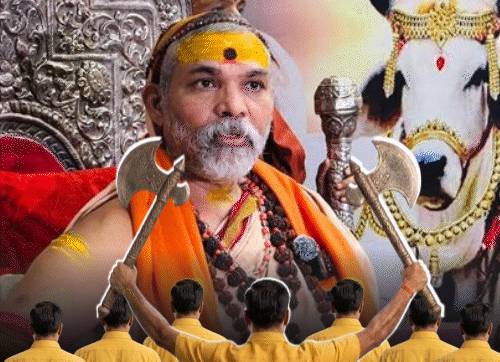
Varanasi (Uttar Pradesh) – Swami Avimukteshwaranand Saraswati announced the formation of a ‘Chaturangini Sena’ here. The target is to include a total of 218,700 members, and people from across the country will be able to join. He stated that the force will work for the protection of cows, religion, scriptures, and temples. A 27-member office-bearer committee has also been announced, with the Shankaracharya himself serving as its president.
🚩 A Powerful Initiative to Defend Dharma from Kashi
Shankaracharya Swami Avimukteshwaranand Saraswati has announced the formation of the ‘Chaturangini Sena’ – a force of 2.18 lakh volunteers dedicated to the protection of Dharma. 🛡️🐄
📜 The Blueprint:
🪓 Every member to carry… pic.twitter.com/2yYxv0mq9t— Sanatan Prabhat (@SanatanPrabhat) March 24, 2026
“Stop, Intercept, and Act”
Explaining the functioning of the force, he said that first a warning will be issued and the wrongdoing will be pointed out. If not heeded, efforts will be made to stop it. If there is still no response, further action will be taken. He clarified that ‘act’ (thoka) does not mean violence, but refers to legal action, filing complaints, or taking decisions at the local level, strictly through constitutional means.
Force to be ready in 10 Months
He stated that the Chaturangini Sena will be fully formed and operational by the next Magh Mela. A slogan has also been announced, with cow protection as its primary objective.
Structure of the Sena
Each unit will consist of 10 members; forming 21,870 such units will complete the force.
India has around 800 districts; if each district forms 27 units (270 members), the total will reach approximately 216,000 members.
Members will be seen in yellow attire, each one carrying a parshu (axe).
Meaning of ‘Chaturangini Sena’
A Chaturangini Sena refers to a fourfold army composed of infantry, cavalry, chariots, and elephants. In ancient India, it was considered highly significant and was mentioned in texts like the Mahabharata and the Ramayana, where all four divisions were used in major battles. This system is believed to have originated in the Vedic period and later evolved, symbolising not just military strength but also advanced organisational and strategic concepts in ancient Indian warfare.
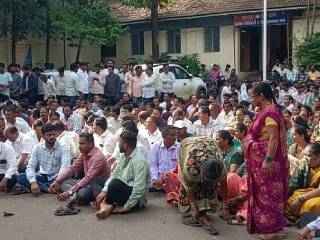 Villagers march to Kagal (Kolhapur district) Police Station in the ‘Love Jihad’ case and demand that the Hindu young woman be handed over to her parents !
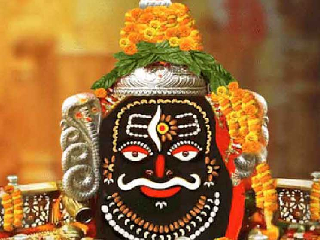 The Temple has fixed deposits worth ₹472 crore and gold and silver worth ₹300 crore !
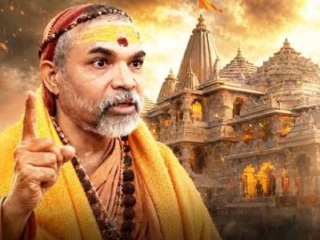 The Shri Ram Temple is an office of the BJP and the RSS; I will go for darshan when it truly becomes a Shri Ram Temple ! : Jyotish Peeth Shankaracharya Swami Avimukteshwaranand Saraswati
 Actor Aamir Khan is the ‘brand ambassador’ of ‘Love Jihad’; Boycott his films ! : Minister Nitesh Rane
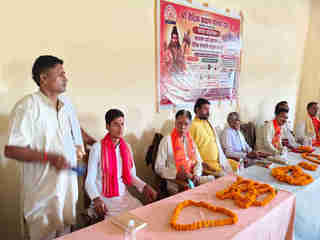 Jaunpur Hosts Seminar on Sanatan Dharma Awakening and Preservation of Vedic Culture
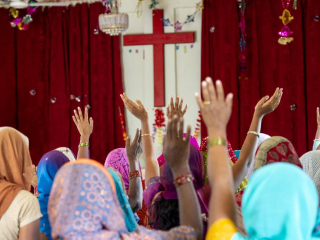 Case registered against husband and wife for propagating Christianity at Sassoon General Hospital, Pune