
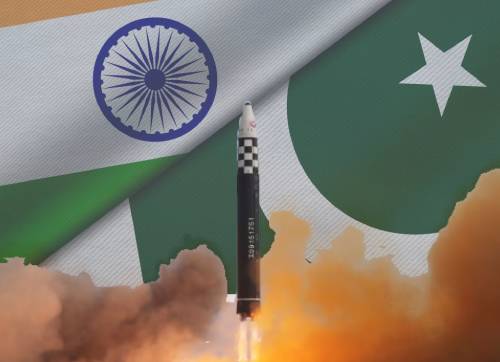
Washington (USA) — According to a 34-page “Annual Threat Assessment” report presented by the US intelligence community in the Senate, the risk of nuclear conflict between India and Pakistan continues to exist. The report states that whenever the two nuclear-armed nations have come face-to-face in the past, there has been a risk of escalation.
Although neither India nor Pakistan openly seeks war, incidents, particularly involving terrorist elements, continue to create volatile situations. A recent terrorist attack near Pahalgam in Jammu and Kashmir last year demonstrated how such incidents can potentially trigger wider conflict. It was noted that intervention by President Donald Trump helped ease recent nuclear tensions.
Pakistani Missiles Could Threaten the US! – Tulsi Gabbard, US Intelligence Chief
Tulsi Gabbard stated in a meeting with lawmakers and officials in Washington that the number of dangerous missiles globally is expected to rise rapidly in the coming years. She noted that Pakistan is developing long-range missile capabilities that could, in the future, pose a threat to the United States.
3,000 Missiles Capable of Targeting the US
Gabbard said that the intelligence community estimates that currently, around 3,000 missiles worldwide can strike the United States. This number could rise to over 16,000 by 2035. Countries such as Russia, China, North Korea, Iran, and Pakistan are actively developing advanced missile technologies and weapons. Pakistan may develop intercontinental ballistic missiles capable of long-range strikes, while Iran could also achieve similar capabilities before 2035.
Russia and China Could Penetrate US Missile Defence Systems!
Gabbard further stated that China and Russia are developing advanced technologies capable of bypassing U.S. missile defence systems.
Lawmakers Express Anger Over Gabbard’s Response
During the meeting, Virginia Senator Mark Warner asked Gabbard whether she had advised Donald Trump that targeting Iran could lead to retaliation against Gulf nations and possible closure of the Strait of Hormuz. Gabbard declined to give a direct answer, stating that she does not disclose internal communications. She added that the intelligence community provides the President with the most objective and accurate intelligence available to support decision-making.
Editorial PerspectiveSince both India and Pakistan are nuclear-armed nations, the risk of nuclear conflict remains inherent in any escalation of tensions between them. US support to Pakistan adds to India’s security concerns, raising questions about Washington’s stance on the issue. |
 Trump withdraws 20% levy on vessels passing through the Strait of Hormuz
 Porous Borders, Shadow Operatives: Unpacking the Geopolitical Rift in the US-India Intelligence Relations
 Prime Minister Modi had prevented Putin from dropping an nuclear bomb on Ukraine in 2022 !
 Anti-Terrorism Squad (ATS) raids more than 23 locations in Pune and Pimpri-Chinchwad
 Iran attacks oil tankers in the Strait of Hormuz; Indian national killed
 If you want to do politics, take off your uniforms and participate in the elections : Maulana Fazlur Rehman