
From temple tourism and bhajan clubbing to campus politics and digital storytelling, India’s Gen Z is dismantling imported woke narratives and reasserting civilizational confidence rooted in Dharma, culture, and national continuity.
In the age of ‘woke’ politics, a new narrative frame is steadily taking shape. From Nepal to Bangladesh, Gen Z is increasingly being mobilized to unleash chaos and orchestrate regime change. In the span of just a decade, youth populations that were once viewed primarily through the lens of demographic potential are now frequently drawn into ideological conflicts and broader geopolitical manoeuvring.
The Global South is the hotbed of the woke ecosystem’s Gen Z toolkit. From Nepal and Bangladesh to Madagascar and Kenya, the Gen Z is being increasingly framed as a powerful agent of ‘revolution’, often a euphemism for anarchy and regime change.
India, however, tells a different story. Even as a section of the Western media continues to incite India’s youth to hit the streets, they seem more interested in reviving temple tourism, reconnecting with their Dharmic roots by innovating new cultural forms, and engaging in civilizational storytelling through social media platforms. Thus, as far as India’s youth is concerned, the woke ecosystem seems to be losing its grip on the Gen Z plot quickly.
The following sections examine how India’s Gen Z is spearheading the country’s Dharmic, cultural, and civilizational resurgence, while weakening the stranglehold of leftist narratives on India’s social, cultural, and political spaces.
India’s Youth and the Rise of Dharmic Tourism
StopHindudvesha has previously documented the rise of temple tourism following the inauguration of the Ayodhya Ram Mandir. New Year celebrations in the period that followed revealed a clear shift in public behavior, with many Indians moving away from conventional Western-style festivities and instead choosing temple visits and Dharmic pilgrimages. This trend was reflected in a nationwide surge in temple tourism, as devotees thronged major Dharmic sites such as the Ayodhya Ram Mandir, the Jagannath Temple in Puri, and the Akshardham Temple in Delhi. The Ayodhya Ram Mandir itself witnessed the participation of over 200,000 devotees, many of them having queued up to witness the year’s first aarti.
As India welcomed 2026, the surge in Dharmic tourism continued, marked by a further shift in behavior, particularly among Gen Z. Increasingly, young Indians chose to usher in the New Year through temple visits and acts of worship, rather than Western-style New Year alcohol parties.
According to a report by Bhaskar English, around 2.5 million devotees reached Ayodhya, Kashi, and Mathura on the first day of the New Year 2026, with Gen Z constituting the largest segment of the crowd. Data from the Uttar Pradesh government and the state’s tourism department indicate that more young people travelled to Kashi to welcome 2026, spending time at the Ganga ghats, offering prayers at the Kashi Vishwanath Mandir, and documenting their experiences on social media.
Gen Z has significantly contributed to the recent surge in spiritual tourism in India. Multiple factors, including the construction of the Ayodhya Ram Mandir, the revamping of the Kashi Vishwanath Temple, and the increased media visibility of temples and other Hindu pilgrimage sites, have contributed to the growing interest among youth in Dharmic tourism.
India’s Gen Z is also redefining the concept of spiritual tourism by repackaging it for contemporary youth sensibilities, while still respecting the Dharmic ethos of pilgrimage spaces. Young travellers are increasingly combining Dharmic tourism with leisure and wellness travel and adventure tourism. Travel companies are responding by introducing packages that integrate traditional temple visits with yoga retreats, curated food experiences, and outdoor pursuits such as river rafting and bungee jumping. Destinations like Rishikesh, Bodh Gaya, and Kedarnath have emerged as particularly attractive to Gen Z, offering ample scope to combine temple visits with nature walks, meditation sessions, trekking expeditions, and yoga retreats.
India’s youth has long been viewed through a colonial lens, often stereotyped as either immersed in Western culture or aspiring solely toward Western values and ideals. The appeal of the English language, Western cinema, music, fashion, lifestyle, and culture has traditionally shaped portrayals of youth aspirations. Increasingly, however, Gen Z is challenging these assumptions by actively participating in India’s civilizational and cultural reawakening. Fluent in the language of modernity, Indian youth now appear to have moved beyond uncritical fascination with the West, choosing instead to engage with modernity on its own terms and reconnect with Dharmic and civilizational roots in dynamic and innovative ways.
Bhajan Clubbing and the Cultural Turn of India’s Gen Z
When Millennials were in their early to mid-20s, youth culture was often synonymous with Western-style parties featuring head-banging music or late nights at clubs set to Bollywood disco beats. Having fun as a young person largely meant hanging out at bars and clubs, accompanied by generous amounts of smoking and drinking, reflecting a hyper-Westernized model of entertainment rooted in overt hedonism.
Much of the Western media commentary that routinely denounces India’s ‘patriarchal culture’, and ‘conservative society’ remains anchored in a simplistic tradition-versus-modernity binary. Shaped by assumptions of Western cultural superiority and colonial-era frameworks, such narratives portray Indian society as conservative and patriarchal because of its perceived moral boundaries, including resistance to late-night alcohol parties, reservations about premarital sex and live-in relationships, and an emphasis on traditional Hindu festivals. Gen Z, is increasingly over-turning this modern-day atrocity literature by embracing new forms of cultural expression that seamlessly blend Dharmic values with contemporary sensibilities.
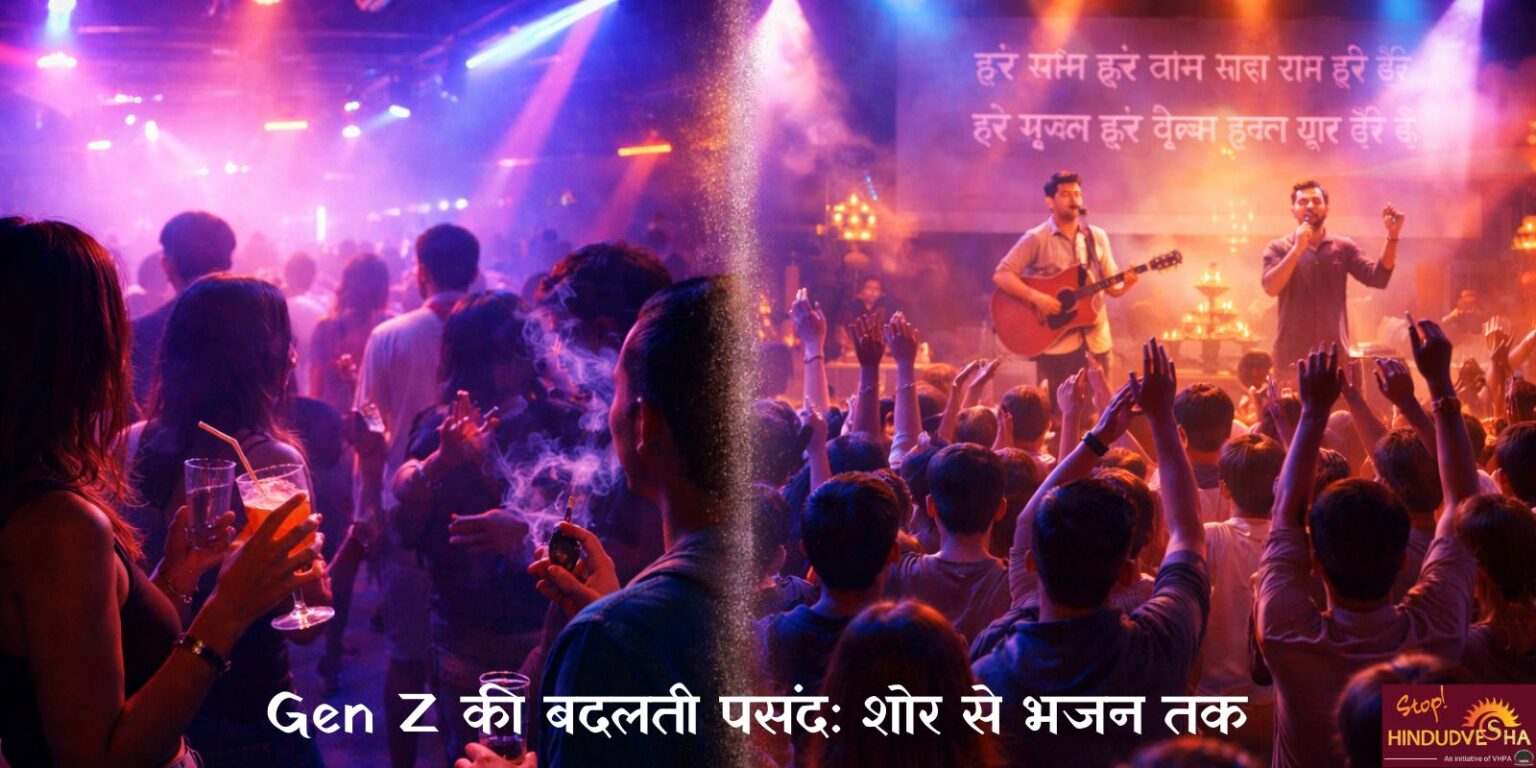
Bhajan clubbing, for instance, has gained remarkable popularity among Gen Z in recent months. Young Indians are increasingly moving away from alcohol-fuelled parties toward live music and jamming sessions where performers render traditional bhajans infused with electronic beats and guitars. Designed to replicate the atmosphere of a rock concert, bhajan clubbing events draw large audiences seeking to reconnect with their Dharmic roots in ways that feel modern, energetic, and participatory.
Bhajan clubbing can thus be seen as a new party culture for India’s Gen Z. Breaking away from the clichés of alcohol-driven entertainment, these concerts recreate the ambience of a modern club through immersive music, subdued lighting, and collective dancing, with the crucial difference that the playlist consists of bhajans and chants. From interactive jamming sessions featuring popular compositions such as ‘Shri Krishna Govind Hare Murari’ and ‘Ram Ram Jai Raja Ram, Ram Ram Jai Sita Ram,’ to more formal concerts centered on mantras and devotional music, bhajan clubbing encompasses a range of formats. Most significantly, it reflects a growing preference among young people to celebrate occasions like the New Year through alcohol-free, spiritually grounded gatherings that reimagine the atmosphere of a traditional kirtan in a contemporary setting. Alcohol consumption is strictly prohibited at these events.
From Delhi and Mumbai to Bengaluru and Pune, bhajan clubbing nights hosted at cafes and auditoriums have become highly sought after by Gen Z. Emerging as a youth-led cultural movement, bhajan clubbing is contributing to a broader Dharmic renaissance. It has also entered the domain of professional, ticketed concerts, with young audiences willing to pay substantial amounts to attend these gatherings. Google Trends data reflects this shift, showing a 400-600% increase since early 2024 in searches for terms such as ‘modern kirtan,’ ‘bhajan clubbing,’ and ‘sober rave India.’ Prachi and Raghav Aggarwal, a brother-sister duo instrumental in popularizing bhajan clubbing, began by hosting informal living-room baithaks for small audiences. Within a year, they were selling over 1,500 paid tickets for a single concert in Mumbai.
A decade ago, the idea of young Indians welcoming the New Year through alcohol-free Dharmic music gatherings would have seemed implausible. The significant paradigm shift of the past decade, reshaping both India’s internal self-image and its external projection through a renewed engagement with its civilizational ethos, has made this transformation possible. This shift is symbiotic : While Bharat’s Dharmic resurgence has influenced Gen Z’s values and preferences, Gen Z itself has played a central role in accelerating this cultural reawakening.
The growing popularity of youth-driven digital content over recent years, celebrating Bharat’s cultural landscape, articulating its ancient history with confidence, and foregrounding Dharmic consciousness, has further shaped this evolving youth culture. Hybrid cultural forms such as bhajan clubbing have benefited from this ecosystem, as have ISKCON youth gatherings featuring kirtans and Art of Living meditation sessions, both of which have gained significant visibility on social media.
From Far-Left Dominance to Cultural Nationalism on Campus
Campus politics in India has traditionally been shaped by the leftist ecosystem, with students often being covertly nudged toward anarchy and anti-nationalism in the name of dissent and protest.
| Editorial Perspectives
Far-left rhetoric has long influenced academic discourse in many Indian universities, to the extent that faculty members in humanities and social science departments have frequently been found promoting overt separatist tendencies and, at times, even glorifying terrorism under the guise of academic scholarship. The sustained stranglehold of the left over premier educational institutions, such as Jawaharlal Nehru University and Delhi University, has further contributed to the proliferation of radical far-left ideology on campuses. Recent trends, however, indicate that Gen Z is increasingly rejecting left-liberal politics in university spaces. The results of the Delhi University Students’ Union elections announced in September 2025 underscore this shift. The RSS-backed Akhil Bharatiya Vidyarthi Parishad (ABVP) won three out of four posts, including the presidency. Since Independence, the cultural and literary public sphere of urban India has been overwhelmingly dominated by the leftist ecosystem. As youth engagement is broadly shaped by the prevailing cultural discourse, young Indians often become passive recipients of these ideological narratives. The dominance of leftist viewpoints across literary festivals, cultural events, and academic forums subtly conditioned generations of youth toward far-left ideologies. The rapid rise of social media over the past decade, however, has significantly altered this dynamic. Gen Z is increasingly using digital platforms to challenge and expose leftist narratives surrounding Indian history, culture, politics, and society. In doing so, social media has weakened the influence of the traditional elite cultural sphere long controlled by the left, leaving a substantial segment of Gen Z outside its ideological grip. Indeed, a revival of the Dharmic public sphere is now underway, with Gen Z at its forefront. Scenes that would have been unthinkable a decade ago, such as young Indians reciting the Hanuman Chalisa outside cafés or social media influencers openly discussing Bharat’s Vedic heritage, are now becoming commonplace. India’s broader civilizational and cultural resurgence has decisively altered the narrative, reshaping how youth engage with identity, tradition, and modernity. |
Closing Remarks : Dismantling Macaulay’s Colonial Legacy
India’s Gen Z is increasingly challenging Macaulay’s colonial legacy through behavioural patterns that defy easy categorization within a Western liberal framework. Their choices and priorities are proving difficult to force-fit into imported ideological templates.
This has only deepened the frustration of the left-liberal ecosystem, particularly because India’s youth is refusing to conform to the far-left anarchist model that sections of the media, academia, and civil society continue to promote with growing urgency.
StopHindudvesha has previously highlighted the Western media’s tendency to romanticize unrest and instability in non-Western societies, often by instrumentalizing Gen Z and encouraging youth in stable democracies like India to take to the streets and undermine democratic norms.
Such portrayals are rooted in familiar colonial tropes and the atrocity literature paradigm. What complicates this narrative, however, is that Indian youth is increasingly charting a path that runs counter to how Western media expects it to behave. Rather than conforming to externally prescribed models of protest, Gen Z is pursuing a trajectory grounded in cultural continuity and civilizational confidence.
The Western media’s underlying assumption that Democracy in the Global South is perpetually fragile and requires constant correction through protest and disruption reflects an old Macaulayan mindset, one that looks down upon indigenous languages, cultures, knowledge systems, and political traditions.
India’s Gen Z is now openly rejecting this worldview, embracing instead a civilizational and cultural homecoming informed by the discourse of decolonization.
That transformation is largely ‘out of syllabus’ for the left-liberal ecosystem.
This Article is being re-published in Sanatan Prabhat with the explicit permission of the Editorial Team of StopHinduDvesha.org
(Courtesy : Excerpts from an Article by Rati Agnihotri on Stop Hindu Dvesha website)
Original Article on : https://stophindudvesha.org/gen-z-as-a-civilizational-vanguard-reclaiming-culture-faith-and-identity/
| India’s Gen Z is redefining the concept of spiritual tourism by repackaging it for contemporary youth sensibilities ! |
 We pay our obeisance a million times on the Birthdays (as per Tithi) of
 Offering gratitude unto the Holy feet of the Guru is true Gurudakshina !
 Messages of the Gurus on the occasion of Guru Purnima (29th July)
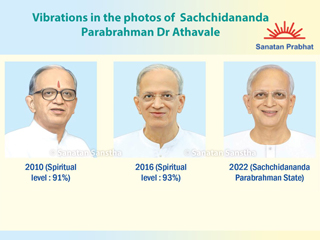 Sadguru (Dr) Mukul Gadgil’s analysis of the vibrations in the photos of Sachchidananda Parabrahman (Dr) Athavale, corresponding to His spiritual level at different times
 Projects of funding commercial complexes worth Rs 246 crore using temple funds cancelled by Tamil Nadu Government
 Salutations unto the Guru !