
Supreme Court Justice Dipankar Datta questions the ‘Collegium’ system
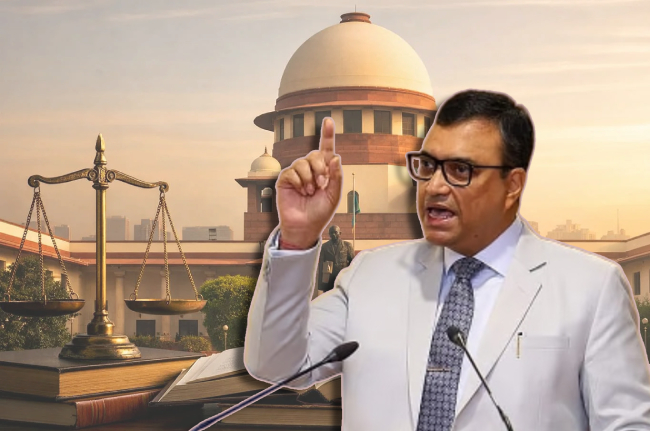
New Delhi – Justice Dipankar Datta, a judge of the Supreme Court of India, has raised questions about the functioning of the Collegium system. He stated, “You may be surprised to know that I do not know what happens in the Collegium. I also do not know where the Collegium meets.”
His remarks have brought renewed attention to the Collegium system, which is used to recommend appointments and transfers of judges in the Supreme Court and the High Courts.
Justice Dipankar Datta questions the 'Collegium' system: "We don’t know what goes on inside!" ⚖️
The debate over judicial appointments and transfers just got a major reality check from within the Supreme Court.
The call for reform is getting louder; this time from within the SC… pic.twitter.com/FGbE5AmcEa
— Sanatan Prabhat (@SanatanPrabhat) March 9, 2026
Judicial appointments should be based on merit, not gender
Justice Dipankar Datta further stated that judicial appointments should be based on merit rather than gender. He said that when it comes to promotion to the position of High Court judges, the focus should not be on numbers but on the quality and competence of candidates.
Ability, integrity, and character must be considered
Justice Datta also emphasized that when considering promotions to a bench, a candidate’s ability, integrity, and character should be taken into account. If a person is qualified to become a judge, he or she should be appointed.
What is the Collegium system ?
The Collegium system is responsible for the appointment and transfer of judges in the higher judiciary in India. It is not established by Parliament and is not a constitutional provision. Instead, it evolved through a series of judgments of the Supreme Court of India.
The Supreme Court Collegium consists of 5 senior-most judges and is headed by the Chief Justice of India. In the High Courts, the Collegium is led by the respective Chief Justice and includes the 2 senior-most judges of that High Court.
Through this system, recommendations are made for appointments and transfers within the higher judiciary. The role of the government begins once the Collegium forwards its recommendations for judicial appointments.
 Announce date for construction of Shri Krishna temple before 9th August, then no need for Karseva : Kali Sena
 Shri Ram temple needs a devotee, not a government-appointed officer : Saints demand
 Bengaluru to establish the country’s first Government AI University !
 Sahil Shaikh and his gang brutally assault a Hindutva activist in Hadapsar, Pune !
 Pakistani cricketers smuggled drugs during their tours of India: RVS Mani
 Crores of rupees spent on teaching tribal students in English; yet students deprived of basic facilities !