
Fear of rising unemployment looms
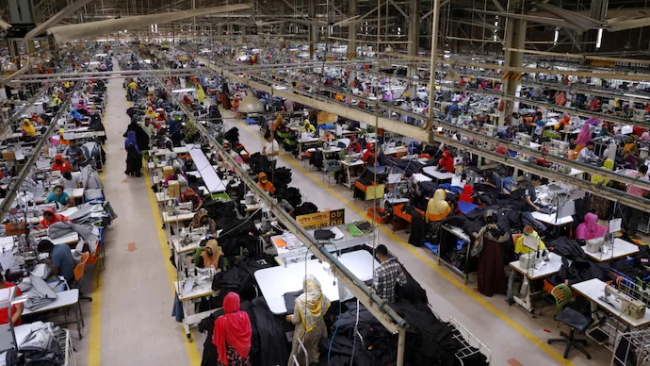
Dhaka (Bangladesh) – Bangladesh’s domestic textile industry is facing a serious crisis due to the growing import of Indian yarn. The influx of low-cost yarn from India has placed the very survival of local spinning mills at risk, raising fears of a large-scale employment crisis in the country.
Pressure on local industries
The share of Indian yarn in Bangladesh’s textile market has been steadily increasing. Since Indian yarn is cheaper than locally produced yarn, garment manufacturers in Bangladesh are increasingly opting for imports from India. As a result, local spinning mills are struggling to sell their output, leading to mounting inventories and significant financial losses.
Threat to employment
The ready-made garment (RMG) sector plays a crucial role in Bangladesh’s economy. If local spinning mills are forced to shut down, millions of workers could lose their jobs. The Bangladesh Textile Mills Association has expressed deep concern over the situation and has urged the government to take steps to protect domestic industries.
India’s competitive edge
India is among the world’s largest producers of cotton and yarn. Easy availability of raw materials and large-scale production enable Indian yarn to remain highly competitive in global markets. Additionally, India’s geographical proximity to Bangladesh keeps transportation costs low, giving Indian exporters a further advantage.
Signs of a trade conflict ?
Amid growing discontent and pressure from local entrepreneurs, the Bangladesh government may consider imposing restrictions on imports of Indian yarn. Reports suggest that banning yarn imports through certain ports is under consideration. If such measures are implemented, they could impact trade relations between the two countries.
 “Statues of Chhatrapati Shivaji Maharaj are being installed to target Muslims !” : France 24
 USA to seek extradition of gangster Lawrence Bishnoi imprisoned in India
 US attacks 140 Iranian military sites
 Racial discrimination against Indian truck drivers working in Australia
 Our DNA and India’s DNA are the same !
 Every graveyard in Kashmir contains the graves of Pakistani terrorists !