
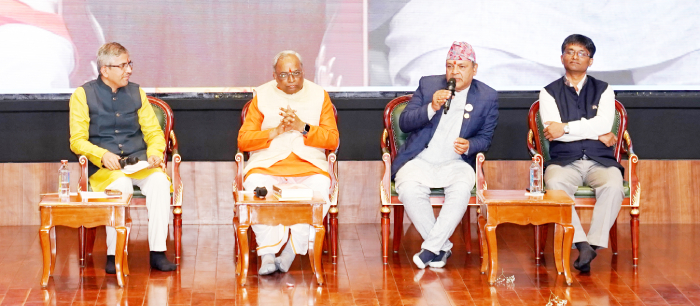
New Delhi – Participants at the ‘Sanatan Rashtra Nepal’ dialogue asserted that despite Nepal having been declared a secular state, Nepal—along with India—will inevitably become a Hindu Rashtra if there is collective resolve. Hindutva supporters from Nepal expressed this view during the discussion. The dialogue was anchored by Mr Vishwanath Kulkarni, Uttar Pradesh and Bihar State Coordinator of the Hindu Janajagruti Samiti. The speakers included senior Hindu leader from Nepal Mr Shankar Kharal, Mr Santosh Shah of Today’s Youth Asia (Nepal), and Sadguru (Dr) Charudatta Pingale, National Guide of the Hindu Janajagruti Samiti.
Nepal remains Hindu Rashtra in spirit: Shankar Kharal, Senior Hindu Leader
Mr Kharal stated that Nepal continues to be a Hindu Rashtra in essence, asserting that the country’s cultural and spiritual identity remains Hindu. Remnants of the Hindu monarchy still exist and efforts are ongoing to preserve Hindu culture. Religious conversions are taking place in mountainous regions and lasting peace would not be possible until Nepal is declared a Hindu Rashtra. Referring to recent ‘Gen Z’ movements, Kharal said they had not resulted in the expected systemic changes.
Large funds flowing for conversions of Hindus in Nepal: Santosh Shah
We do not accept the notion of ‘secularism’. No religion is truly secular. Despite Nepal having a much smaller population and geographical size compared to India, around 2 billion US dollars are being funneled into Nepal for religious conversions. This indicates the scale of the conspiracy being carried out. By the grace of Lord Pashupatinath, and because it is the land of Mother Sita, large-scale conversions have not taken place outside the mountainous regions.
Nepal reflects strong Sanatan tradition: Sadguru (Dr) Charudatta Pingale
Nepal represents a strong expression of the Sanatan tradition and continues to follow the Hindu calendar rather than the Gregorian calendar. When considering the situation in India, one must reflect on the Mahabharat era and the state of Arjun. Seeing his own relatives on the battlefield, Arjun became deluded, believing they were his own people. A similar situation arose in India after independence. In 1946, Indians were misled into thinking certain elements were their own people and failed to recognise the threat. If India and Nepal remain vigilant, the Hindu flag will once again fly high in both places.
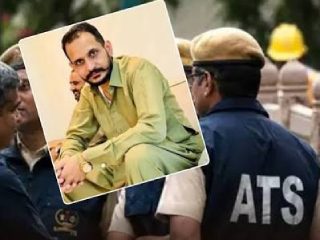 Anti-Terrorism Squad (ATS) raids more than 23 locations in Pune and Pimpri-Chinchwad
 Jammu Court Seeks Records from the Police
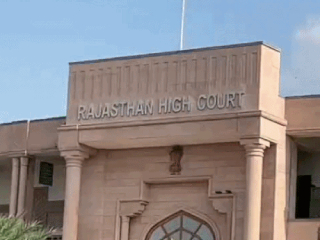 Rajasthan High Court dismisses petitions opposing demolition of illegal mosques and dargahs along the India–Pakistan border
 Consumer Disputes Redressal Commission directs Post Office to pay Rs 40,000 in compensation
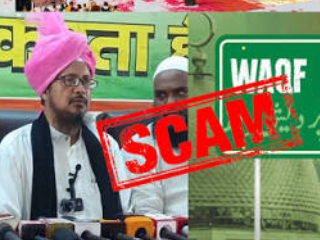 Scam worth crores of rupees in Waqf Board lands during the Samajwadi Party’s tenure in power ! : Maulana Shahabuddin Rizvi Bareilvi
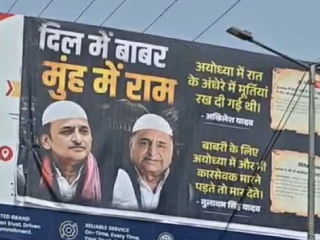 Statement by Samajwadi Party leaders expressing anger over a poster displayed in Mathura (UP) reading, “Babar in the heart, Ram on the lips”