
Ayurveda for a healthy life- 61/2025 on 1.10.2025


2. Symptoms of food poisoning
The symptoms usually appear within 12 to 36 hours of eating food. The patient suffers from nausea, vomiting, diarrhoea, pain in the abdomen and may also develop fever and a headache. The patient usually recovers within 1 to 7 days. The patient should be hospitalised and treated with intravenous fluids and appropriate medicines.
The following measures are useful for the prevention of food poisoning –
A. Food should be cooked properly and served when hot.
B. Stale food or food exposed to room temperature for a long time should be avoided. Food stored in the refrigerator is safe.
C. It is important to use clean utensils for cooking and clean dishes for serving meals.
D. Food should not be exposed to flies and dust.
E. Before cooking and eating, one should wash one’s hands. Individuals suffering from diarrhoea, cold, cough, boils and infection of the hands should not be allowed to handle or cook food.
F. Leaking or broken tins of canned food should be discarded.
G. Canned food or stored food which has gas bubbles or has a rancid odour or bad taste should also be discarded.
H. Fruits and vegetables should be washed thoroughly before using them.
I. Stale meat or fish or those of diseased animals should not be consumed.
J. The kitchen should be clean and lit adequately with
sufficient sunlight and have ample air circulation. The utensils should be clean.
3. What is food allergy ?
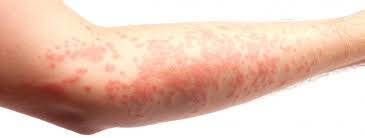
Food allergy occurs as a result of intolerance to certain food items. The person develops symptoms of allergy after eating even a little food to which he is allergic. Eggs, fish, crabs, lobsters, oranges, tomatoes, nuts, pulses and chocolates are the food items to which a patient is commonly allergic.
The patient may suffer from varied manifestations such as hives, eczema, vomiting, diarrhoea, nausea and recurrent asthma.Vomiting occurs within a few minutes or hours of eating the food one is allergic to. Allergy to food items like meat, milk or fruits may manifest for only a few weeks or months at a time but may recur after several years. It is important to find out the allergen by withdrawing the food items one by one and observing the affected individual. In infants, it is preferable to add food items one by one as dietary supplements so as to observe the allergic manifestations if any. Skin tests for allergy may give a clue to the offending food item. The food item to which the patient is allergic should be withdrawn from the diet.
Obesity

1. What is obesity ?
The word obesity is derived from the Latin word ‘obesus’ which means eating. A person who weighs more than 20% of the appropriate weight for his age and height is considered obese. Obesity results from accumulation of fat which is more than that needed for good health. The fat tends to accumulate around the hips, breasts and abdomen. An individual is prone to put on more weight during infancy, adolescence, pregnancy, after delivery, menopause and old age. The words obesity and overweight are often used synonymously. Overweight means excess of body weight while obesity means excessive accumulation of fat. An athlete with well developed muscles may be overweight but is not obese. Some individuals have heavy and large bones. These persons are not obese though they may be overweight. On the other hand, a person with average weight may be obese if he has thin bones, poor musculature and excess of fat. The proportion of fat in a healthy individual varies according to age, sex, diet and the work or activity. At birth, the fat is 12% of the body weight. At
6 months of age, it is 30% of the body weight while at 10 years of age, it is 18%. At the age of 18, it is 15% to 18% of the body weight in males and 20% to 25% of the body weight in females. In rich and people who are middle aged, fat constitutes 30% to 40% of the total body weight.
2. What are the causes of obesity ?
A. The most important factor that leads to obesity is the inability to control the desire to enjoy and overeat tasty dishes such that energy input exceeds the output and the excess is stored as fat.
B. About 1/3rd, i.e. 30% of the energy acquired by consumption of food is spent in muscular activity by an average person. In a labourer, 65% – 75% of the energy is spent in manual activity. Thus sedentary habits play an important role in development of obesity. Also an excess of sleep or sleeping during the day leads to obesity.
C. Constitutional factors : Hyperactive and hypermetabolic individuals tend to remain thin. Individuals with a Kapha constitution (prakruti) are generally obese while those with Vata and Pitta constitutions are thin.
D. Some individuals tend to eat more and put on more weight during stressful situations, e.g. examinations or psychological tension or in depression. Some persons are happy-go-lucky by nature and do not have any worries. This can also cause obesity.
E. Obesity is hereditary. Identical twins maintain their weight such that there may be a difference of a maximum of five pounds between them even if their environmental conditions and habits differ greatly.
F. Very rarely endocrine factors, i.e. hormonal disturbances give rise to obesity and can be easily identified.
G. The number of fat cells in an obese individual is often more than three times that in an average person. The number of fat cells in an adult is determined by the quantity of fat stored in the body during childhood. New fat cells are rapidly formed in obese infants. After infancy, the rate of formation of new fat cells dwindles till adolescence. Later, the number of fat cells remains constant and only the size of the fat cells varies with the food intake. Hence restricting the diet in early infancy might help in preventing obesity in adult life by reducing the number of fat cells.
H. Dietetic habits : Some individuals are habituated to eating fried food, chips, sweets, dry fruits like walnuts, cashewnuts, etc. In some families, people keep on eating such items. Children from such families are habituated to eating it in excess which leads to obesity.
3. Pathogenesis of obesity
Obese persons have good power of digestion and absorption. Hence their appetite is good which in turn leads to more ingestion of food. Excessive accumulation of fat obstructs the flow of nutrients to various organs and makes them sluggish. Due to decreased metabolism of various tissues, the fat tends to accumulate.
In obese individuals, if one restricts the diet suddenly, the nutrition of various organs which is already affected is likely to suffer greatly. Hence it is more difficult to treat obese patients as compared to thin ones.
 Illegal church in Solapur and misconduct by a municipal employee to be investigated
 Mandirs : The Building Blocks of the Rashtra
 Vataja Shula – Beneficial diet
 Controversy in Kolkata over ISKCON removing eggs from school mid-day meals
 Owners of hotels, restaurants and dhabas violating regulations will not be spared : Commissioner Tukaram Mundhe
 Smoking causing an extreme effect on the Kundalini-chakras of a seeker