
Why They Want to ‘Break India’
The belief that Urban Naxals want to ‘break India’ stems from their ideological disdain for the Indian Nation-state. For them, India represents a colonial construct upheld by capitalist exploitation, Brahminical patriarchy, and majoritarianism. Rather than seeing India as a vibrant, pluralistic democracy, they view it as an imperialist power that must be dismantled.
Key motives attributed to them include :
1. Undermining national unity by supporting separatist movements in regions like Kashmir, the Northeast, and the tribal region of Central India.
2. Challenging cultural coherence by mocking national and Sanatan symbols, institutions, traditions as regressive or oppressive.
3. Promoting class conflict and social polarization to weaken internal stability.
4. Aligning with international anti-India narratives, particularly in human rights and media platforms, to discredit the country globally.
In their ideological vision, the Indian Constitution and Democracy are not tools for change but obstacles to be removed. Hence, their long-term vision is incompatible with the integrity and continuity of the Indian Republic. Here are brief details about a few urban elites accused of involvement in Naxalite activities. These are just a few examples and no way the exhaustive list of such people.
Sudha Bharadwaj : Sudha Bharadwaj, a trade unionist and civil rights lawyer, was arrested in 2018 under the Unlawful Activities (Prevention) Act (UAPA) in connection with the Koregaon Bhima case. Authorities alleged she was linked to Maoist organizations and part of a conspiracy to incite violence during the 2018 Koregaon Bhima commemoration. Her arrest drew criticism for targeting human rights defenders. Critics argue that her work for marginalized communities was criminalized, while evidence presented by the authorities, including allegedly planted digital files, remains controversial. Her detention raised significant concerns about the misuse of anti-terror laws to stifle dissent and activism. On the other hand, the prosecution could convince the courts of her involvement.
Varavara Rao : P. Varavara Rao, an 80-year-old Telugu poet and activist, was arrested in 2018 under the UAPA in the Koregaon Bhima case. Authorities accused him of Maoist links and involvement in a purported plot to assassinate Prime Minister Narendra Modi. Rao has long been associated with revolutionary poetry and leftist ideologies, making him a persistent target of state scrutiny. His prolonged incarceration, was widely criticized as a violation of his civil liberties. Critics allege that his arrest was part of a broader crackdown on intellectuals and dissenters critical of Government policies and systemic injustice.
G.N. Saibaba : G.N. Saibaba, a wheelchair-bound former Delhi University professor, was arrested in 2014 under the UAPA for alleged Maoist links. Authorities claimed he was part of the banned CPI (Maoist) and involved in anti-national activities. He was convicted in 2017 and sentenced to life imprisonment.
His arrest and incarceration have been condemned internationally due to his severe physical disabilities and poor prison conditions. Rights activists assert that Saibaba was targeted for his outspoken advocacy for Adivasi rights and opposition to state repression in tribal areas. However, his conviction and life imprisonment itself proves that he was involved in the crime and hence convicted.
Vernon Gonsalves : Vernon Gonsalves, a writer and activist, was arrested in 2018 in the Koregaon Bhima case under UAPA charges. Previously convicted in 2007 for Maoist links and released in 2013, he faced fresh accusations of being part of a larger conspiracy to destabilize the Indian state and assassinate the Prime Minister. Gonsalves has long been involved in trade union and civil liberties work, focusing on prison reform and political prisoner rights. Critics argue that his arrest is part of a systematic effort to silence dissent and associate human rights activism with terrorism, often on the basis of contested digital evidence. However, his conviction by courts itself speaks volumes about his criminality.
Gautam Navlakha : Gautam Navlakha, a veteran journalist and human rights activist, was arrested in 2020 under UAPA in the Koregaon Bhima case. Authorities alleged he had Maoist connections and was part of a conspiracy to foment unrest. Navlakha has been a self declared voice against so called state violence, militarization in Kashmir, and suppression of civil liberties. His house arrest and alleged denial of basic rights like proper medical care was propagated by the ‘Urban Naxals’. Resultantly, it sparked widespread condemnation.
Arun Ferreira : Arun Ferreira, a so-called human rights lawyer and activist, was arrested in 2018 under UAPA in the Koregaon Bhima case. Previously imprisoned from 2007 to 2012 on charges of Maoist links – of which he was acquitted – Ferreira’s re-arrest involved similar accusations of involvement in Maoist conspiracies. His supporters claim that his work on prison rights and in defending undertrial prisoners was great. In their opinion, Ferreira’s case illustrates the cyclical targeting of activists using harsh legal tools. Critics see his arrest as part of a pattern of suppressing civil liberties through indefinite detention without trial, especially of those working with marginalized populations or challenging dominant state narratives.
‘Operation Black Forest’ and recent activities of Urban Naxals
The worst form of Urban Naxals was visible when the security forces began operation ‘Black Forest’ in the ‘Red Corridor’ of Chhattisgarh, Maharashtra and Telangana in April 2025. The ‘Red Corridor’ is basically the hot bed of Naxalism falling in the tribal areas of these States.
Operation Black Forest was a strategic and highly sensitive counter-insurgency operation conducted by Indian security forces against Maoist insurgents in the dense forests of Chhattisgarh and adjoining areas of Telangana / Andhra and Maharashtra.
The operation aimed to neutralize key Maoist leadership and dismantle the core of their operational command in the region. While the operation was a success from a tactical standpoint, it faced significant pushback from what are often termed ‘Urban Naxals’ – urban-based sympathizers, intellectuals, and activists who allegedly support or rationalize Maoist ideology under the guise of civil liberties, tribal rights, or academic freedom.
Urban Naxals played a key role in attempting to delegitimize Operation Black Forest. They raised concerns over human rights violations, tribal displacement, and extra-judicial killings, often without presenting concrete evidence. This narrative was amplified through media outlets, social platforms, academic forums, and NGOs, influencing public opinion and international perception. Their objective, critics argue, was to exert pressure on the Government to halt counter-insurgency measures and to create a protective ecosystem for insurgents using legal and institutional frameworks.
Since the Operation Black Forest was unprecedented in its scale and success, the many new sympathizers were uncovered. Many politicians, including ex-CM of Telangana started advocating talks with the Naxals.
Their argument was when the Naxals are ready for talk, the operation should be halted. The real reason was most of the prominent leaders of Naxals were in the trap of the security forces (and later eliminated). So this pain and appeal for ‘peace’. Prominent individuals who opposed or criticized Operation Black Forest include politicians from Telangana, Maharashtra and Chhattisgarh. These were in addition to old and known group of sympathizers like Arundhati Roy, Gautam Navlakha, Sudha Bhardwaj, etc.
Despite their opposition, the Government maintained that such operations are vital for national security and restoring governance in Maoist-dominated areas. The controversy around Urban Naxals and Operation Black Forest highlights the complex balance between national security and civil liberties in conflict zones.
Conclusion
Urban Naxalism represents a dangerous convergence of radical ideology, urban sophistication, and covert insurgency. While it is important not to equate legitimate dissent with sedition, it is equally critical to recognize and neutralize subversive threats operating under intellectual guises.
The challenge for the Indian state lies in striking a delicate balance – protecting democratic freedoms while guarding against internal sabotage. Security, governance, education, and public awareness must work in tandem to expose and defeat the ideological warfare posed by Urban Naxals.
In this silent war of ideas, vigilance, not paranoia, must be the guiding principle.
(Article Concluded)
(Courtesy : Article by Major Saras Tripathi (Retd), Pragya Matth Publications, Ghaziabad, UP; 28.7.2025)
(Major Saras Tripathi is a retired Indian Army officer, author, and publisher. He served in the army from 1992 to 1999, including during counter-insurgency operations in Kashmir. He later authored books and became a publisher, heading Pragya Matth Publications. He is also a motivational speaker and commentator.)
| Security, governance,and public awareness must work in tandem to defeat the ideological warfare posed by Urban Naxals ! |
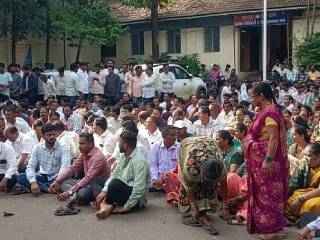 Villagers march to Kagal (Kolhapur district) Police Station in the ‘Love Jihad’ case and demand that the Hindu young woman be handed over to her parents !
 The Temple has fixed deposits worth ₹472 crore and gold and silver worth ₹300 crore !
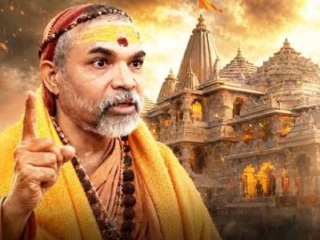 The Shri Ram Temple is an office of the BJP and the RSS; I will go for darshan when it truly becomes a Shri Ram Temple ! : Jyotish Peeth Shankaracharya Swami Avimukteshwaranand Saraswati
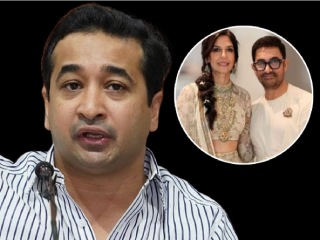 Actor Aamir Khan is the ‘brand ambassador’ of ‘Love Jihad’; Boycott his films ! : Minister Nitesh Rane
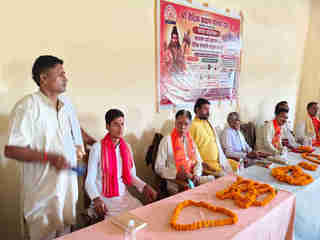 Jaunpur Hosts Seminar on Sanatan Dharma Awakening and Preservation of Vedic Culture
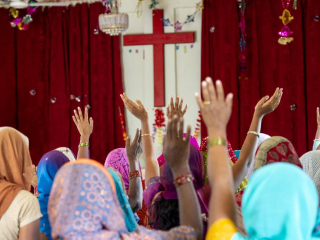 Case registered against husband and wife for propagating Christianity at Sassoon General Hospital, Pune