
1,298 Days of War : A Glimmer of Resolution?
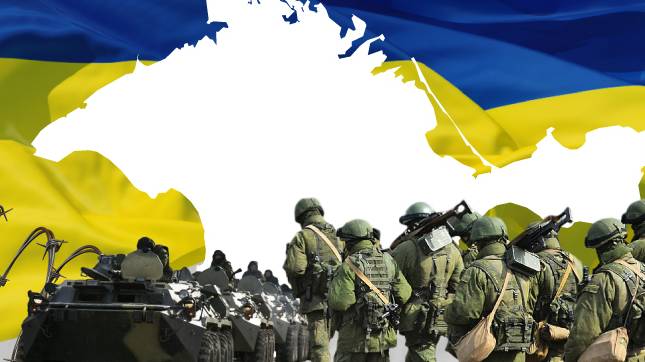
A full 1,298 days have passed since the Russia–Ukraine war began on 24 February 2022. After this prolonged period, a significant development occurred on 15 August 2025, a high-level meeting was held in Alaska between Russian President Vladimir Putin and US President Donald Trump to find a concrete solution to end the war. By all accounts, this is the most devastating war Europe has witnessed since World War II. Over the past three and a half years, Western powers have made every possible effort to isolate Russia. Now, for the first time, the United States has stepped forward to mediate between Russia and Ukraine in an attempt to secure peace. Although the Putin–Trump meeting didn’t yield a breakthrough, both leaders expressed optimism that the process has moved forward. Subsequently, Ukrainian President Volodymyr Zelensky held meetings with leaders from the US and several European nations in America. This raises hopes that a Russia–Ukraine bilateral meeting may take place soon, possibly followed by a tripartite dialogue with American mediation.
Wars Today: Not Just for Territory, but Economic Control
The Donbas Dispute
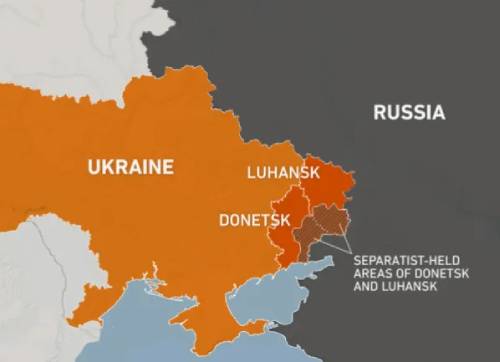
One crucial aspect to consider: Modern warfare is no longer solely about territorial control. Today’s wars revolve around economic sanctions, supply chain control, and energy corridors. This is the core of the geo-economic doctrine shaping global conflict, and the same principle underlies the Russia–Ukraine war. Russia had previously attacked Ukraine in 2014, capturing Crimea, to prevent Ukraine from joining NATO. Moscow feared that the US and Western European powers would compromise its sovereignty and economic significance. Russia also seeks official control over the Donbas region, which holds vast reserves of coal, natural gas, and lithium, in addition to its globally significant agricultural output. From both economic and geopolitical perspectives, Russia sees Donbas as crucial. Ukraine, however, staunchly opposes this demand and insists on guarantees for its sovereignty and security.
National Interest Comes First!
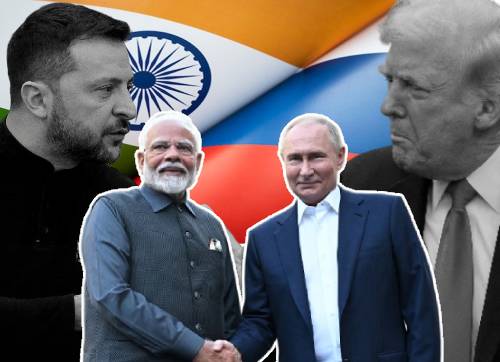
India has been closely watching the developments among Russia, Ukraine, and the US and for good reason: India’s national interests are deeply embedded in this situation. The crux of the issue lies in oil. US President Donald Trump was angered by India’s continued purchase of Russian oil. Despite warnings from the US, India chose to prioritise its energy needs. In retaliation, Trump abruptly imposed an additional 25% import duty on Indian exports, raising the total duty to a staggering 50%. This was a major blow to India. According to 2024 trade data, India exports goods worth $77.5 billion to the US. A 50% tariff would make Indian goods costlier in the American market, reducing their competitiveness and demand. The direct impact would be on Indian exporters, meaning the Indian economy itself. India simply cannot afford such a high tariff. Although the current 25% duty remains in force, the additional 25% is scheduled to take effect from 27 August 2025. If the Russia–Ukraine war ends, the reason behind this economic burden disappears, and there would be no justification left for the US to maintain the extra duties on India.
Hidden Motives Behind the Tariff War
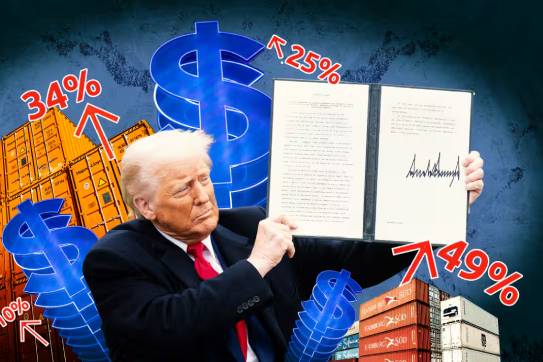
A deeper analysis reveals that the Russia–Ukraine war was merely a pretext. The real motive behind America’s actions lies in its desire to enter India’s agriculture and dairy sectors. This is a strategic move to balance the trade deficit the US has with India. Hence, the US is provoking India under pretences. But Prime Minister Modi has firmly declared that India will protect its 700 million farmers. To understand the implications: agriculture contributes around 20% to India’s GDP, and about 46% of Indians depend on it for their livelihood. If the Indian market opens to American agricultural and dairy products, Indian farmers would face direct and disastrous consequences. India currently imposes 100% import duties on US agricultural goods, making them prohibitively expensive. Yet, American corporations, eyeing India’s massive consumer base, are willing to absorb the cost. India does not want this penetration.
America’s Alternative Game Plan: Geopolitics with Pakistan
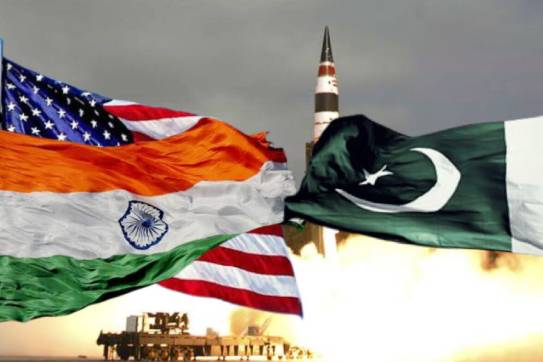
Let us now consider another dimension. If the Russia–Ukraine war ends, the US loses its immediate leverage over India. Therefore, it is already shifting gears and has taken Pakistan under its wing. According to Major General (Retd.) G.D. Bakshi, India must strategically dismantle Pakistan into five regions – Balochistan, Khyber Pakhtunkhwa, Punjab, Saraiki, and Gilgit-Baltistan to stabilise internal security. Shockingly, in alignment with Pakistan’s de facto ruler, Field Marshal Asim Munir, the US has designated the Balochistan Liberation Army (BLA) a terrorist organisation. This is a grave injustice. The BLA is engaged in a revolutionary armed struggle for the rights and freedom of the Baloch people, who have long suffered under brutal Pakistani oppression. Their struggle is strikingly similar to India’s pre-Independence revolutionary movement, the Hindustan Socialist Republican Association (HSRA) led by Bhagat Singh and Chandrashekhar Azad. Just as those revolutionaries fought to liberate India from British tyranny a century ago, the BLA is fighting for Balochistan’s liberation today. Thus, the creation of an independent Balochistan, from a humanitarian and strategic Indian viewpoint, is in India’s interest. But it is the US that has obstructed this cause, driven by its hunger for profit from the Indian market. In response, Prime Minister Modi has revived the slogan of Swadeshi (self-reliance), striking at the root of America’s economic ambitions in India. Meanwhile, to strengthen India’s geopolitical standing, India is making strategic overtures toward Nepal, China, and Russia.
The Dual Mantra: Peace and Swadeshi
Regardless of the surrounding complexities, India must prioritise two things: Expect the immediate end of the Russia–Ukraine war, and a renewed commitment to Swadeshi by Indian citizens. Whether this two-pronged strategy succeeds, only time will tell. But one thing must be ensured: India should not get splattered by the mud flung in global geopolitics.
Final LineEnding the Russia–Ukraine war and embracing Swadeshi, this dual mantra alone will secure India’s comprehensive national interest. |
 We receive tremendous support even from India, a nation of 1.4 billion people: Israeli Prime Minister Benjamin Netanyahu
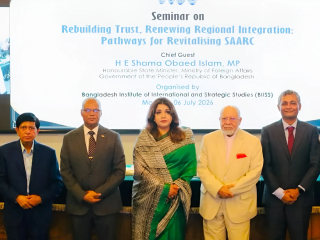 Bangladesh displays incorrect map of India !
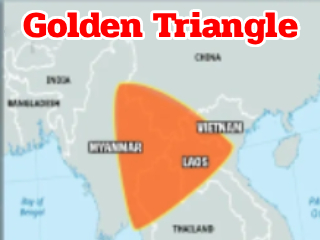 800 Indians held hostage in the ‘Golden Triangle’; 25 young men from Maharashtra among them
 While the US celebrated its 250th anniversary, NYC Mayor Mamdani’s wife attended an Islamic programme in Spain
 Unauthorised hoardings of political leaders erected right outside Mantralaya !
 We can eliminate Iran’s leadership in a snap ! : Trump warns