
The Research conducted here on Marathi Numbers

‘To study the frequencies emitted from the numbers 0 to 10 in Marathi, printed copies (Note 1) of each number were studied, using a pendulum. It is possible to measure the negative and positive energy present in objects, premises, or individuals, with the help of a pendulum. In this study, no negative energy was found in any of the numbers. The proportion of frequencies in each number have been perceived through the subtle dimension by Sadguru Dr. Mukul Gadgil.
Note 1 : For the study, Marathi numbers were selected.
MARATHI NUMBERS
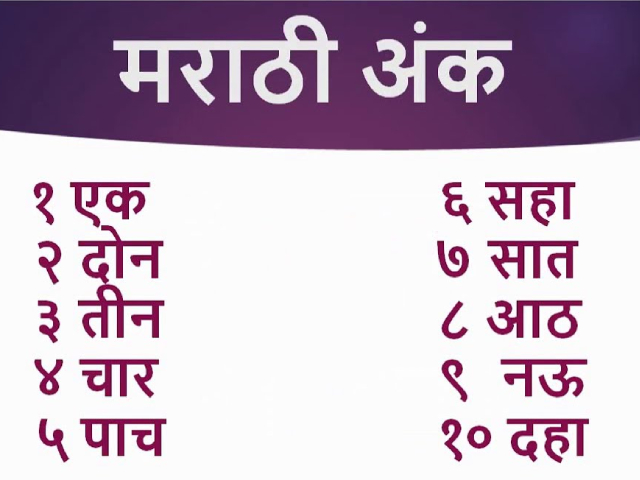
1. Observations of positive energy in the numbers ‘0’ to ‘10’ and the proportion of frequencies perceived in them.’
| Numbers | Positive energy aura (metre) | Proportion of frequencies in the numbers (Percentage) | |||||
| Shakti (Energy) | Bhav (Spiritual emotion) | Chaitanya (Divine consciousness) | Anand (Bliss) | Shanti (Serenity) | Total | ||
| 0 | 27.4 | 5 | 5 | 5 | 5 | 80 | 100 |
| 1 | 15.3 | 10 | 20 | 20 | 5 | 45 | 100 |
| 2 | 16.4 | 20 | 15 | 10 | 10 | 45 | 100 |
| 3 | 18.3 | 25 | 10 | 20 | 10 | 35 | 100 |
| 4 | 21.5 | 25 | 25 | 10 | 10 | 30 | 100 |
| 5 | 25.3 | 10 | 20 | 20 | 20 | 30 | 100 |
| 6 | 14.6 | 20 | 20 | 20 | 20 | 20 | 100 |
| 7 | 16.3 | 10 | 20 | 20 | 10 | 40 | 100 |
| 8 | 17.3 | 10 | 10 | 20 | 20 | 40 | 100 |
| 9 | 21.4 | 20 | 20 | 10 | 10 | 40 | 100 |
| 10 | 15.7 | 10 | 20 | 20 | 20 | 30 | 100 |
From the above observations, the points given ahead can be understood
1. The positive energy aura in the number ‘0’ is 27.4 metre. From the number ‘0’, frequencies of Shanti are emitted in the highest proportion.
2. The positive energy aura in the number ‘6’ is 14.6 metre. From the number ‘6’, all five types of frequencies are emitted in equal proportion.
3. The positive energy aura in the other numbers ranges from 15.3 metre to 25.3 metre. From these numbers, all five types of frequencies are emitted in varying proportions.
1 A. Conclusion : The level of positive energy in each number is different. This is because the proportions of frequencies of Shakti , Bhav, Chaitanya, Anand, and Shanti differ in each number. These frequencies of Shakti, Bhav, Chaitanya, Anand, and Shanti, become progressively subtler, and therefore increasingly more effective. Compared to other numbers, the number ‘0’ has the highest proportion of Shanti frequencies, and accordingly, its aura of positive energy is the greatest. The number ‘6’ has the least proportion of Shanti frequencies, and accordingly, its positive energy aura is also the least. In the other numbers, the proportion of Shanti frequencies is lower, while the proportions of other frequencies, such as Shakti, Bhav, and Chaitanya, are higher. Accordingly, the level of positive energy in each of them varies.

2. Observations recorded for the numbers ‘0’ to ‘10’ using the ‘RFI’ instrument
Using the ‘RFI (Resonant Field Imaging)’ instrument, the energy field of an entity such as an object, person, etc. can be measured in terms of its frequency (in the unit ‘Hertz’). With the help of the frequency chart provided along with this instrument, it can be understood which specific colour corresponds to a particular frequency. This chart includes a total of 16 colours.
2 A. Proportion of the three components in each colour : These proportions have been determined through subtle perception by Sadguru Dr. Mukul Gadgil.
| Colour | Amount of three subtle components (Sattva, Raja, Tama) in the colour (percentage) | ||
| Sattva | Raja | Tama | |
| 1.White | 100 | 0 | 0 |
| 2. Golden | 65 | 25 | 10 |
| 3. Blue | 55 | 25 | 20 |
| 4. Silver | 50 | 40 | 10 |
| 5. Yellow | 50 | 25 | 25 |
| 6. Green | 50 | 25 | 25 |
| 7.Orchid | 45 | 45 | 10 |
| 8. Orange | 45 | 25 | 30 |
| 9. Red | 40 | 40 | 20 |
| 10. Cyan | 40 | 25 | 35 |
| 11. Rose | 35 | 45 | 20 |
| 12. Purple | 35 | 45 | 20 |
| 13. Burgundy | 30 | 45 | 25 |
| 14. Navy blue | 25 | 25 | 50 |
| 15. Grey | 20 | 65 | 15 |
| 16. Black | 0 | 0 | 100 |
2 B. Frequencies measured for the numbers ‘0’ to ‘10’ using the ‘RFI (Resonant Field Imaging)’ instrument and their corresponding specific colours
Note 2 : The proportion of Sagun–Nirgun principle and the proportions of Sattva, Raja, and Tama components in the numbers have been determined through subtle perception by Sadguru Dr. Mukul Gadgil.

From the above observations, the following points can be understood :
1. The ‘frequency’ of each number is different.
2. The colours associated with the ‘frequencies’ of the numbers, cyan, green, yellow, blue, and golden, indicate progressively higher levels of Sattvikta (purity).
3. The proportions of Sagun (materialised) and Nirgun (non-materialised) principles, as well as the proportions of the three components, Sattva, Raja, and Tama vary in each number.
4. The number ‘0’ has the highest proportion of the Nirgun principle and Sattva component. Accordingly, the colour associated with its frequency is golden, which is the most Sattvik colour. (Refer to the table in ‘Point 2 A’.)
5. The number ‘10’ has the lowest proportion of the Nirgun principle and Sattva component. Accordingly, the colour associated with its frequency is cyan, which has a lower Sattva component compared to golden, blue, yellow, and green. (Refer to the table in ‘Point 2 A’.)

2 A. Conclusion : Each number has a distinct ‘frequency’. This is because the proportions of Sagun and Nirgun principles, as well as the proportions of Sattva, Raja, and Tama components, differ in each number. The greater the proportion of the Nirgun principle and Sattva component in a number, the more Sattvik is the colour associated with its ‘frequency’. Among the numbers ‘0’ to ‘10’, the number ‘0’ has the highest proportion of Nirgun principle and Sattva component, whereas the number ‘10’ has the lowest proportion of both.’
– Mrs Madhura Dhananjay Karve, Maharshi Adhyatma Vishwavidyalaya, Goa (19.9.2025)
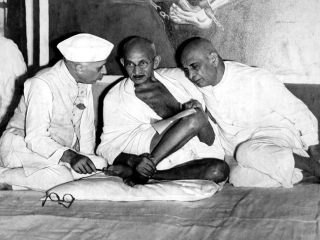 Nehruji’s Selection by Gandhiji for Congress Presidentship Again and Again
 A person’s nationality or foreign name cannot determine their faith in Hindu Dharma !
 Radiant Thoughts of Sachchidananda Parabrahman (Dr) Jayant Athavale
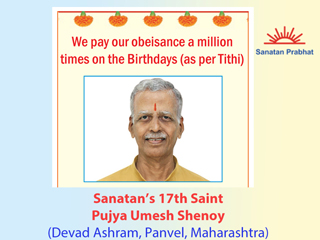 We pay our obeisance a million times on the Birthday (as per Tithi) of
 Major win for Hindu unity : Maharashtra Government suspends the controversial ‘Devasthan Inam Abolition Draft Act’
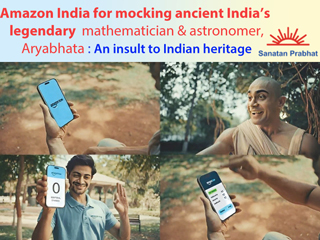 Amazon Insults Aryabhata : Hindu Janajagruti Samiti serves legal notice