
Studied the surface of 'LHS 3844 b' exoplanet, located 48.5 light years away from Earth
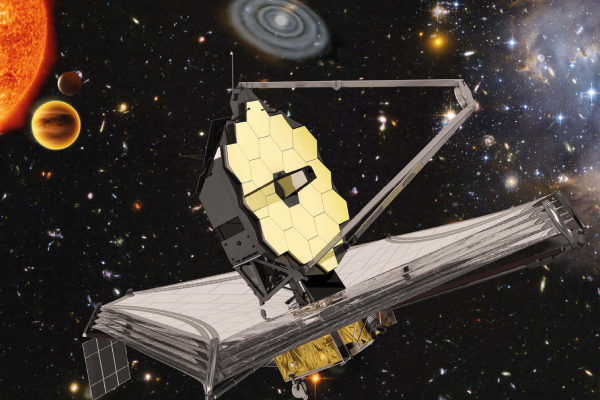
New York (USA) – Humans have discovered ‘exoplanets’ which are located outside our solar system and orbit their stars. In 1995, the US space research agency ‘NASA’ discovered exoplanet for the first time. In the next 30 years, humans have discovered as many as 6,000 exoplanets. This is a very small number compared to the billions of planets in the universe. However, the search for these planets has accelerated in the last 5 years. The speed of searches has increased through space-based telescopes like the ‘James Webb Space Telescope’ (JWST). Using the advanced technology of these telescopes, researchers are now exploring the geology of distant planets, which was never possible before.
No Earth-like geological activity on LHS 3844 b exoplanet
The JWST telescope has successfully analyzed the surface composition of the exoplanet LHS 3844 b. The planet is located 48.5 light-years from Earth. The telescope’s observation technology allowed scientists to isolate heat directly from the exoplanet’s surface. This method made it possible to study the geology without relying on atmospheric signals. The researchers compared the exoplanet’s infrared records with known rock types on Earth, the Moon, and Mars. The results ruled out silica-rich materials like granite, which are typically formed in water-based environments. This suggests that the planet does not have Earth-like geological activity.
The temperature of the planet reaches 725 degrees Celsius
Studies of the exoplanet’s surface show that it is tidally locked, meaning that one side of it always faces its star. The dayside is extremely hot, estimated to reach 725 degrees Celsius. This has a major impact on the formation of the surface.
Various findings suggest that the planet may have a layer of either solid rock or loose material, which will be clarified by future observations.
The study would help humans identify Earth-like environments in the universeThe success of the study by the James Webb Space Telescope is providing a blueprint for future studies of the composition of other exoplanets. It could also help in the future search for the earliest chemical signatures associated with exoplanet habitability. This next phase of planet discovery will improve our understanding of planetary systems. It will bring us closer to the ability to detect Earth-like environments elsewhere in the universe. |
 Ukraine launches drone attacks on 20 Russian vessels !
 Christian stabs Indian-origin Muslim over his religion in the US
 Pakistani Army opens fire on protesters in Pakistan-occupied Kashmir: 12 killed, 38 injured
 US to impose 100% tariffs on five countries, including India, for purchasing Russian oil !
 Trump withdraws 20% levy on vessels passing through the Strait of Hormuz
 Porous Borders, Shadow Operatives: Unpacking the Geopolitical Rift in the US-India Intelligence Relations