

Wing Commander Vinayak P. Davray (Veteran)
The Sanatan Rashtra Shankhnad for the year 2025 has been organized in India’s capital, New Delhi, on the 13th and 14th of December 2025. On this occasion, we shall see how deeply interconnected India’s great Sanatan cultural heritage, its valour, and its national security truly are. Among the profound principles given to us by Arya Chanakya is this, “Whenever a nation neglects its culture and the valour of its armed forces, the security of that country invariably falls into danger.”
Examples of this are visible throughout Indian history. Mighty empires had flourished across various regions of India since ancient times such as the Maurya, Vijayanagar, Satavahana, Chola, Hoysala, Gupta, Pandya, Pallava, Chalukya, Ahom and many others. Yet, the foreign invaders managed to conquer the parts of northern India. The Mughal domination over India commenced in the 16th century. The British entered Indian politics since the Battle of Plassey in 1757 and tightened their grip over the country. The primary reason these two foreign invasions succeeded was the neglect by Indians of their Sanatan culture, the valour of their armed forces, and their lack of unity. Despite the prior experience, India’s political leaders not only neglected the great nationalist Sanatan culture and the valour of the Indian armed forces for sixty-seven years following the partition of the country in 1947 but often mocked them. The nation suffered serious consequences of this neglect — and continues to suffer them even today.
Mockery of the Valour of the Armed Forces: A few Examples
1. Loss of Territory in Jammu and Kashmir (PoJK) in 1948
Disguised as Kabaili tribal raiders, the Pakistani Army troops attacked Jammu & Kashmir, intending to annex it, immediately after Independence in 1947. Maharaja Hari Singh of Jammu & Kashmir appealed to India for military assistance in October 1947 and signed the Instrument of Accession to India. India immediately sent military aid. The Indian Army fought bravely and pushed back most of the Pakistani aggression. But disregarding the advice of the Indian Army Chief, General Cariappa, Prime Minister Jawaharlal Nehru unilaterally halted the war midway and rushed to the United Nations. As a result, one-third part of the State of Jammu & Kashmir remained under Pakistan’s occupation (Pakistan-occupied Jammu & Kashmir, PoJK). India has never been able to recover that territory.
2. Loss of Territory in Arunachal Pradesh and Ladakh to China in 1962
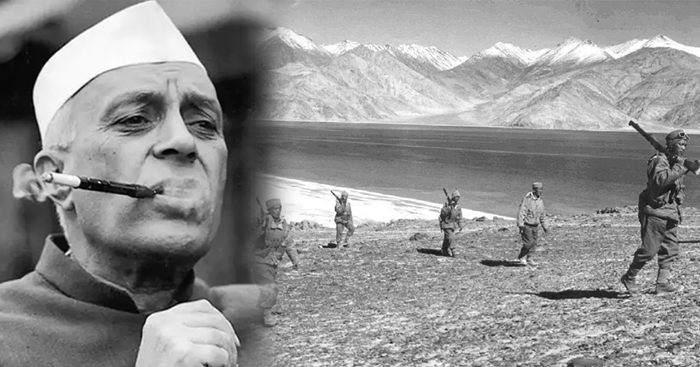
China invaded India in the Arunachal Pradesh and Ladakh regions, in October 1962. The then government, and especially Prime Minister Jawaharlal Nehru, had neglected the armed forces to such an extent that the Indian Army lacked even basic ammunition, and soldiers did not have warm clothing to withstand the harsh Himalayan winter. The Indian Army fought valiantly, but the comprehensive lack of military resources led to the nation’s security collapsing and to a humiliating defeat.
3. Return of the Captured Pakistani Territory Post-1971 War (Shimla Accord)
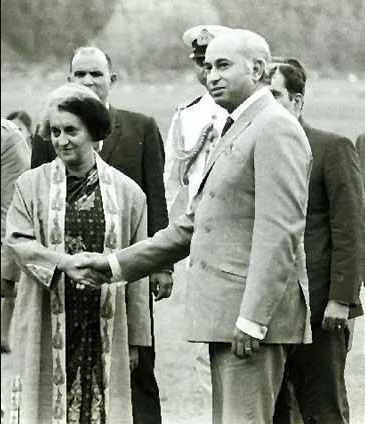
India achieved a decisive victory over Pakistan, in the 1971 India-Pakistan war. Ninety-three thousand Pakistani troops surrendered to the Indian Army, and India liberated Bangladesh. However, under the Shimla Accord signed in July 1972 between Prime Minister Indira Gandhi and Pakistani Prime Minister Zulfikar Ali Bhutto, India returned 13,000 square kilometres of territory captured during the war. Not a single military officer was included in the negotiations or even consulted, despite the victory having been achieved under the leadership of Field Marshal Sam Manekshaw and the valour of the armed forces.
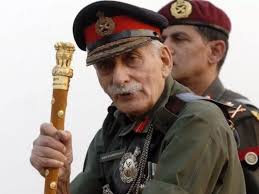
The successive Indian governments repeatedly mocked the valour of the armed forces. The Indian public too remembers the armed forces only during times of war. Some elected representatives, such as Members of Parliament, have even made derogatory remarks about soldiers.
Absence of Cultural and National Pride
Image “Not a blade of grass grows in Aksai Chin region. Why should we fight for that land?”
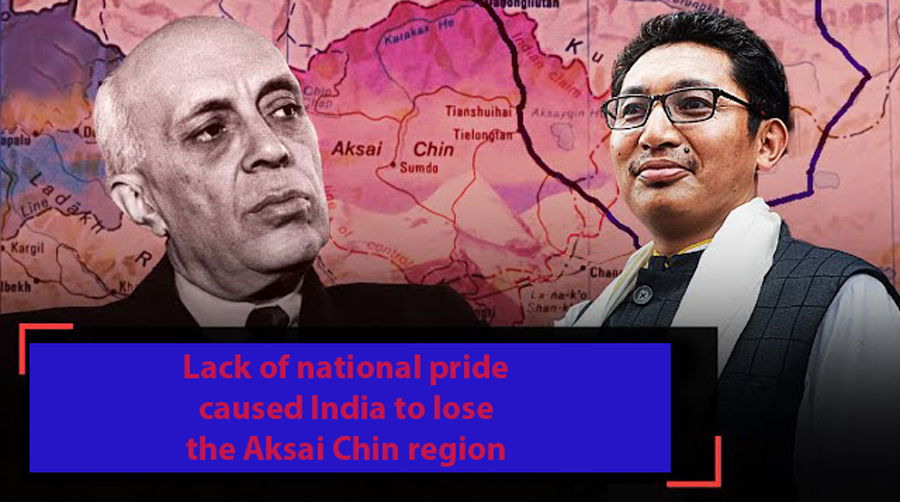
China occupied the Aksai Chin region of Ladakh, in 1959. Instead of taking action to reclaim India’s territory, Prime Minister Jawaharlal Nehru stated in the Indian Parliament, “Not a blade of grass grows in Aksai Chin region. Why should we fight for that land?”
Such a lack of national pride caused India to lose the Aksai Chin region. It does not seem possible that India will ever recover it.
When Sanatan Culture and Military Valour Are Honoured, Victory Follows
Conversely, when India’s great Sanatan national culture, the valour of the armed forces, and sound strategy are given priority, victory is achieved and national security remains strong. Here are a few examples from the recent history, demonstrating how noble Sanatan culture, military valour, and excellent strategy together lead to success.
1. Chhatrapati Shivaji Maharaj
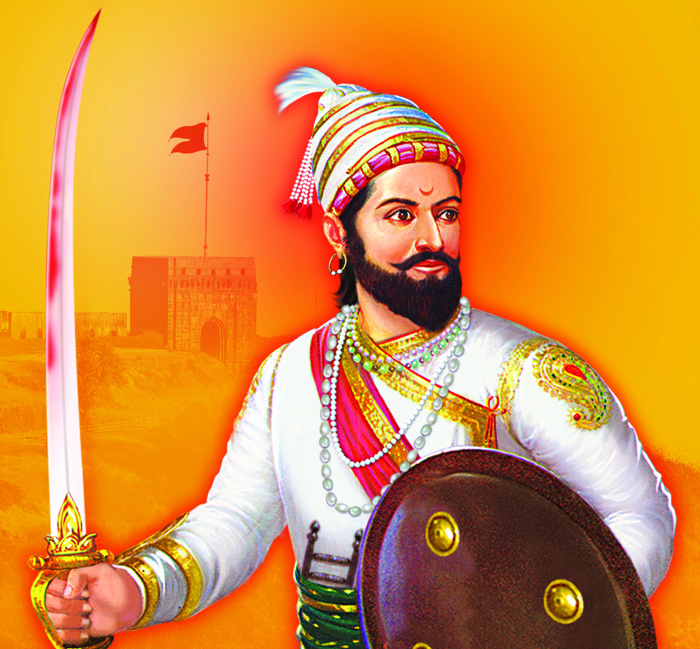
The Swarajya of Chhatrapati Shivaji Maharaj was surrounded by powerful Mughal empire and Muslim kingdoms (Adil Shahi, Nizam Shahi, etc.) from all sides. Chhatrapati Shivaji Maharaj awakened national pride among the common people and established the Hindavi Swarajya and coronated himself as a Hindavi king in 1674. He built the Maval infantry from the mountains of the Sahyadri. With the valour of this army, he defeated the vast forces of the Mughal Sultan of Delhi and the Adil Shahi kingdom. Such a victory was possible because of Sanatan national culture, military valour, and outstanding strategy.
2. Peshwa Bajirao-I
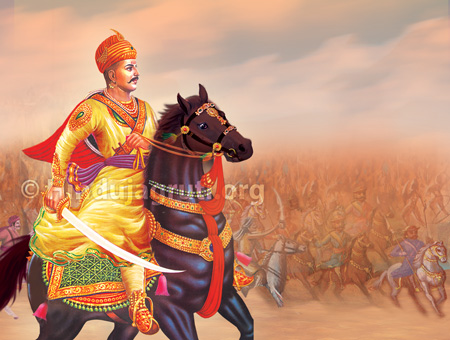
Peshwa Bajirao-I fought and won the decisive Battle of Palkhed against the Nizam-ulMulk of Hyderabad in February 1728. The army of Nizam-ul-Mulk was three times larger than Peshwa Bajirao’s. however, Peshwa Bajirao-I won the battle and forced the army of Nizam-ul-Mulk to surrender. Behind this victory were noble Sanatan culture, military valour, and brilliant strategy.
3. Indian Victory in the 1965 Indo-Pak War
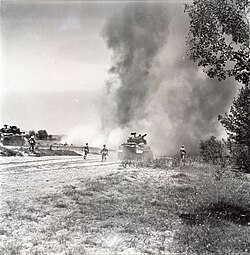
The United States of America had supplied Pakistan with the modern weaponry before the 1965 India-Pakistan War — especially fghter aircraft and invincible Patton Tanks, which were far superior to India’s fghter aircraft and Sherman and Centurian Tanks of the Second World War vintage. Despite Pakistan possessing the American-supplied superior weaponry, the Indian armed forces defeated Pakistani armed forces, through their valour, nationalist spirit and grit.
4. Indian Victory in the 1971 Indo-Pak War
Pakistan had full support from the United States of America and the Western powers during the 1971 India-Pakistan War. However, India defeated the Pakistani armed forces, which resulted in the surrender of 93,000 Pakistani soldiers and creation of Bangladesh. Such a victory was made possible by the valour, nationalist spirit and excellent strategy of the Indian armed forces.
5. Indian Victory in the 1999 Kargil War
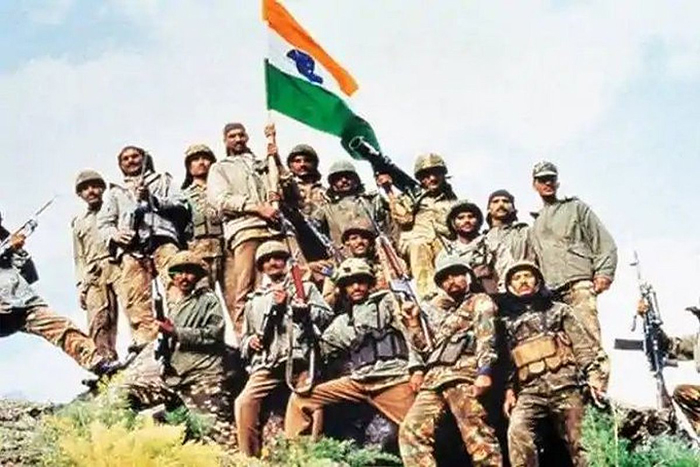
The Pakistani troops crossed the Line of Control (LoC) in the Kargil sector of Jammu & Kashmir and captured hundreds of Indian posts, during the winter of 1998–99. The Northern Light Infantry (NLI) of the Pakistani Army was recruited from the mountainous region of Gilgit-Baltistan. Hence, they could fght in the mountainous region without getting affected by the High-altitude Sickness. Despite harsh weather, the Indian Army recaptured all the posts and defeated the Pakistani armed forces, again due to its national spirit, valour and excellent military strategy.
6. The Overwhelming Victory of ‘Operation Sindoor’ (May 7–10, 2025)
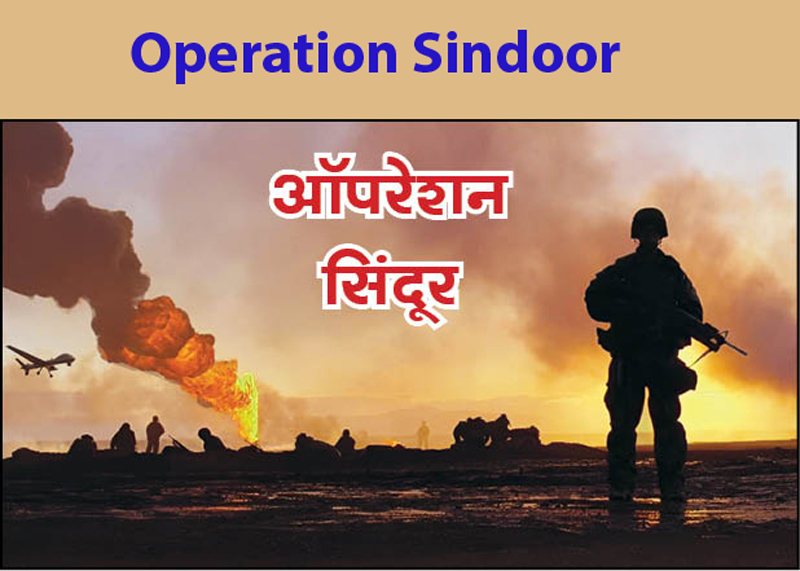
The Indian armed forces demonstrated exceptional valour in the successful ‘Operation Sindoor’, during the four days from May 7 to May 10, 2025. Nine major terrorist bases were destroyed on the very frst day. On the next day, the Pakistani Army launched hundreds of drones and missiles at ffteen Indian airbases. India’s robust Integrated Air Defence System prevented even a single drone or missile from reaching any Indian target. Tht was followed by India destroying the Pakistani Air Defence System and achieving an ‘air superiority’ over the Pakistani airspace. In the early morning of May 10, Indian armed forces conducted precision strikes on eleven Pakistani ‘Command and Control Centres’ destroying them all. As a result, Pakistan’s Director General Military Operations (DGMO) requested India’s DGMO to stop the war on May 10. The Indian armed forces achieved an
unprecedented and decisive victory within just 88 hours. This achievement clearly
displayed the valour, grit and nationalist spirit of India’s armed forces; the autonomy granted by India’s political leadership to military leadership; and the self-reliance India has built over the past eleven years.
The Sanatan Concept of ‘Nation and Nationality’
The concept of Nation and Nationality exists since Vedic times in the ancient Sanatan Indian culture. This concept is described in the tenth chapter of the Yajurveda. During the coronation of a king, among the sacred verses recited during the ritual of sprinkling of consecrated water, the second verse is a prayer to the holy waters of Saptasindhu (seven oceans and sacred rivers):
वषणृ उरमरि सी राषदा राषं मे देहि सवािा वषृ णS उरमरि सी राषदा राषममुषमै देहि
वषसेनोरसृ राषदा राषं मे देहि सवािा वषृ सेनोरस राषदा राषममुषमै देहि ।।
(O streams of the sacred Sapta-Sindhu (seven oceans and sacred rivers), empower the King to protect the Nation. Grant such valour to the King and his mighty army that they may build a prosperous nation and safeguard it with excellence. O streams of the sacred Sapta-Sindhu, for this purpose we offer this sacred oblation unto you.)
This verse, along with the ten succeeding verses in the tenth chapter of the
Yajurveda, describes the ideas of Nation, Nationality, Culture, and Valour. Signifcantly, during the flag-hoisting ceremony at the Shri Ram Temple in Ayodhya on 25 November 2025, these very verses from the Yajurveda were recited.
As stated earlier, the Yajurveda teaches that it is the foremost duty of all citizens to inculcate in themselves the sense of Nationhood and National identity rooted in the eternal (Sanatan) culture of Bharat.
All educational institutions of Indian Armed Forces nurture this sense of national identity. A soldier inspired by such nationalism attains victory on the battlefield through courage, regardless of how adverse the circumstances may be. The nationalist spirit is inculcated and nurtured among the citizens by Rashtriya Swayamsevak Sangh consistently for the past one hundred years.
Strengthening National Security by Nurturing Culture and Military Valour : Foreign Examples
The principle that ‘national culture and military valour strengthen national security and lead to victory in war’ can also be observed in other nations. The major examples include:
1. Vietnam
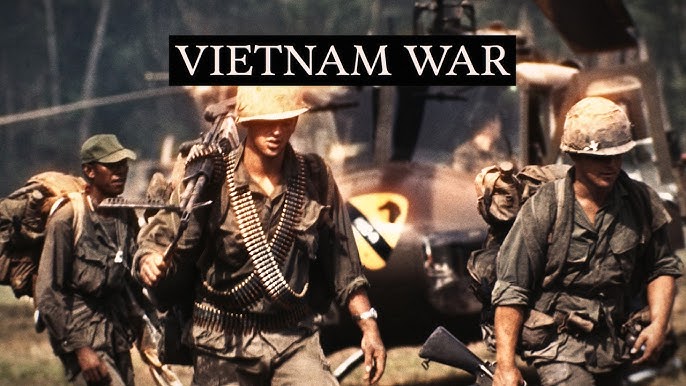
The war imposed by the United States of America on Vietnam lasted twenty years, from 1955 to 1975. The United States fought on behalf of South Vietnam against North Vietnam. South Vietnam’s military strength was severely limited compared to the formidable U.S. Armed Forces. However, South Vietnam was blessed with nationalist and determined leadership of Ho Chi Minh. Ho Chi Minh awakened patriotism in the hearts of his people, inspiring them through national identity and valour. Without giving up against the overwhelming American military might, the Vietnamese fought relentlessly for twenty years and eventually defeated the United States armed forces. That culminated in the reunification of North and South Vietnam, leading to a single nation Vietnam.
2. Afghanistan
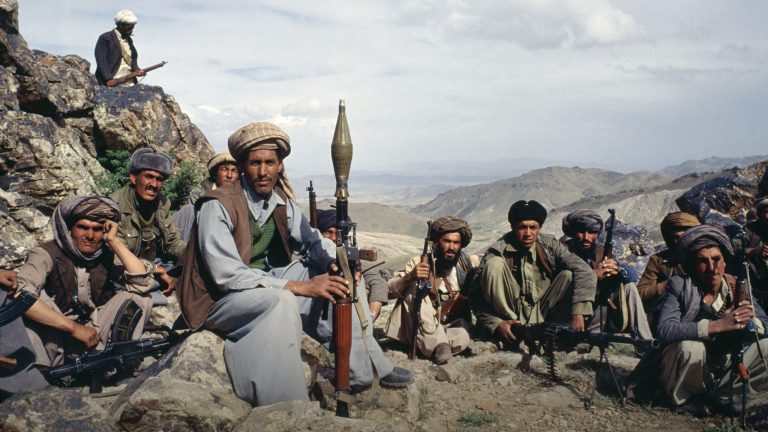
Afghanistan faced two major foreign invasions in recent history.
A. The Invasion by the Soviet Union
The frst was the Soviet invasion in 1979. The Afghan freedom fghters — driven by their culture and nationalism — fought bravely against the Soviet forces for ten years. The Soviet invaders were compelled to withdraw from Afghanistan in 1989
B. The Invasion by the United States of America
After the 9/11 attacks in the United States in 2001 — masterminded by Osama-binLaden and his Taliban organisation operating from Afghanistan — the United States invaded Afghanistan and occupied it. Once again, Afghan freedom fghters, inspired by culture and nationalism, fought courageously against the overwhelming military might of the U.S. armed forces. They continued their freedom struggle for twenty years without wavering. Fuelled by deep cultural identity, nationalism, and bravery, they eventually defeated the U.S. armed forces in 2021 and drove them out of Afghanistan.
Preserving the heritage of our Sanatan national culture, continually nurturing a
sense of national identity, and keeping alive the valour of all citizens — especially the Armed Forces — is the essence of national security. On the auspicious occasion of the Sanatan Rashtra Shankhnaad, let us, the people of India, pledge :
“We shall preserve the heritage of our Sanatan national culture, uphold the spirit of nationalism, and honour and encourage the valour of the Indian Armed Forces.”
 Radiant Thoughts of Sachchidananda Parabrahman (Dr) Jayant Athavale
 We pay our obeisance a million times on the Birthday (as per Tithi) of
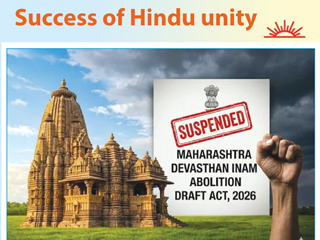 Major win for Hindu unity : Maharashtra Government suspends the controversial ‘Devasthan Inam Abolition Draft Act’
 Amazon Insults Aryabhata : Hindu Janajagruti Samiti serves legal notice
 Murtis of Hindu Deities found in the basement of Jama Masjid in Bharuch (Gujarat)
 Secularism and the ‘Hindu Rashtra’