
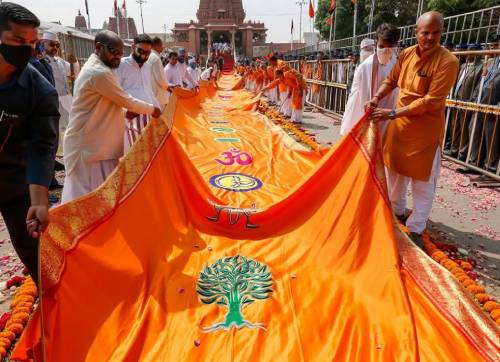
On the auspicious occasion of Margashirsha Shukla Panchami – the very muhurta of Sita-Swayamvar that has arrived after 8,800 years, the grand consecration of the Ram Temple in Ayodhya reached its final, historic culmination. The construction of the temple of Maryada Purushottam Shri Ram is now complete, and atop its golden pinnacle now flies a radiant, living Dharma-Dhvaj (sacred flag). This divine flag will stand as the symbol of the renaissance and revival of Sanatan Dharma.
In the Sanatan tradition, the Dharma-Flag holds an extraordinary place of honour; it is the emblem of the nation’s very existence. Our tradition states: “A nation must reflect the ideals of Ram Rajya.”
That the temple’s summit now bears the Dharma-Flag featuring the divine Kovidar tree, the radiant sun of the Suryavanshi Raghu Vansh (dynasty), and the cosmic seed-mantra ॐ (Om) marks the beginning of a renewed national consciousness. Ram Lalla has not merely been installed in the sanctum; He has now taken His seat in His royal court. In the days to come, this flag will continue to radiate Shri Ram’s divine vibrations into the atmosphere and propel the establishment of Ram Rajya, which, by all signs, is not far away.
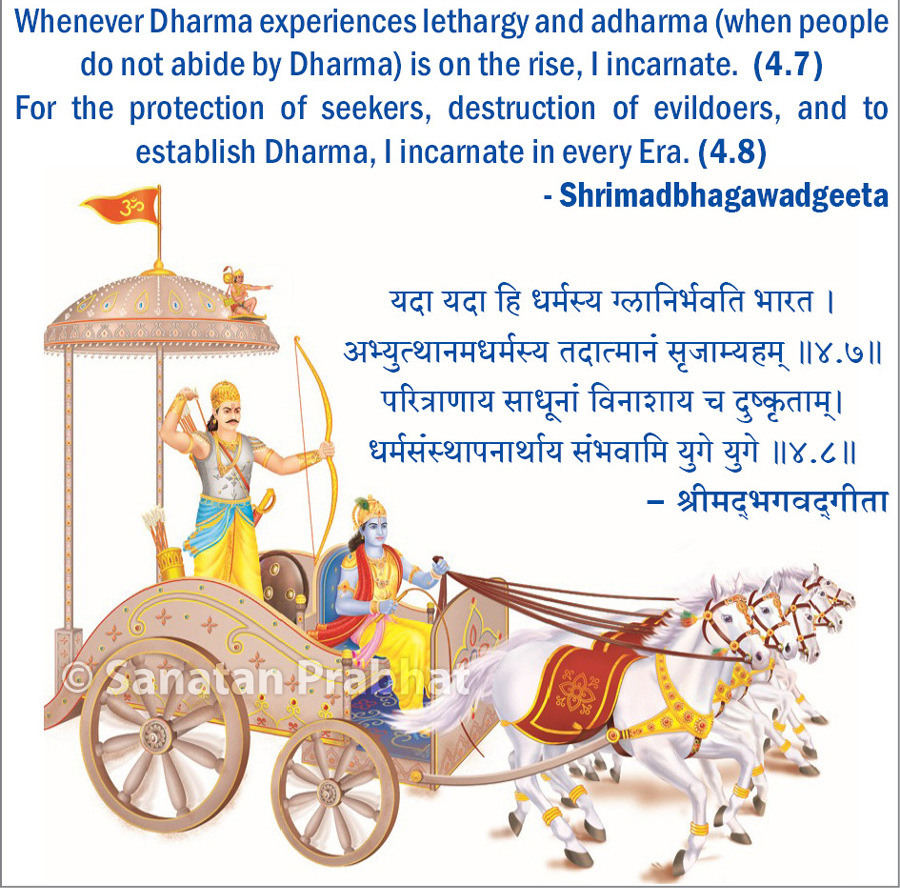
A Dharma-Flag that Inspires Energy, Resolve, and Momentum
In the divine, majestic and newly transformed Ayodhya, the installation of the Dharma-Flag on 25 November 2025, accomplished in the presence of saints and spiritual leaders, and performed by Prime Minister Narendra Modi along with RSS Sarsanghachalak P. P. Mohanji Bhagwa,t is a day of supreme fortune for all devotees of Shri Ram and all patriots.
This day is truly historic because the presence, energy, and sanctity of this Dharma-Flag will inspire Hindus in the coming era to undertake the national task of restoring, rebuilding, and reorganising the nation. True Sanatan Rashtra will manifest only when Ram Rajya manifests. The divine energy required to establish this ideal state will be continuously supplied through this Dharma-Flag, direct from Shri Ram Himself.

Just as the completion of the Ram Temple ignited a firm resolve for the re-establishment of a Hindu Rashtra, the consecration of the Dharma-Flag atop the temple now ensures that this mission will gain unstoppable momentum. In this context, it is noteworthy that the Prime Minister urged the country to discard its mentality of colonial inferiority and reconnect with its inherent identity – its swatva, swadeshatva, and its civilizational essence, while also specifying a time-bound objective.
Establish Shri Ram in Your Inner Being
Prime Minister Modi used this sacred moment to gently but powerfully connect the event to the larger project of nation-building and bestowed upon Indians an expansive national vision. His evocative description of Shri Ram moved the hearts of devotees while simultaneously planting new seeds of patriotism.
His ten-year national goal – to free India from the psychological slavery of the West begins with transforming the educational curriculum and extends all the way to reforming daily conduct, lifestyle practices, and spiritual discipline. His call to awaken the principle of Shri Ram within one’s inner being lays the very foundation of a future self-reliant and spiritually awakened India.
Sarsanghachalak P. P. Mohanji Bhagwat noted in his address that the world now looks to India with hope as the nation that will guide the future. To fulfil this responsibility, every Indian must install the Dharma-Flag of Shri Ram in the temple of the heart. The divine court of Shri Ram has now manifested physically; its governance must now begin.
Therefore, the responsibility to bring Ram Rajya onto Indian soil lies as much with the people as with the government. The Prime Minister also urged citizens to visit the newly created shrines of the Saptarshis and other members of the Ram Parivaar, such as Mata Shabari, King Nishadraj, Hanuman, and Lakshman – each of whom embodies the virtues that made Ram Rajya possible.
He reminded the nation that we must think not merely of the next decade but of the next millennium. As P. P. Bhagwatji said, regardless of difficulties, we must remain steadfast in our efforts. Spiritually too, the coming millennium belongs to Hindu Dharma; the Hindu Rashtra that emerges will sustain itself across centuries. But to build such an ideal state, Hindus must begin now starting with themselves. Only a strong foundation of devotion to Shri Ram can secure the path toward Ram Rajya.
From the Ram Temple to a Nation-Temple
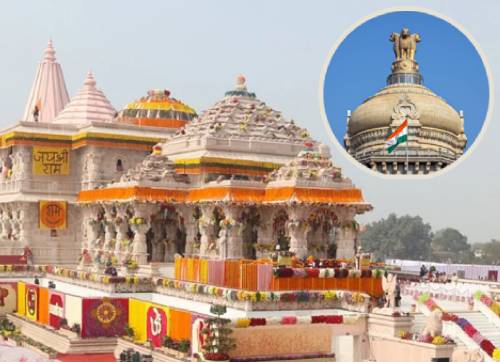
Shri Ram ruled for 10,000 years after performing the Ashwamedha Yagya and conquering the entire earth. The entire world recognised the perfection of Ram Rajya. Today’s India too can lay the foundation for the next millennium only through a synthesis of economic development and spiritual evolution.
Righteous citizens and a dharma-abiding ruler were the two essential pillars of Ram Rajya. The temples of Shri Ram in Ayodhya, built by King Vikramaditya in the 3rd century, by Skandagupta in the 6th century, and by King Meghasetu in the 12th century, were destroyed by Babur. Over 500 years, countless Ram Bhakts, patriots, and saints made immeasurable sacrifices for the rebuilding of Shri Ram’s temple; today’s temple stands upon their martyrdom.
The souls of those who sacrificed their lives for the Ram Mandir must certainly be at peace today. But just as the struggle did not end with winning independence, nation-building had to begin; the struggle does not end with the installation of the deity. Now begins the real task: building an ideal nation.
If Ram Rajya is to manifest, there must be equal justice for all, safety for women, and firm adherence to discipline. Government and citizens alike must work tirelessly to bring these principles into practice. In Ram Rajya, both king and subjects shared a bond of respect, duty, and affection. That balance must be re-established.
Security is the foremost duty of a nation. Though efforts are underway, the State has not yet adopted a complete “zero tolerance” towards internal threats, be it jihadist elements or other forces of social decay. Crime, corruption, violence, and moral degradation continue to rise. Only when offenders undergo deep inner transformation, perhaps even through spiritual disciplines such as constant recitation of Ram Naam, can true reform take place.
One hopes that the Dharma Flag atop the Ram Temple will inspire the government, the administration, and the people to take these responsibilities seriously.
According to the divine message symbolically emanating from this flag, the developed India of 2047 envisioned by the Prime Minister must be more than an economic superpower; it must be a spiritual superpower, a Vishwaguru Bharat.
As this flag proclaims, India is destined in the coming years not merely to become an “economic giant,” but to be recognised as a beacon of spiritual leadership for humanity. To honour this sacred call, every patriot and devotee must now embrace Ram Naam, unity, and unwavering dedication to Dharma.
India can lay the foundation for the next thousand years only through spiritual as well as economic development.
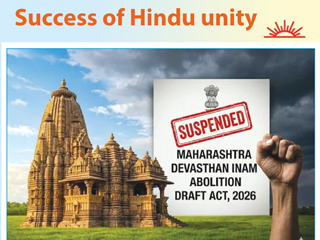 Major win for Hindu unity : Maharashtra Government suspends the controversial ‘Devasthan Inam Abolition Draft Act’
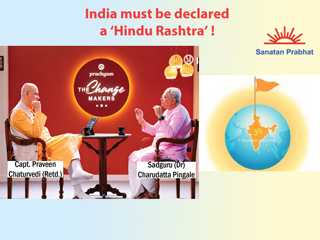 Secularism and the ‘Hindu Rashtra’
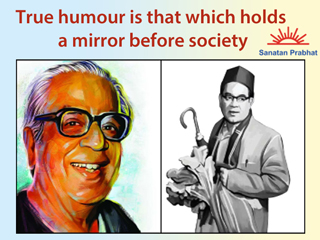 Who are the true comedians ?
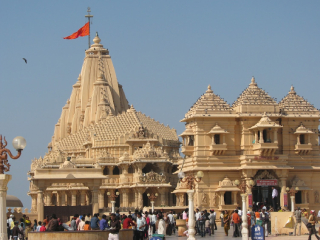 Mandirs : The Building Blocks of the Rashtra
 Subtle changes observed in March 2026 in the Sanatan-made picture of Shriram in the temple in Sachchidananda Parabrahman (Dr) Athavale’s room and their spiritual analysis
 O’ Donors ! Offer wealth for the Dharma-related mission on Guru Purnima !