
Ayurveda for a healthy life- 63/2025 on 1.11.2025
The following diet is contraindicated for obesity
1. Cereals : Rice, wheat, jowar and bajra should be reduced gradually.
2. Starchy food items : Arrowroot, tapioca, sago grain, potato and sweet potato.
3. Pulses – Udid (black gram).
4. Nuts and dry fruits – Groundnut, til (sesame seeds), coconut, cashewnut, almond and walnut.
5. Meat – Fish and meat (mutton).
6. Milk products : Ice cream and kulfi.
7. Taste : Sweet, sour and salty food items.
8. Fat : Ghee, butter, cream, animal fat, oil and fried food items.
9. Sugarcane products : Sugarcane, sugar, jaggery. Do not add sugar to tea and coffee.
10. Wine : All types of wine and alcoholic drinks.
F. Activity : The period of keeping awake at night, frequency of intercourse and duration of exercise should be gradually increased. Avoid sleeping during the day as well as excessively. Excessive travelling and exposure to the sun are also useful. Exercise is of immense value as it increases the usage of calories. The duration and intensity of exercise should be gradually increased.
G. Massage : Massaging the skin with a dry powder of triphala or agaru.
H. Smoking : Smoking medicated cigarettes prepared from medicines which subdue Kapha and fat are helpful.
I. Psychological state : One should not remain idle and should remain busy with some constructive work.
J. Panchakarma treatment : It includes induction of sweating and vomiting, administering purgatives, blood letting (i.e. extraction of 50 ml to 100 ml of blood every 6 months) and evacuation enema should be administered intermittently to obese individuals.
1. Evacuation enema
The evacuation enema should be prepared from triphala kvath, cow’s urine, honey, salts like borax and javakshara and a decoction of medicines belonging to the ushakadi group. The enema should be prepared from a decoction of hot and dry items.
8. Medicines in obesity
A. Medicated diet
1. One teaspoonful of honey should be taken with one glass of warm water before meals.
2. One ounce, i.e 30 ml of cow’s urine should be taken twice a day for three to six months.
3. One to two ounces, i.e 30 ml to 60 ml of takra arishta, i.e wine prepared from buttermilk should be taken twice a day for 3 to 6 months.
4. Ginger, pepper, long pepper, triphala, vidanga, ajamoda (celery) and honey should be added to kanji prepared from yava (barley) and taken daily.
B. Powders (Churna)
1. One to two teaspoonfuls of triphala should be taken twice a day with hot water for six months.
2. One teaspoonful of haritaki powder should be taken with honey.
3. One to two teaspoonfuls of a powder or a decoction of guduchi, bhadra and musta twice a day with hot water for six months.
4. One to two teaspoonfuls of ginger, pepper, long pepper, musta, triphala, vidanga and guggul in equal quantity should be taken twice a day for three to six months.
C. Decoctions
1. A decoction of chitrak, pippali, sunth (dry ginger), vidanga, amalaka and guduchi should be taken.
2. A decoction of punarnava, kadunimba, sunth, daruharidra, haritaki, kutaki and snake gourd should be taken.
3. A decoction of vidanga, haritaki, punarnava, bharangamula
and vekhand should be taken.
4. A decoction of murudshinga, kadechirait, vidanga, arjuna, daruharidra, turmeric, kadunimba leaves, kutaki and punarnava should be taken.
5. A decoction of haritaki, triphala, patha, nagarmotha, kadunimba and madanaphala should be taken.
6. A decoction of sunth, pepper, pippali, triphala, drumstick, kutaki, turmeric, daruharidra, ativisha and hinga (asafoetida) should be taken.
7. A decoction of triphala, khadira, kadunimba and turmeric should be taken.
8. A decoction of guduchi, nagarmotha, triphala, vidanga, sunth, javakhara, amalaka, loha bhasma (iron salt) and ajamoda (celery) should be taken.
9. A decoction of sunth, pepper, pippali, erandamula (castor roots), mustard seeds and bhallataka (marking nut) should be taken.
10. A decoction of guduchi, bhadra, musta and triphala should be taken.
11. A decoction of triphala, aragvadha, patha, saptaparna, kutaja, musta, madanaphala and nimba should be taken.
D. Market preparations
1. Two tablets of shilajit should be taken twice a day with the juice of agnimantha.
2. Two tablets of triphala guggul should be taken twice a day.
3. Two tablets of chandraprabha vati should be taken twice a day with cow’s urine.
4. One tablet of arogyavardhini should be taken twice a day with a decoction of punarnava.
5. 120 mg. to 240 mg of suvarna makshika should be taken twice a day for six to twelve weeks.
6. 120 mg. to 240 mg of fine iron powder
9. Treatment of foul odour due to excessive sweating in obese individuals
1. Application of a dry powder of priyamgu, lodhra, haritaki and sandalwood.
2. Application of a paste of shankha bhasma in fresh juice of leaves of vasa.
3. Massage with triphala powder.
10. What is the role of exercise in controlling weight ?
Exercise increases the activity of the muscles as a result of which a lot of energy is spent. This energy is derived from food. In case the food supply is inadequate, the energy is derived from the fat accumulated in the body.
Exercise stimulates appetite. If one eats more food, a part of it will be utilised as energy for exercise and a part of it will accumulate in the body in the form of fat. Hence it is important to restrict the diet while undertaking exercise. In addition, exercise should be gradually increased so that one does not get exhausted.
11. Is surgery of any use in reducing body weight ?
In obese individuals, fat is distributed all over the body though it accumulates more on the abdomen, buttocks and breasts. It is not practical to remove chunks of fat from various parts of the body. However in selected cases, intestinal bypass helps in controlling weight. In this surgery, the food is diverted from the upper part of the small intestine into the large intestine so that most of the food is not absorbed. It is always better to avoid a surgical operation as far as possible. However if the weight of the person is 50 Kg more than the expected weight or if the weight is not controlled by restricting the diet and with medicines, only then should one consider surgical measures.
Obesity is a disease and controlling one’s gustatory desires, i.e, controlling one’s food intake is the best treatment.
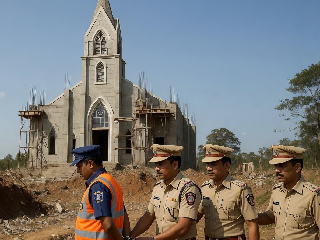 Illegal church in Solapur and misconduct by a municipal employee to be investigated
 Radiant Thoughts of Sachchidananda Parabrahman (Dr) Jayant Athavale
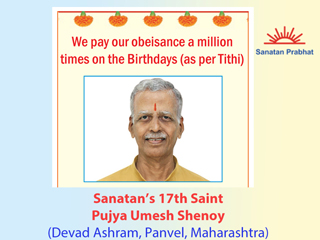 We pay our obeisance a million times on the Birthday (as per Tithi) of
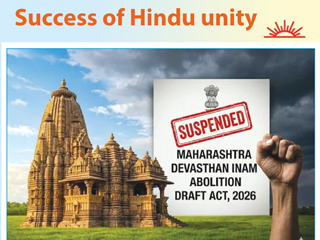 Major win for Hindu unity : Maharashtra Government suspends the controversial ‘Devasthan Inam Abolition Draft Act’
 Mumbai-based advocate Siddhavidya, who is trying to stop trafficking through surrogacy (artificial pregnancy) and animals, and animal killing
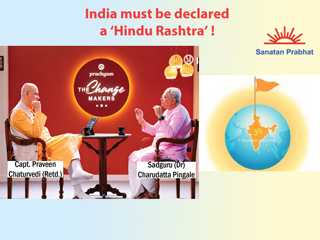 Secularism and the ‘Hindu Rashtra’