
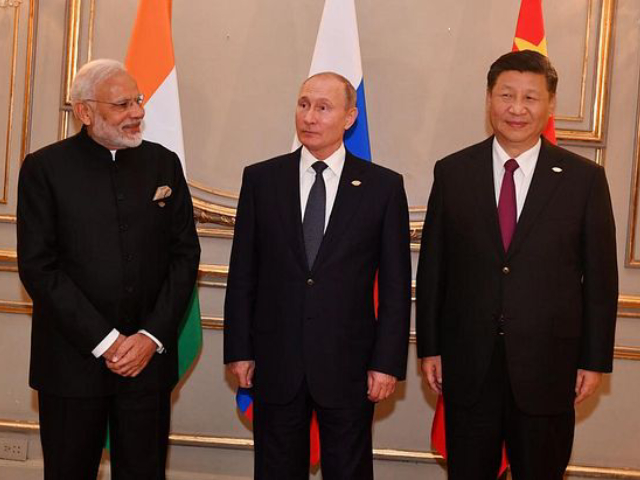
The rapidly shifting global political equations are currently the most dynamic force shaping our world. In these shifting sands, geopolitical factors lend critical strategic weight to such equations. Just as America fired its guns from Ukraine’s shoulders to confront Russia, a similar pattern unfolded with Israel and its fiercely anti-American neighbor, Iran. The ongoing India-Pakistan military conflict also echoes this pattern, albeit with diplomatic nuances.
A New Dilemma
China has long been making intense efforts to steer the politics of the Indian subcontinent and its own neighborhood in its favor. After India humbled China’s ambitions in the Galwan Valley clash in June 2020, relations between the two nations had severely deteriorated. In the wake of the Pahalgam incident, India’s “Operation Sindoor,” and the subsequent military conflict between India and Pakistan, there are whispers that China may jump into this war. For now, the situation appears calm on the surface, but in this tangled web, Russia—scorched by NATO and the United States—has made a decisive move. Russia’s Foreign Minister Sergei Lavrov has openly hinted at renewing trilateral ties between India, China, and Russia calling it as “the right time to revive the troika”. These relations had been at a standstill for the past five years following the Galwan standoff, and Russia’s new stance has left many puzzled.

Traditionally, Russia had been a genuine ally of India and America on the other hand has showcased its detrimental duplicity. During Donald Trump’s second term, he hinted at deepening relations with Prime Minister Modi. However, just days later (in February 2025), this so-called “friend of India” approved a $397 million package for the maintenance of Pakistan’s existing F-16 fighter jets—aircraft that had been supplied to Pakistan earlier. The US claimed it had ensured Pakistan’s pledge that these jets would be used solely for counter-terrorism, not against India, and only then provided assistance. However, Pakistan went on to use those very F-16s against India during “Operation Sindoor.” This exposes America’s facade of supporting India—it’s nothing more than empty words and token gestures. It’s not far-fetched to suspect that the anti-India actions in Pahalgam had America’s covert backing, and that the military aid given to Pakistan two months ago stands as evidence of this.
A Treacherous China—An Ally for India ?
Russia is looking for an opportunity to counter its duplicitous and self-serving adversary, the US. In this context, Russia’s initiative to revive trilateral ties with India and China after the India-Pakistan conflict points toward alternative strategic options. Whether it’s US-Russia or US-China, both bilateral relationships aim to polarize the world. As the world’s fourth-largest economy and military power, India is an obvious target for alignment by global superpowers. While Russia, India’s traditional ally, and its bloc may seem more favorable for India, the presence of an expansionist China as a key member of this bloc complicates the picture. China lays claim to Arunachal Pradesh, Ladakh, Aksai Chin, and several parts of the Himalayan range. It is also trying to rope in Nepal, Bangladesh, Sri Lanka, and the Maldives through diplomatic maneuvers and strategic influence. China’s recent meeting with Sri Lanka to tighten economic ties was reported by the Chinese mouthpiece Global Times. The China-Pakistan Economic Corridor (CPEC) is yet another major initiative aimed at challenging India. China is also attempting to mediate peace between Pakistan and Afghanistan. Notably, China was the first country to officially host a Taliban envoy. Given all this, it’s difficult to predict whether India-China-Russia will truly come together to shape global strategies in the future. Geopolitical factors are far more sensitive and directly impactful than political or ideological posturing—geographically proximate countries pose direct challenges in trade, economy, and military spheres. To safeguard India’s territorial integrity and sovereignty, and to counter China’s ambitions, India must handle China with astuteness—without alienating the US.
The New Normal
Until now, India’s diplomatic approach revolved around the twin pillars of “caution” and “cooperation.” Now, however, “aggression” has been added as a third pillar. Congress leader Shashi Tharoor’s statements on India’s policy toward Pakistan and jihadist terrorism reflects this shift. India has dispatched all-party delegations to the US, UK, France, Russia, Japan, Saudi Arabia, and Bahrain to expose Pakistan’s terrorist face. Speaking to the Indian diaspora in Panama on May 27th, Shashi Tharoor clearly stated that any act of terrorism on Indian soil would be considered as an act of war, and India would respond in the strongest terms. He called this India’s “new normal” policy — a shift beyond Gandhi’s doctrine of “turning the other cheek” and instead, acknowledging the relevance of Savarkar’s ideology. Amusingly, Congress seems to have shelved Gandhi and is now affirming Savarkar’s relevance. Nonetheless, Tharoor clarified that India’s message is clear: “Leave us alone. We are focused on the development of our citizens and providing them with a better life. Do not challenge us.” This message of cautious aggression is not just directed at Pakistan—it is also a message to China. While this strategy may seem beneficial for India in the near future, it’s crucial to remember that India must sustain its efforts to eliminate Pakistan-sponsored terrorism and to keep China in check.
| Final Line : As the potential India-China-Russia alignment poses challenges for India, the policy of “caution and aggression” will remain the most prudent course. |
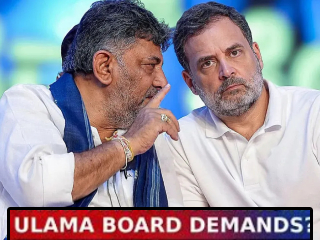 Karnataka: Ulema demand three ministerial berths for Muslims from Congress
 Priyank Kharge’s conspiracy to divide Hindu society ! : Kota Srinivas Poojary, BJP MP
 Woman dies while attempting to remove branches hanging over her house after the municipality failed to act despite repeated complaints
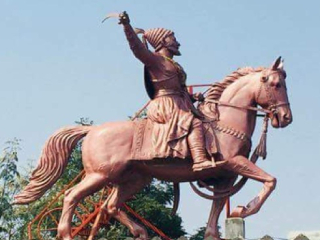 Chhatrapati Shivaji Maharaj’s statue removed at midnight in Congress-ruled Telangana !
 RSS is an Organisation that Teaches Patriotism: Doesn’t Require Registration!
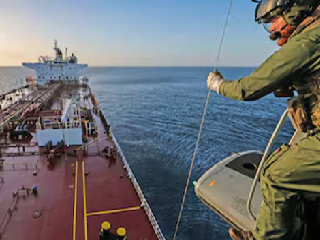 Britain seizes Russian oil tanker; one Indian national arrested