
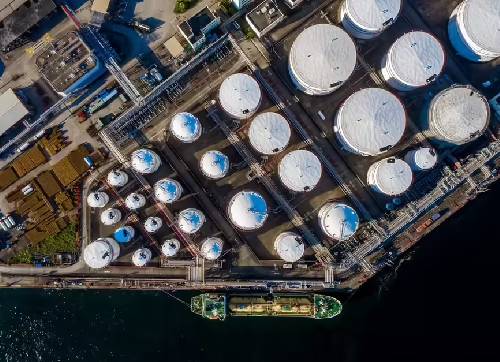
India is the world’s second-largest Liquefied Petroleum Gas (LPG) consumer and among the top four Liquefied Natural Gas (LNG) importers. The associated issues are thus central to our energy security, economic planning, and foreign policy. India’s landmark deal with the USA to import 2.2 million metric tonnes of LPG from the US in 2026 has a significant impact. So has the Reliance partnership in the $300 billion project to construct a new oil refinery in Texas, USA.
Gas in Two Forms: LNG and LPG
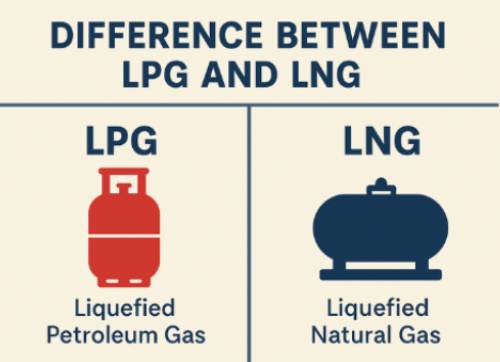
India’s energy transition increasingly hinges on two very different fuels: LNG and LPG. LNG is essentially liquefied methane, used mainly for power generation, fertilisers and city gas distribution. LPG is a mix of propane and butane, used in household cylinders and small commercial establishments.LPG has a higher volumetric energy content than LNG, making it more efficient for storage and transport in small-scale applications.
LNG must be cooled to around minus 162 degrees Celsius (liquified) and shipped in specialised cryogenic tankers, then regasified at coastal terminals and sent inland by pipeline. LPG, by contrast, liquefies at moderate pressure and ambient temperature, travels in pressurised ships and rail tankers, and is distributed via bottling plants and cylinders. The two fuels have different supply chains, pricing benchmarks and end‑users. For policy purposes, they are not interchangeable.
India’s LNG Story: Rising Imports, Strategic Anchors
Domestic natural gas production has struggled to keep pace with demand. Over the last few years, India’s output has hovered in the mid‑30s billion cubic metres (bcm) annually, while total gas use has been substantially higher.
Qatar is India’s anchor LNG supplier under long‑term, oil‑linked contracts, providing roughly half of total LNG imports. Additional volumes increasingly come from the United States, the United Arab Emirates (UAE), Oman and portfolio traders. US cargoes, typically linked to the Henry Hub benchmark, give India diversification away from pure oil‑indexation. Strategically, New Delhi has been building a three‑layer LNG portfolio: long‑term base‑load contracts from Qatar and others; flexible US and portfolio supplies; and opportunistic spot cargoes.
This architecture serves two goals. First, it underpins India’s stated aim to raise natural gas’s share in the primary energy mix from about 6–7 per cent to 15 per cent by 2030. Second, it improves bargaining power by avoiding excessive dependence on any single country or pricing formula.
India’s LPG Dependence: Social Policy Meets Import Risk
If LNG is about industrial and power sector flexibility, LPG is about households and political legitimacy. Over the past decade, schemes such as the Pradhan Mantri Ujjwala Yojana (PMUY) have expanded LPG access dramatically. Active LPG consumers have effectively doubled, and annual consumption has risen into the 30‑million‑tonne range.
Domestic LPG production, derived mainly from refineries and gas‑processing plants, has not kept up. India now imports roughly 60–65 per cent of its LPG needs. Around 90 per cent of these imports traditionally come from the Gulf — especially the UAE, Qatar, Kuwait and Saudi Arabia — priced off the Saudi Aramco Contract Price (CP) for propane and butane. Retail cylinder prices and subsidies are adjusted periodically, making LPG a frontline instrument of welfare policy as well as inflation management.
A New Player: US LPG Arrives in Scale
India’s Nov 2025 deal with the USAto import 2.2 million metric tonnes per annum (MTPA)of LPG from the US in 2026marks an important shift. These deals are benchmarked to Mont Belvieu prices, the key US LPG hub, rather than to Saudi CP. In practical terms, India is inserting a second reference price into its LPG basket.While US-sourced LPG may have a lower FOB price, the total landed cost can be higher than Gulf-sourced LPG due to freight and insurance. However, the strategic value of diversification and supply security may outweigh the incremental cost, especially in times of regional disruption.
The move thus does several things. Commercially, it allows Indian buyers to arbitrage between Middle East and US markets. When US propane and butane are abundant and cheap, they can offset Gulf price firmness even after accounting for higher freight. Politically and strategically, the deals deepen US–India energy interdependence and address American concerns over the bilateral trade balance (a persistent irritant), while signalling to Gulf suppliers that India has credible alternatives.
In a related development, on 10 Mar 2026, US President Donald Trump announced that Reliance Industries will partner with America First Refining to build the first new US oil refinery in 50 years. A $300 billion project in Texas.
Snapshot: LNG vs LPG in India
| Dimension | LNG – Liquefied Natural Gas | LPG – Liquefied Petroleum Gas |
| Main components | Methane (CH₄) | Propane (C₃H₈) and butane (C₄H₁₀) |
| Key uses in India | Power, fertiliser, industry, city gas networks | Household cooking, small commercial, and some transport |
| Core infrastructure | Import terminals, regasification, pipelines | Import jetties, pressurised ships, bottling plants |
| Main suppliers | Qatar, US, UAE, Oman, portfolio traders | UAE, Qatar, Kuwait, Saudi Arabia, now US |
| Typical pricing basis | Oil‑linked long‑term, Henry Hub, spot indices | Saudi Aramco CP, Mont Belvieu, freight and premiums |
| Import dependence level | Rising, over half of gas use from LNG imports | High, roughly two‑thirds of consumption imported |
Vulnerabilities and Opportunities: Three India‑Centric Scenarios
For strategy students, it is useful to think in scenarios. Three simple stress cases illustrate India’s vulnerabilities and options around LNG and LPG.
Strait of Hormuz closure or severe disruption,
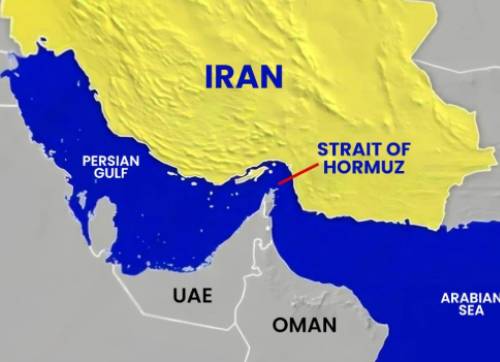
The Strait of Hormuz carries a large share of Qatar’s LNG and Gulf LPG exports. A closure or major conflict would hit India on both fronts: industrial gas supply and household cooking fuel. India’s LNG import capacity has expanded rapidly, with several new terminals commissioned (Dahej, Dabhol, Kochi, Ennore, Mundra, Dhamra) or under construction. Floating Storage and Regasification Units (FSRUs) offer flexibility and rapid deployment. The need is for additional regasification capacity designed to receive Atlantic Basin LNG (from the US and others), more flexible destination clauses in contracts, and robust storage and pipelines on the west and east coasts. Strategically, this scenario reinforces India’s incentives to support freedom of navigation, invest in its navy, and maintain balanced relations with Gulf states and Western naval powers.
Major shifts in the United States sanctions policy
A sharp turn in US sanctions or export controls, whether targeting specific energy exporters, shipping, or even broader geopolitical adversaries, cannot be ruled out. Secondly, if US LNG and LPG supplies to India itself became constrained, the diversification achieved in recent years could partly unwind. India would lean back more heavily on Qatar and the wider Gulf, likely at higher prices and with less flexibility. The need here is two‑fold: to negotiate contract clauses that insulate Indian purchases from extraterritorial measures where possible, and to keep strengthening ties with non‑US suppliers (for example, through long‑term LNG commitments with Qatar and expanded LPG arrangements with Gulf producers) without letting any single bloc dominate. This scenario also underlines the importance of India’s hedging diplomacy between Washington, the Gulf, Russia and others.
Global tanker disruption and chokepoint stress
A third scenario involves large‑scale disruption to tanker traffic from conflict, cyber‑attacks on port infrastructure, piracy spikes, or prolonged blockages at chokepoints like the Suez Canal or Bab‑el‑Mandeb. LNG and LPG, both dependent on seaborne trade, are exposed. Longer routes around the Cape of Good Hope raise freight costs and delay deliveries, straining inventories and subsidy budgets. For India, the need is to invest more in coastal and inland storage capacity, developing more flexible cargo‑swapping arrangements with East Asian and European buyers, and building redundancy across both west and east coast terminals. Over the medium term, modest increases in domestic gas production, refinery upgradation to maximise LPG yield, and alternatives for cooking (such as electricity and biogas in specific regions) can all reduce vulnerability at the margin.
What This Means for India’s Energy Strategy
The diversification into United States LNG and LPG supplies does not replace the Gulf; it gives India more levers in price negotiations and crisis management. The landmark US LPG deal exemplifies a proactive approach to risk management in an increasingly volatile global market. The recent Reliance partnership to build a $300 billion oil refinery in Texas deepens the interdependence. Over the next decade, the countries that can combine diversified contracts, resilient maritime access, robust storage and flexible domestic infrastructure will be best positioned to navigate energy shocks. For India, making LNG and LPG strategy part of mainstream national security and economic planning is no longer optional — it is central to both growth and stability.
India’s energy import strategy is a delicate balancing act between cost, security, and diplomatic considerations.
Recent years have seen India make significant strides in diversifying suppliers, expanding infrastructure, and enhancing strategic reserves. All aimed at reducing vulnerability and enhancing strategic autonomy. However, challenges like high import dependency, exposure to global price shocks, and infrastructure bottlenecks remain. The Centre has invoked the Essential Commodities Act to ensure natural gas supply for key sectors. Clearly, energy security will remain a top policy priority for the foreseeable future.

(The author, Brigadier (Retd) Shri Sanjay Agarwal, is a Former Security Advisor, Ministry of Home Affairs, GoI.)
 ‘We will cut off the hands of those who stop our water !’ : Pakistani Minister Musadik Malik
 India prepares to seek Pakistan’s reinstatement to the FATF grey list
 “If I reveal the names of the powerful people involved in the Shri Ram Temple donation theft, they will kill me” : Bageshwar Dham chief Pandit Dhirendra Krishna Shastri
 No Chinese military incursion into Arunachal Pradesh : Indian Army clarifies
 Attempt to demolish 125-year-old Gurdwara in Pakistan !
 Radiant Thoughts of Sachchidananda Parabrahman (Dr) Jayant Athavale