

7 November 1966! That was the day when the sentiments of the Hindu majority were strangled. It was a time when the shadow of a Hindu-hostile Congress rule loomed over this Hindu nation. Under the leadership of the All-Party Cow Protection Movement Committee, lakhs of saints and devout Hindus had united to demand a nationwide law banning Gau Mata (the sacred Cow) slaughter. Some saints, such as Mahatma Ramchandra Veer, undertook fasts unto death for as long as 166 days. Yet the Indira Gandhi government at the Centre did not fulfil their just demands. Lakhs of Hindus marched towards Parliament.
In response, the ruthless police of the Congress regime opened indiscriminate fire on this Hindu gathering. According to official figures, 7-8 saints were killed. The following year general elections were due. It is said that Indira Gandhi did not want the issue to escalate further; therefore, under the cover of night, many bodies were secretly disposed of by the police. The then Bharatiya Jana Sangh stated that 200 people were killed, while many claim that the number reached five thousand. This was nothing short of a massacre of Hindus – whether the number was 7, 200, or 5,000 – because they were killed simply for being Hindus.
A “Sarkar Committee” was appointed to comprehend the possibility of a nationwide law for banning the cow slaughter (Gau Hatya), but it was later disbanded and no report ever emerged from it.

An Indologist from Belgium, Dr. Koendrad Elst’s works are foundational to modern Hindutva historiography. He often highlights the political consequences of the state’s response to the 1966-march. He said, “The massacre of 1966 remains a ‘forgotten’ chapter in mainstream Indian historiography, yet it was the catalyst that proved the secular state was willing to use lethal force against the most sacred symbols of the majority to maintain its ideological status quo.”
In recounting this history, it is essential to mention DharmaSamrat Pujya Karpatri Swamiji, who was the pioneer of the Gau Mata-protection (Gau Raksha) movement.
Why a Nationwide Ban?
Some may ask: what is the purpose of recounting an incident that occurred sixty years ago? Such a question itself is unreasonable. In a country of one billion Hindus, nearly eight decades after independence, the state still fails to protect Gau Mata, who is dearer than life to Hindus. This is nothing short of a tragedy. Some may argue that Gau Hatya is already banned in 12 states. Then why insist on a nationwide ban? The answer is simple. India is a Hindu civilisation. If Hindu sentiments are not respected here, where will they be respected – in Pakistan, Bangladesh, or in London that is increasingly turning Islamic? Another question arises: even in the 12 states where Gau Hatya is banned, is the law implemented properly? A central law would certainly increase pressure for enforcement.
Certain opportunists, especially so-called “secular Hindus,” may ask:
· What about the dietary preferences of Muslims and Christians?
· Should their tastes not be respected?
· Would such a law not violate freedom of expression?
· Is it not anti-democratic?
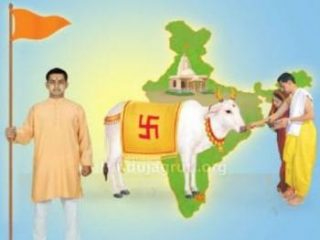
Observe the hypocrisy of these minority-appeasing arguments.
Have these critics consistently raised their voice against the cow-slaughter bans already existing in those 12 states? Do they show any sympathy for the supposed hurt sentiments of Muslims or Christians in those states? Whether a ban exists at the state level or at the national level, Gau Mata protection laws are humane and democratic laws that respect the religious sentiments of the majority.
The Hindu society has historically embraced multiculturalism and respected other faiths, even when those faiths have often displayed hostility toward it. Why, then, should Hindus not assert their own religious sentiments? At the very least, minority communities should respect the sentiments of Hindus as a gesture of reciprocity. Any society or legal system that upholds human values cannot reject such a humane principle.
Rather than opposing Gau Mata protection laws, the Muslim community could view them as a golden opportunity to strengthen the Ganga-Jamuni Tehzeeb – a tradition of coexistence by respecting Hindu sentiments. The same principle applies equally to Christian-majority states such as Goa and the North-eastern states.
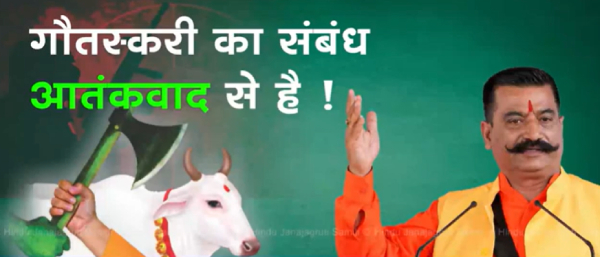
Selfless Sentiment
Another important aspect must be recognised. Regardless of whether Gau Hatya is banned in a particular state or not, illegal transportation of cattle is always unlawful. Leaders such as Satish Pradhan of the Punjab Gau Rakshak Dal have repeatedly stated from public platforms that cow smugglers openly transport cattle illegally while the police – the guardians of law and order remain passive.
Consequently, in hundreds of cases, Hindus have had to risk their own lives to protect Gau Matas, whom they regard as mothers – the pious Gau Mata.
According to the Indian Express, in 2016 alone, at least 200 Gau Mata-protection groups were active in the NCR.
The so-called intellectual elite of India often criticise these Gau Mata protectors in derogatory terms eg. cow vigilantes. Following the alleged lynching of a man named Akhlaq on suspicion of Gau Hatya, Gau Mata protectors were labelled “intolerant,” and the country witnessed the dramatic spectacle of the “award-return movement – Award Wapasi.” Gau Mata devotees in this country have not forgotten that episode.
In truth, the sentiment in the hearts of Gau Mata protectors is profoundly selfless:
“The cow is my mother, within whose body reside thirty-three crore deities. She must be protected.”
This raises several unanswered questions:
· Why cannot such deep Hindu sentiment receive legal protection?
· Why are Hindus forced, in their own country, to sometimes take the law into their own hands to protect Gau Matas?
· Is the fault of the Gau Mata protectors or of the administrators? Accountability matters when the civilisation is at stake.
Mobilisation
Nevertheless, the path of public agitation is a legitimate weapon granted by democracy and must not be abandoned.
Any movement that is sincere and selfless creates great awareness and increases the possibility of success. Samarth Ramdas Swami had said that such movements receive divine support.
Filmmaker and writer Mayank Jain observes that since the Ganga Mukti Andolan of the 1980s and the Shri Ram Janmabhoomi Andolan, Hindu society has not witnessed a movement combining both spiritual (BhramaTej) and martial energy (KshatraTej).

Today, the demand for Gau Mata protection is once again gaining momentum.
The Bharatiya Jana Sangh of that era now governs the country in the form of the Bharatiya Janata Party – the BJP. Voices are rising across the nation that the BJP, which claims commitment to Hindutva, must now fulfil this long-standing demand of Hindus.
Thousands of saints across India have begun new mobilisation, ready to dedicate everything to impose a ban on Gau Hatya.
Gau Mata Honour Must Be Restored
This entirely non-political movement is called the “Gau Samman Aahvaan Abhiyan.” Today, not only saints but also thousands of young men and women have joined this initiative. In an era dominated by social media and career pursuits, such youth participation is remarkable and deserves appreciation.

While speaking with Sanatan Prabhat, the revered “Param Gobhakt Sant” Shri Gopesh Krishna DasJi Maharaj of Mathura, associated with the campaign said, the executive committee of the campaign is as follows… Gau Mata is the patron (Sanrakshak) of the campaign, Nandi Baba is its president (Adhyaksha), and the blessings of the Hindu deities (Devatas) are there. The sadhus-saints, acharyas, Gau Mata devotees, Gau Mata saints, Gau Mata protectors, and Gau Mata sevaks of the country are offering their selfless service. This itself demonstrates that the movement is deeply rooted in divine inspiration.
Its demands are:
· Gau Mata should be declared Rashtra Mata (Mother of the Nation) and Rashtra Devata (National Deity).
· A central law for Gau Mata protection should be enacted.
· Gau Hatya must be completely banned across India.
The movement will reach 5,000 talukas across the country. On 27 April 2026, memoranda containing these demands will be submitted to Tehsildars in 5,000 talukas in the name of the Chief Ministers, the Prime Minister, and the President. If the demands remain unmet, further memoranda will be submitted every two and a half months at the district, state, and national levels. If the demands are still ignored, saints and devotees will undertake fasts unto death, and if someone dies during the fast, others will take their place. The movement will continue until a nationwide law banning Gau Hatya is enacted.
Importantly, the campaign is completely selfless. No financial contributions are being sought, and mechanisms exist to file complaints if anyone demands donations in its name. In short, this is a future mass movement.
Constitutional Amendment Is Possible
There are certainly legal obstacles to a nationwide ban on Gau Hatya.
For example:
· Gau Mata protection falls under state jurisdiction, not the central government.
· Article 48 of the Constitution places Gau Mata protection under Directive Principles, not Fundamental Rights.
However, constitutional amendments can address such issues.
For instance, Article 45 originally placed Right To Education up to age 14 under Directive Principles. But in 2002, through the 86th Constitutional Amendment, Article 21A made education a fundamental right.
Similarly, the right to free legal aid evolved through constitutional interpretation.
These examples show that a nationwide ban on Gau Hatya through central legislation is entirely possible. What is required is political will. The government that could remove the seemingly impossible Article 370 can certainly impose a nationwide ban on Gau Hatya.
The Indian Gau Mata : Economically As Well As Ecologically Beneficial !
In today’s world of economic profits and efforts of sustaining the GDP for a Viksit Bharat 2047, Indian Gau Mata can definitely prove to be more than effective.

Rajiv Dixit, a prominent advocate for Swadeshi and Indian traditional knowledge, frequently lectured on the “Gau-Aadharit Arthavyavastha” (Cow-based Economy). He argued that the Indian (Desi) Gau Mata is not just a religious symbol but a scientific and economic powerhouse.
Rajiv Dixit famously argued that a single Indian Gau Mata could generate an income of ₹2 lakh or more annually if its products were utilized scientifically. Remember, the days were of the 2000s. Imagine, the scalability today.
The Religious Imperative
Hindus must also remember the Dharmic perspective that underline the inevitability of Gau Mata. Hindu scriptures themselves condemn Gau Hatya and term it as a sin.
Texts such as the Manusmriti, Rig Veda, Atharva Veda, and Mahabharata describe the divine significance of the Gau Mata.
The Anushasana Parva of the Mahabharata states:
“One who kills a cow, eats its flesh, or permits its killing shall suffer in hell for as many years as there are hairs on the cow’s body.”
The Rig Veda declares:
“The cow is the mother of the Rudras, the daughter of the Vasus, the sister of the Adityas, and the source of immortality.”
The 14th-century scholar Sayanacharya explained that this verse is a direct command: the cow is sinless and divine, and while ordinary people see her merely as a milk-giving animal, the wise recognise her as a goddess. He clearly states that Gau Matas should never be harmed, stolen, or taken to slaughterhouses. Therefore, Gau Mata protection is not merely a social cause, it is a Dharmic duty.
Hindus must unite, rise above sectarian divisions (Sampradayas), and dedicate themselves to this nationwide movement for Gau Mata protection. This is not merely the demand of the times – it is a Dharmic, a Spiritual obligation.
| Come forward with whatever strength you possess for this national upliftment – the Gau Samman Avahan Abhiyaan!!! |
 Yerawada (Pune) Police Station’s Inspector Anjum Bagwan involved in anti-Hindu and anti-social activities
 Prime Minister Modi had prevented Putin from dropping an nuclear bomb on Ukraine in 2022 !
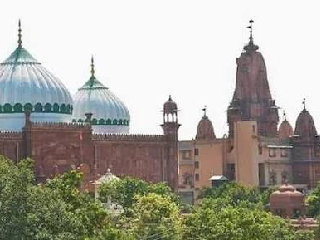 Announce date for construction of Shri Krishna temple before 9th August, then no need for Karseva : Kali Sena
 Shri Ram temple needs a devotee, not a government-appointed officer : Saints demand
 Bengaluru to establish the country’s first Government AI University !
 Pakistani cricketers smuggled drugs during their tours of India: RVS Mani