
Ayurveda for a healthy life- 69/2026 on 1.2.2026

8. Should tonics be routinely given to growing children ?
Every mother likes to give the best tonic to her child. If one studies the tonics available in the market, one would realise that all the tonics are permutations and combinations of vitamins and minerals such as vitamin A, B, C, D, iron, calcium, etc. Like diet, deficiency as well as excess of tonics too is harmful for the body. If the child’s diet contains inadequate amount of iron, the child will suffer from iron deficiency i.e. anaemia and the haemoglobin content in his blood will be low. If such a child is given iron tonic in the form of iron syrup or iron tablets, his anaemia will disappear and blood haemoglobin will go up, appetite will improve and he will gain some weight. However, if a child who has 100% haemoglobin in the blood and is given an iron tonic, as the haemoglobin count in his blood cannot increase beyond 100%, the iron tonic given to such a child will not be absorbed and will not serve any purpose. (The normal level of haemoglobin for various age groups is taken as 100% for standardisation. It is akin to pouring water in a bucket already filled with water. Naturally this is wasted. If one continues to give iron tonic to such a child, his appetite will on the contrary reduce. The same holds true in case of excessive administration of vitamins A and D.

Rather than administering tonics which can be harmful if taken in excess, it is important to see that the child takes adequate and a balanced diet. Give sufficient calories and proteins to growing children in diet through coriander, fresh fruits, germinated grains, eggs, meat, milk, pulses, groundnuts, cashewnuts. An undernourished child should be given a high calorie and high protein diet which is rich in milk, pulses and nuts. On the other hand, an obese child should increase his intake of vegetables. The diet of a child with scurvy, i.e. vitamin C deficiency, should include fresh fruits such as sweet lime, orange, guava, amalaki, etc.
If one cannot afford to include fruits, milk and other costly food items in the diet, there is nothing wrong in giving vitamins and minerals in the form of tonics if their deficiency exists or if daily food is not well balanced in terms of vitamins and minerals.
Bones and ribs of undernourished children are prominent because of lack of a layer of fat below the skin. Such children are often wrongly diagnosed as cases of rickets and are given doses of vitamin D and calcium. These children actually need more calories and protein through the medium of nourishing food.

9. How does ‘balkadu’ help children ?
The original Ayurvedic texts describe the regular administration of tonics for children which mainly include brain tonics such as brahmi, pippali and shatavari. It consists of even nourishing agents such as walnuts, almonds, dates dried, raisins etc. that help in the growth of all tisues of muscle, bones, nerves, blood and including its body fluids. These items were administered in ghee or honey, which itself provides additional nourishment.
Balkadu as used today is a mixture of many household spices such as ginger, vavding, harada, pippali, cumin seeds, nutmeg, mayaphala, etc. The common man, who is ignorant of the therapeutic uses of these spices, uses balkadu with the idea of preventing all diseases and promoting good health. He fails to realise that some of these mixtures often contain ingredients having opposite effect, e.g. harada being a laxative softens stools while nutmeg being an astringent it tends to bind stools together. In the past, an elderly person or one having experience and who knew the uses of each of these ingredients would administer these medicines appropriately. The market preparations now-a-days should be administered by an experienced person after studying its composition. Appropriate home remedies for various ailments are elucidated in books by the same author.
10. Loss of appetite or taste of tongue is lost (Arochaka)
The word arochaka literally means impairment of the sense of taste and loss of appetite. Even tasty food appears bland.
10A. The natural causes of diminished appetite are as given ahead.
1. Physiological anorexia that is loss of appetite in children between 1 to 12 years.
2. Reduced appetite in old age.
3. Individuals with a kapha constitution have loss of appetite.
4. In summer and monsoons, the appetite reduces.
5. In the initial stages of all acute diseases, the appetite reduces.
6. In all chronic diseases, the appetite is reduced except in diabetes mellitus and hyperthyroidism.
10B. Types of arochaka : Ayurveda has classified arochaka into vataja, pittaja and kaphaja types depending on the symptoms of the dominant dosha. The associated symptoms in these three types are given ahead.
1. Vataja arochaka : Constipation, distension of the abdomen and gurgling sounds in the abdomen.
2. Pittaja arochaka : Loose stools, burning sensation in the abdomen and sour or foul smelling stools.
3. Kaphaja arochaka : Nausea, heaviness of the abdomen and head and laziness. When loss of appetite is observed, continue fasting and induce vomiting till appetite is restored.
10C. General treatment on Vataja and Kaphaja arochaka
10C 1. Vaman (induction of vomiting)
A. Take one teaspoonful of powder of vacha. Later drink salt water till vomiting occurs.
B. Take one teaspoonful of powder of nimba leaves or bark of tree and then drink with salt water till vomiting occurs.
10C 2. Treatment with medicines – (Deepak pachak yog)
A. A decoction of pippali, vidanga, yavakshara, bhargi, rasna, cardamom, asafoetida, saindhav and ginger should be taken.
B. A decoction of ajamoda (celery), vacha, ginger, pepper, pippali, turmeric, daruharidra, bhargi, kushtha and chitrak should be taken.
C. A decoction of amalaki, haritaki, chitrak, pippali, saindhav, cumin seeds, pepper, kushtha, vidanga, souvarchala (blacksalt), yashtimadhu (glycerrhiza), ginger and sugar should be taken.
D. A decoction of ginger, pippali, pepper, turmeric, triphala and yavakshara should be taken.
E. A mixture of equal parts of powders of ginger, pepper, pippali and kapittha (woodapple) should be taken with hot water.
F. One teaspoonful of a mixture of powders of cinnamon, cardamom, pepper and clove should be added to sarbat or soup of tamarind and consumed.
G. One teaspoonful of ajamoda should be chewed and eaten.
H. A decoction of dry black grapes, pointed gourd, nimba, haritaki, bor and amalaki should be taken.
I. A decoction of guduchi, nimba, pippali, amalaki, haritaki and chitrak should be taken.
J. 120 mg. of laghumalini vasant should be taken twice a day.
K. Ginger juice with saindhav salt should be consumed with honey as an appetiser before meals.
10D. Treatment on Pittaja arochaka
10D 1. Induction of vomiting
Take one teaspoonful of powder of yashtimadhu (glycerrhiza) with one teaspoonful of old jaggery and madanphal 120 gm and drink this decoction till vomiting is induced.
10D 2. Deepak digestive preparation
A. A decoction of dry black grapes, leaves of pointed gourd, bidalavan, skin of nimba, murva and triphala.
B. A decoction of brahmi, nimba and guduchi.
C. A decoction of patha, vanshalochan, ativisha and daruharidra.
D. A decoction of musta, amalaki, ushira, chandan (sandalwood), ginger and aragvadha.
E. A decoction of fennel seeds, cumin seeds, coriander, dry black grapes, pomegranate and sauvarchala.
F. A decoction of dry black grapes, dates and mahalunga keshar.
G. Ginger & lemon juice should be licked with Sendha namak (salt).
H. Cinnamon powder should be mixed with honey and licked.
I. A decoction of pippali, root of pippali, chavya, chitrak and ginger.
J. A decoction of musta, vacha, ginger, turmeric, daruharidra and bhargi.
K. A decoction of guduchi, nimba, chandan and lotus.
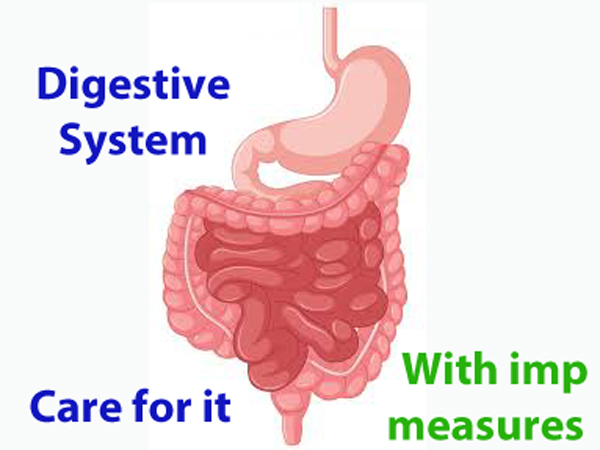
10E. Diet in arochak (loss of appetite)
10E 1. The following food items are beneficial in arochaka –
A. Cereals : Red rice, popped rice, rice kanji.
B. Pulses such as moong (green gram), kulith (horse gram) and chana (chickpea).
C. Milk products : Buttermilk and ghee made from milk of a cow or goat.
D. Vegetables : Green sponge gourd (ghosale), raddish, suran (yam), carrot, tendli (ivy gourd), drumstick, snake gourd, kushmanda (ash gourd), banana flower, bhargi, ridge gourd, Elephant’s ear and onion.
E. Fruits : Tender coconut, bor (jujube), lemon, grapes, apple, kokam, jamun, tamarind, sweet lime, orange, jackfruit, ramphal
F. Meat : Mutton, chicken, meat of a deer and small fish.
G. Sugar : Old jaggery and wine
H. Spices : Chatni, Onion, coriander, papad, ginger, clove, garlic and saindhav.
 Illegal church in Solapur and misconduct by a municipal employee to be investigated
 Radiant Thoughts of Sachchidananda Parabrahman (Dr) Jayant Athavale
 We pay our obeisance a million times on the Birthday (as per Tithi) of
 Major win for Hindu unity : Maharashtra Government suspends the controversial ‘Devasthan Inam Abolition Draft Act’
 Mumbai-based advocate Siddhavidya, who is trying to stop trafficking through surrogacy (artificial pregnancy) and animals, and animal killing
 Construction of Sanatan Dharma Complex halted due to threats in Bangladesh