
The Free Trade Agreement signed between India and the European Union has been widely praised by media outlets from the United States to Australia. This move seen as strategically outmanoeuvring the US clearly reflects India’s accelerating global ascent, a reality that has caught the world’s attention. However, this path of India’s development cannot progress without a united Indian society.
The Rigveda proclaims:
“Sangacchadhvam samvadadhvam sam vo manansi janatām” which means “Let us move together, speak together, and let our minds be in harmony.”
Sanatan Hindu Dharma teaches society to remain united and act with discernment. Only through social cohesion can the dream of a developed India be realised. Otherwise, history has repeatedly shown that societal fragmentation makes it easier for external forces to attack and destabilise a nation. Attempts are currently underway to create precisely such a divisive environment in the country.
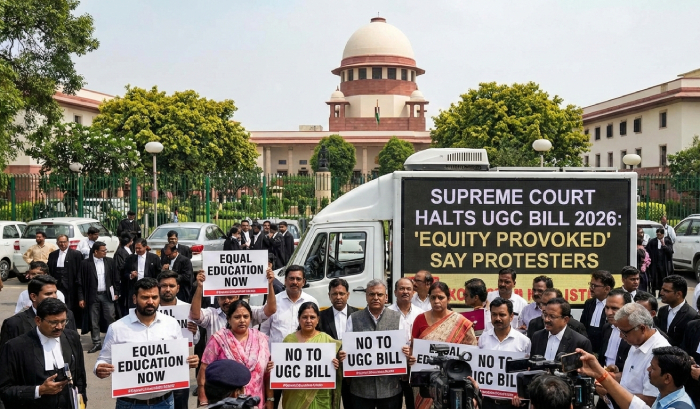
The trigger for this situation is the new regulations of the University Grants Commission (UGC). On January 13, the UGC notified new rules titled “Promotion of Equity in Higher Education Institutions Regulations, 2026.” These regulations mandate the formation of special committees, helplines, and monitoring units in colleges and universities to prevent caste-based discrimination. Claiming that discrimination primarily affects Scheduled Castes, Scheduled Tribes, and Other Backward Classes, these bodies were tasked with curbing discriminatory forces. The UGC asserted that these changes were introduced to ensure fairness and accountability in higher education institutions.
‘Equity’ For the First Time!
Several Public Interest Litigations were filed in the Supreme Court challenging these regulations. During a hearing on January 29, the Court described the rules as “completely vague” and imposed a stay on their implementation and directed to rollback to the 2012 rulebook. The UGC and the Central Government were also directed to bring clarity to the rules by March 19, approximately 50 days. This judicial intervention has been widely welcomed, and rightly so.
The reasons behind this stay merit serious examination. Notably, the very name of the new regulations introduced a distinctive term – “Equity.” We are all familiar with “Equality”: equal justice, equal laws, equal punishment, equal opportunity. However, equity is a term primarily used in economic contexts and is being introduced into the social domain for the first time in modern India.
Equity does not mean equality; it implies providing different groups with what they specifically require, formulating policy based on identity. Laws such as reservations and the Scheduled Castes and Scheduled Tribes (Prevention of Atrocities) Act, 1989, were introduced with the stated objectives of social justice, equality, welfare, and empowerment. Their intent to benefit historically disadvantaged groups was clearly articulated.
The deeper fear surrounding the UGC regulations stems from the absence of a clear definition of “discrimination.” Students from the general category expressed concern that these vague rules could encourage discrimination against them within college and university campuses, potentially leading to chaos in academic institutions.
Advocate Vineet Jindal, who filed a petition against these regulations, questioned the constitutional authority of the UGC to frame such rules. He pointed out that Clause 3(c) specifically addresses caste-based discrimination while completely ignoring the possibility of discrimination against general-category students. According to Jindal, this fear was widely prevalent among such students, and the Court rightly recognised this concern while imposing a justified stay. The Court explicitly observed that these regulations could be misused.
A Divisive Narrative!
Even though the Supreme Court stayed the regulations, nationalists must carefully examine how anti-India forces sought to exploit these rules to construct a divisive narrative. Communist and leftist forces often weaponize words and statistics. Certain fringe media outlets, such as The Wire, began peddling alarmist claims to justify the UGC rules, alleging a “118% increase in incidents of discrimination against backward students.”
A closer look at this figure reveals the reality. Across 704 universities and 1,553 colleges, there were 173 reported cases of discrimination in the academic year 2019–20, which rose to 378 cases in 2023–24, an increase of 118%.
This data makes two things distinctively clear:
In such a vast higher-education system, 378 cases represent a negligible proportion, not widespread caste oppression.
Increased awareness of grievance mechanisms in recent years has led to more reporting, not necessarily more discrimination.
Thus, the inflated narrative of a massive rise in casteism collapses entirely.
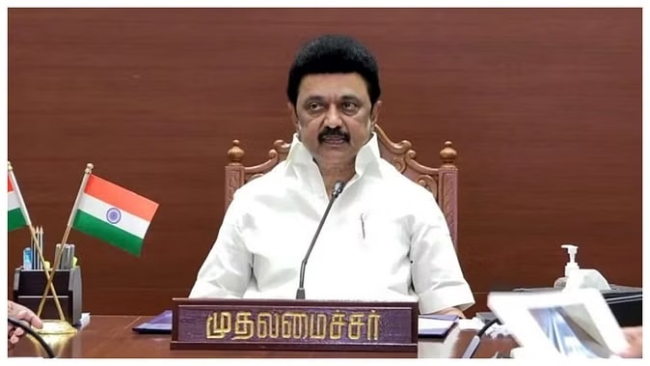
Adding fuel to the fire, Tamil Nadu Chief Minister M.K. Stalin, father of Udhayanidhi Stalin, who had notoriously referred to Sanatan Dharma as “malaria” that must be eradicated, endorsed the UGC regulations and played a dangerous game of sowing divisive seeds. Stalin claimed that caste discrimination is deeply entrenched in Indian higher education and that institutional apathy prevails. According to him, these new regulations would provide “new life” to South Indians, Kashmiris, and minority communities. The careful selection of such language is sufficient to foment division within the country.
Similarly, Mayawati, leader of the Bahujan Samaj Party, currently struggling for political relevance, welcomed the regulations and went so far as to label general-category students opposing them as “casteists.”
At a time when Hindu society must remain united, supporting such vague and ambiguous regulations and thereby re-injecting venom against upper castes into the minds of backward communities is deeply condemnable. This is nothing short of an assault on democracy.
There is little doubt that the Central Government will eventually adopt a revised and more appropriate stance on these flawed UGC regulations. However, it is even more essential for the government to act firmly against anti-democratic forces attempting to divide Hindus. We must never forget: the welfare of Hindu society is paramount – Hindu SamajHit Sarvopari !
ConclusionThere is a strong expectation that laws be enacted to identify and severely punish those who attempt to divide Hindus by branding them as “anti-democratic forces.” |
 Who are the true comedians ?
 Special Editorial | An Assault on Shri Ram? Beyond the Ayodhya Temple Theft
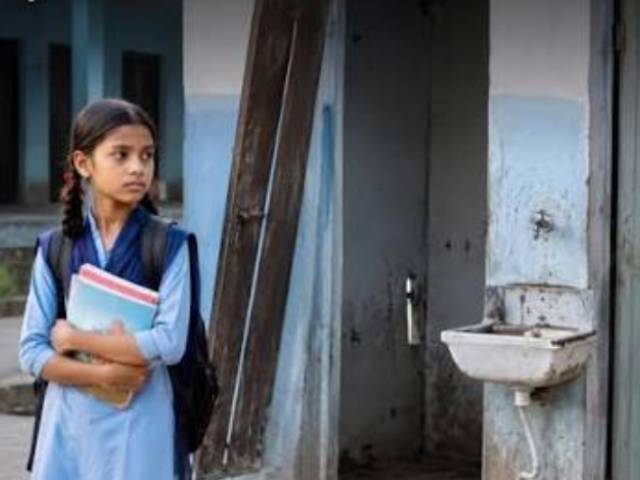 State’s 1,164 schools lack separate toilets for girl students !
 Walking on footpaths is a fundamental right: Supreme Court
 Supreme Court dismisses petition seeking intervention in cases of political defections
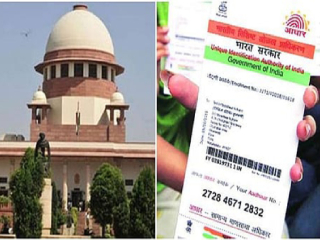 Supreme Court issues notice to the Centre and the States on the petition seeking that ‘Aadhaar cards should be used only for identification.’