

Is Moral Decay Inside Karnataka Police a Consequence of Systemic Corruption?
The police force is meant to be society’s shield – a symbol of justice, discipline and Dharma. When those entrusted to protect citizens themselves turn criminals, the issue is not of a few individuals – it reflects institutional collapse. Karnataka today stands at exactly such a crossroads.
The rising involvement of police officers in robbery, corruption and nexus with criminals indicates an erosion of ethical governance. This crisis is not accidental – it is systemic, rooted in corruption and the absence of moral leadership.

Recruitment Scam : A warning sign, not a closed chapter
The exposed police recruitment scam should not be dismissed as a past incident. Although the tainted recruitment was cancelled and no candidates were appointed, it exposed deep institutional rot inside the system.
If such manipulation could happen openly at the entry level, how many other corrupt networks exist in promotions, postings and internal protection rings? The cancellation of one tainted process cannot purify an institution whose mindset remains unchanged.
It is therefore reasonable to conclude that the recruitment scam was not the root – but merely the first visible crack. The rot may run much deeper.
When police join criminals
In Bengaluru, a daylight ATM cash-van heist worth ₹7.1 crore exposed the direct involvement of a serving policeman. Instead of preventing the crime, insiders planned and executed it.
In Davangere, two Sub-Inspectors were arrested for allegedly abducting and robbing a gold artisan. The uniform that once deterred criminals is today a cause of fear for ordinary citizens.
Inside jails : Crime under protection
At Parappana Agrahara Central Prison, jail officials were caught smuggling mobile phones, drugs and illegal items into the premises. Inmates enjoyed VIP treatment, pointing toward organised internal collusion.
Senior officers were dismissed after video evidence showed hardened criminals enjoying comfort, electronics and privileges inside secure barracks.
Official admission : Rot acknowledged at the top
The Karnataka government has itself admitted the gravity of the situation. Home Minister G. Parameshwara stated that action has been initiated against “bad apples” in the police force, with at least 88 police personnel facing criminal charges.
More damning was a circular issued by DG & IGP M.A. Saleem, acknowledging that police personnel are being arrested for grave crimes – including robbing victims of gold, planning dacoities, and kidnapping for ransom.
This is no longer an allegation by critics; it is an official admission of deep-rooted decay.
Who rules and who is responsible?
Karnataka today is ruled by the Congress – a party historically associated with scams, appeasement and institutional breakdown.
Moral decline inside law-enforcement cannot be separated from political ideology. A government that fails to respect civilisational values cannot safeguard administrative ethics.
The silent watchdog : Lokayukta
The Karnataka Lokayukta exists, but its impact remains disturbingly weak. When corruption is visible across policing and prisons, silence from oversight agencies is unacceptable.
A watchdog that sleeps becomes decoration – and where watchdogs fail, corruption becomes law.
The root cause : Absence of Dharma
Recruitment without integrity. Power without restraint. Authority without character.
When Dharma is abandoned, the uniform becomes a costume and justice becomes theatre.
The only solution : Shuddhikaran (purification)
No cosmetic reform will heal systemic decay. What is required is moral and institutional cleansing through accountability, value-based training, and swift punishment.
Final word
A corrupt police force is not merely dysfunctional – it is a civilisational danger.
Either Dharma returns to governance, or decay will dominate duty.
 Theft during cash counting at Gujarat’s famous Ambaji Shakti Peeth Temple also came to light two months ago !
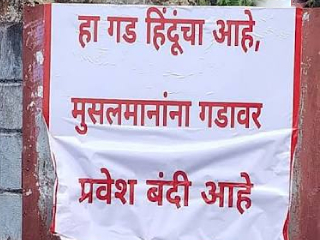 Boards stating ‘This fort belongs to Hindus; Muslims are not allowed entry here’ put up at Sinhagad Fort
 Yerawada (Pune) Police Station’s Inspector Anjum Bagwan involved in anti-Hindu and anti-social activities
 Bengaluru to establish the country’s first Government AI University !
 Pakistani cricketers smuggled drugs during their tours of India: RVS Mani
 Telangana’s Congress Govt to provide free AL and ‘digital security’ training to 80,000 minority students