
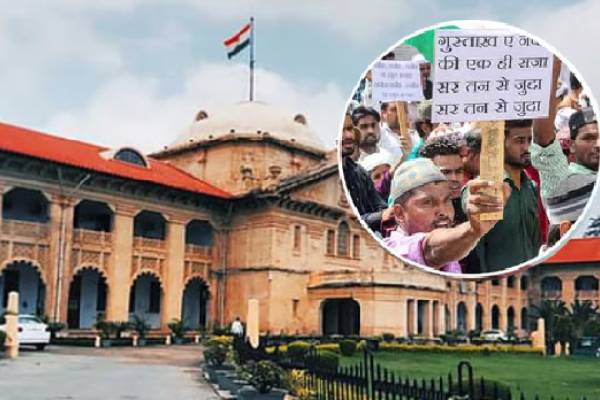
Prayagraj (Uttar Pradesh) – ‘Slogans like ‘Sar Tan Se Juda’ as a punishment for Gustakh-e-Nabi (insulting the Prophet) are not only against the law but are also a direct challenge to the sovereignty and integrity of India. Such slogans do not come under the ambit of freedom of expression or religious rights. They are capable of inciting ordinary citizens to violence and armed uprising,’ the Allahabad High Court observed. With these observations, a single bench of Justice Arun Kumar Singh Deswal rejected the bail application of Rihan, who was arrested during the violent protest in Bareilly.
The Court stated,
1. The Indian Constitution grants every citizen the right to freedom of expression; however, there are clear Constitutional limits to this. When a mob takes the law into its own hands and demands the death penalty like beheading for a person, it is a direct violation of the law. Such violent slogans given in the name of Islam are actually against the ideals of Prophet Muhammad.
2. Prophet Muhammad adopted the path of mercy, compassion and forgiveness despite enduring insults and torture in his life. When he went to the city of Taif, a non-Muslim neighbour living there used to harass him by throwing garbage on his path. However, the Prophet never retaliated. When this neighbour fell sick, the Prophet went to visit her. As a result, the neighbour converted to Islam. This action shows the Prophet’s strong principle of repelling evil with good. Therefore, giving a slogan to behead anyone who insults the Prophet is tantamount to insulting the ideals of Prophet Muhammad.
3. Slogans like ‘Sar Tan Se Juda’ do not originate from India’s cultural, legal or religious traditions. They are influenced by the blasphemy laws and violent incidents in neighbouring countries. There is a clear distinction between religious slogans like ‘Nara-e-Takbir’ (Allah is the greatest) or ‘Jai Shriram’ and slogans that incite violence. Religious slogans do not fall under the ambit of a crime unless they are used maliciously to intimidate people or incite violence.
Editorial PerspectiveIt has now become imperative to make a law banning such slogans in the country and punishing those who utter them with life imprisonment. |
 Rise in thefts of bedsheets, blankets and towels from air-conditioned railway coaches !
 Touching a woman’s chest does not amount to an attempt to rape: High Court
 Yerawada (Pune) Police Station’s Inspector Anjum Bagwan involved in anti-Hindu and anti-social activities
 Announce date for construction of Shri Krishna temple before 9th August, then no need for Karseva : Kali Sena
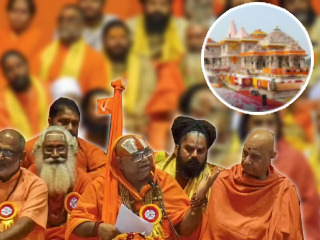 Shri Ram temple needs a devotee, not a government-appointed officer : Saints demand
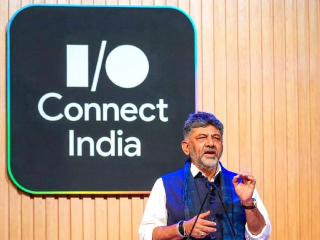 Bengaluru to establish the country’s first Government AI University !