
Ayurveda for a healthy life- 62/2025 on 16.10.2025
4. Symptoms associated with obesity
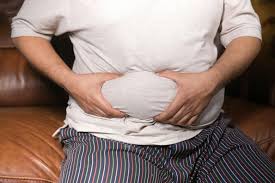
A. As fat accumulates around the abdomen, buttocks, breasts, and chin, these parts look enlarged.
B. Absence of initiative and energy and sluggish movements : Excessive accumulation of fat results in heaviness of the body and the tissues become delicate and loose. Hence the obese person becomes sluggish and lazy.
C. Difficulty in performing intercourse : This is due to diminished quantity of semen and partial obstruction of the path of semen due to fat. As the body is heavy, the movement of the body becomes difficult.
D. Weakness and a feeling of tiredness or exhaustion and excessive sleep due to imbalance of various tissues of the body.
E. Foul odour : This is due to excessive sweat and excretion of the products of fat metabolism in the sweat.
F. Excessive sweating : Due to the similarity between adipose tissue and Kapha, both of which help to increase sweat secretion and an itching sensation, sometimes the body has a foul odour.
G. Excessive hunger and thirst : Due to a very good digestive power and excessive accumulation of Vata in the gastrointestinal tract, hunger and thirst get stimulated by reflex.
H. Exertional breathlessness or a sudden pause while breathing
I. Excessive sleep
J. Indistinct speech
5. Complications of obesity
A. Diabetes
B. Boils, abscesses and carbuncles usually associated with diabetes which do not heal easily.
C. Perianal fistulae
D. Fever and diseases due to ama.
E. Disorders of the nervous system including coma.
F. Disorders of the respiratory tract such as cough and breathlessness.
G. Heart ailments like heart attack, angina and coronary thrombosis.

H. Disorders of the urinary tract leading to oliguria and dysuria.
I. Constipation and pain in the abdomen.
J. Liver disorders like jaundice.
K. Diseases of the gall bladder.
L. Skin disorders including leucoderma. As the fat accumulates below the skin, it gives rise to skin folds. If the skin is not cleansed properly, there is an accumulation of sweat due to inadequate air circulation, thus causing infection.
M. Glandular enlargement and neoplasm.
N. All diseases tend to be more severe.
O. Joint pain and backache.
P. Lifespan shortens : On eating excessively, more fat is formed and stored in the body. Hence nutrition to organs and tissues suffers, thus reducing the lifespan.
Q. Anaemia
R. Oedema
S. High blood pressure
T. There are high chances of obese individuals developing an inferiority complex.
U. Easy fatiguability with slight activity.
V. The veins on the legs become prominent.
6. Some instructions for weight reduction
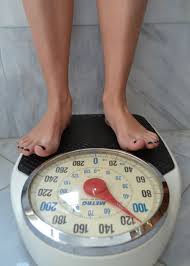
A. Weight should be reduced gradually. One should not try to reduce the weight suddenly or in a hurry as the urge and enthusiasm to reduce weight does not last for long, e.g. fasting
for 3 to 4 weeks. Generally one should reduce the weight by half
a kilogram per week.
B. On controlling the diet, initially one may feel tired and weak and the Pitta humour (dosha) may increase. But these symptoms subside after a few days. Obese individuals should eat less food than their body requirement.
C. Usually an obese individual should take a diet which gives 800 to 1000 calories of energy per day, so that the remaining energy is obtained from the fat stored in his body thus reducing his weight by 1/2 kg. to 1 kg. per week.
D. While controlling the diet, one should take an adequate amount of proteins, minerals and vitamins. Vitamins and minerals do not cause an increase in weight. The diet should be poor in carbohydrates and fats.
7. Treatment
Obesity by itself should be considered a disease and should be treated vigorously and continuously till the fat in the body and the weight are in the right proportion. The treatment should aim at reducing the body fat by langhan which consists of ‘shodhana’ and ‘shamana’.
Shodhana aims at removing excess of humours (doshas) from the body by the five methods (panchakarma), i.e. emesis, purgation, snuff, evacuation enema and blood letting. Shamana consists of attaining a balanced state of all the three doshas namely Vata, Pitta and Kapha which is achieved by –
A. Administration of drugs stimulating the metabolism of cells.
B. Fasting
C. Exercise
D. Working in a hot or breezy environment.
In mild obesity, restricting the diet and fluid intake, under-taking exercise and working in a hot or breezy environment are enough to ensure a cure. In moderate obesity, in addition to these measures, one should administer a drug which will stimulate metabolism. In severe obesity, in addition to all the above, one should undertake panchakarma or shodhana type of therapy.
E. Diet : The diet should help to reduce the fat and Kapha and normalise Vata. It should be low on calories, hot and dry but it should also be heavy so that it requires a long time to get digested and the patient does not feel hungry. Various drugs which decrease appetite are not worth taking as they do not have a long term action while some have side-effects. The best is to control one’s desire with will power and regulate food intake. The following diet is beneficial.
1. Cereals : Yava (Barley), vari, nachani (Ragi) and husk of wheat and rice.
2. Pulses : Masur, mung (Green gram), kulattha (Horse gram), tur (Red gram) and soyabean cake (Pendh) after extracting oil.
3. Milk : Buttermilk with butter removed and 1 to 2 cups of milk with the cream removed.
4. Vegetables : Cucumber, radish, carrot, tomato, karela (bitter gourd), etc. and a greater quantity of all leafy and fruity vegetables such as priyamgu, padval (Snakegourd) and brinjal.
5. Fruits : 1 to 2 fruits daily, except banana and mango.
6. Sugar : 1 to 2 teaspoonfuls of honey in a glass of water.
7. Meat : Meat after removing fat, small fish and an egg.
8. Spices : Amalaka, pungent, bitter and astringent food items, ginger, pepper, pippali, mustard oil, cardamom, ajamoda (Celery), soda bi-carb.
9. Water : Hot or warm water.
The food should be chewed completely. Before eating anything, one should drink a glass of lukewarm water. Fasting intermittently is a useful measure to control obesity. In short, one should eat an excess of fruits and vegetables. Rice, bhakri and chapati (Starchy food items) should be reduced to half the quantity. Proteins should be taken in the same quantity or slightly more and one should not eat fatty food items at all. However there is no need to avoid a small quantity of oil and ghee used for frying spices.
Please read about ‘The diet that is contraindicated in obesity visit: www.//sanatanprabhat.org/english/153542.html
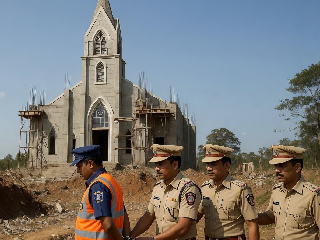 Illegal church in Solapur and misconduct by a municipal employee to be investigated
 Radiant Thoughts of Sachchidananda Parabrahman (Dr) Jayant Athavale
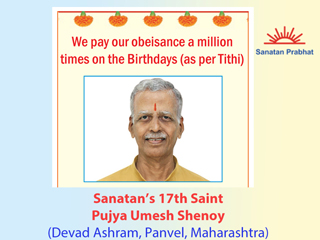 We pay our obeisance a million times on the Birthday (as per Tithi) of
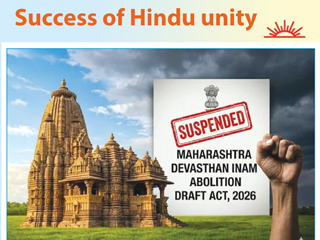 Major win for Hindu unity : Maharashtra Government suspends the controversial ‘Devasthan Inam Abolition Draft Act’
 Mumbai-based advocate Siddhavidya, who is trying to stop trafficking through surrogacy (artificial pregnancy) and animals, and animal killing
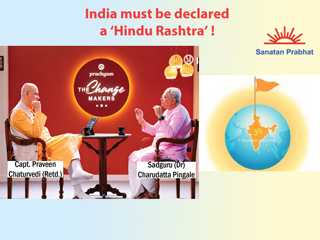 Secularism and the ‘Hindu Rashtra’