
Urban Naxals

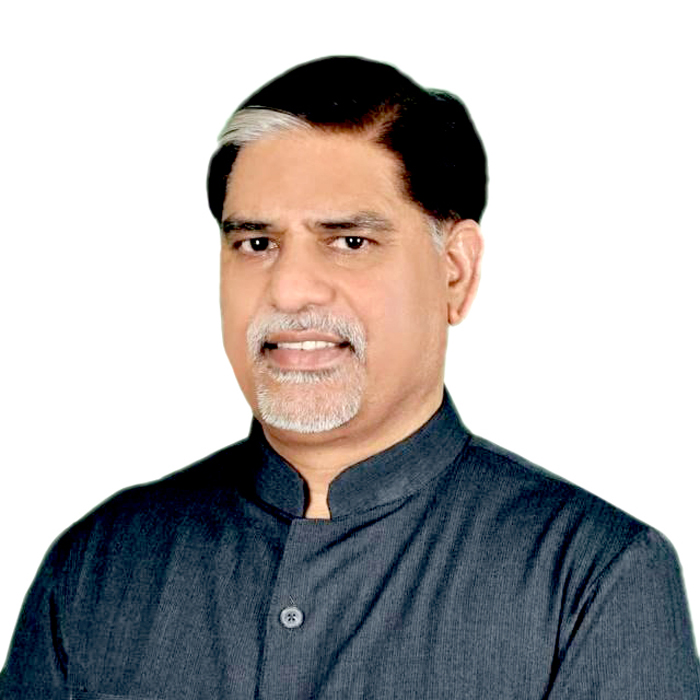
In the realm of national security, challenges are no longer limited to the battlefield or distant borders. One of the most pressing and potential threats today comes not from external enemies but from ideologically motivated actors operating within cities – intellectuals, activists and professionals who are often labeled as Urban Naxals.
When ex-Chief of Defence Staff (Late) General Vipin Rawat had coined the term ‘Dhai Morche Ka Yuddh (two and a half front war)’, he had included these Naxals in the half front within. Naturally, the two fronts he was indicating were China and Pakistan.
The term ‘Naxal’ refers to individuals who, while outwardly functioning in respectable societal roles propagate, support, and legitimize the armed Maoist insurgency to overthrow the constitutionally established Government. The problem has plagued India for decades. It captures a hidden but real ideological network working against the Indian state, while the supporters of the Naxals see it as a tool to suppress dissent. Regardless of the controversy, the issue deserves attention, particularly in the context of national security, civil liberties, and the ideological battles shaping India’s future.
Understanding Urban Naxalism
To grasp the idea of urban Naxalism, one must begin with the Naxalite movement itself. Originating in 1967 in Naxalbari village of West Bengal, the movement started as a violent peasant uprising inspired by Maoist ideology. Its goal was and remains – the overthrow of the Indian state through armed ‘revolution’. Over the decades, it spread to several parts of the country, particularly tribal and underdeveloped regions, giving rise to what’s commonly called the ‘Red Corridor.’
While rural Naxalism (insurgency) is violent and armed, urban Naxalism is its covert, strategic, and ideological arm. It involves the use of academic platforms, media, NGOs, legal forums, courts, bar, cultural institutions, etc to spread the divisive and destructive (they call it revolutionary) ideology and weaken the state apparatus from within. Unlike the gun-wielding cadres in jungles, urban Naxals operate in cities – away from the battlefield, but not away from the conflict. They bring the ‘war’ in the classrooms, boardrooms, newsrooms and drawing rooms.
Characteristics of Urban Naxals
Urban Naxals are not ragtag militants; they are often educated, articulate, and ideologically driven individuals. Their effectiveness lies in their ability to blend seamlessly into respectable circles while pursuing a subversive agenda. Some of the common characteristics associated with urban Naxals include :
1. High Educational and Social Standing : Many urban Naxals are lawyers, professors, authors, human rights activists, journalists, NGO workers and even Government servants. Their professional stature lends credibility and influence to what they say and do.
2. Ideological Rigidity : Rooted in Marxist-Leninist-Maoist thought, they see the Indian state as an oppressive, capitalist, and fascist entity. Their goal is not reform but the complete overthrow of the existing democratic structure.
3. Institutional Infiltration : Urban Naxals infiltrate into academia, media, think tanks, bar councils and judiciary to shape public opinion, influence youth, and obstruct state action.
4. Indirect Operational Role : They may not carry weapons, but they offer strategic guidance, legal aid to arrested Maoists, and coordinate with underground networks.
5. Narrative Warfare : They challenge state narratives under the guise of free speech, secularism, or social justice, while subtly legitimizing Maoist violence and delegitimizing the Indian state.
The Aim : Dismantling the Indian state
The aim of urban Naxals, according to several intelligence reports and academic studies on Left-Wing Extremism (LWE), is aligned with the larger Maoist objective – the destruction of the Indian state and its replacement with a ‘people’s Government.’ Their ideological commitment is not to the democratic institutions but to class struggle, revolution, and eventual seizure of power through any means necessary. Their urban strategy focuses on :
1. Mobilizing discontent through civil unrest, protests, and anti-state movements, like – anti-CAA movement, farmers agitation in the name of faulty crop purchase policy, etc.
2. Exploiting social issues such as caste discrimination, tribal displacement, poverty, police brutality and imagined concepts of ‘Brahminism’, capitalism, etc to turn people against the state. The examples are – agitation on Rohit Vemula suicide case, Narmada Bachao Andolan, anti-nuclear reactor movement at Kudankulam, imagined discrimination by ‘Brahmans’ on other caste in the past etc.
3. Recruiting educated youth, particularly from universities, for further assistance of the revolutionary cause, like NSUI.
4. Weakening state institutions by challenging proposed bills for amending the existing laws/Acts, legislations, Acts, obstructing law enforcement, and providing legal shields to armed cadres and arrested/jailed rebel. The examples are lobbying and legal aid to Ververa Rao, GN Saibaba, Sudha Bhardwaj, Vernon Gonsalves, Varavara Rao, Gautam Navlakha and Arun Ferreira. All this is done in the name of ‘human rights violation’ of ‘freedom of speech.’
5. Building ideological ecosystems in literature, art, cinema, and social media that romanticize armed revolution and vilify national institutions.
The urban front is crucial because it provides the intellectual legitimacy and tactical planning required to sustain rural insurgencies. Without ideological fuel and strategic cover from urban networks, many security experts believe, the rural insurgency would collapse.
The Support System : A Deep and Organized Network
Urban Naxals thrive within a structured and layered support system that extends far beyond individual actors. This includes :
1. Academic Institutions : Some universities are seen as hotbeds of radical thought. Professors and student unions may, knowingly or unknowingly, promote Maoist ideology in the name of critical thinking or activism.
JNU (Jawaharlal Nehru University) New Delhi is prominent among such institutions. JNU has become so infamous for nurturing urban Naxals that when 76 security men (75 from CRPF and one from local police) were ambushed and killed, there was celebration in the campus by urban Naxals of NSUI in connivance with a few professors.
2. NGOs and Civil Rights Groups : Certain non-Governmental organizations are found to funnel funds, gather intelligence, or offer cover for Maoist sympathizers under the banner of human rights.
The NGOs include the Diocesan Society Church of North, Jesus and Mary Delhi Educational Society, Delhi Diocese Overseas Grant Fund, Institute of Economic Growth (IEG), Samuel Foundation Charitable India Trust and Hemophilia Federation of India (HFI).
In total 20,711 NGOs have been shut by the Government of India. These NGOs think very futuristically and strategise their planning well in advance. Every year a new NGO is registered so that if one NGO is banned, the others can continue and new ones are registered.
3. Legal Networks : A web of lawyers and activists provide legal assistance to arrested Maoists, delay investigations, and file public interest litigations to obstruct security operations, like many lawyers and civil rights activist lobbied for Teesta Setalwad who is accused of embezzlement of funds and anti-national activities. Many lawyers have been fighting cases of dreaded terrorists of Kashmir.
4. Media and Cultural Outlets : Some journalists, writers, and filmmakers are accused of creating sympathetic portrayals of Naxals and hostile depictions of the state, thus shaping public opinion in their favour. There are many movies that support terrorists in Kashmir by portraying the terrorists as victims.
5. Foreign Funding and Support : Intelligence agencies have raised concerns about international funding for NGOs linked to leftist causes, which may indirectly benefit the Naxal movement.
This complex web allows urban Naxals to operate effectively while evading direct scrutiny. They act as the urban command structure for an insurgency that is otherwise rural and violent.
(This is Part 1 of an Article, which will be concluded in our next Issue.)
(Courtesy : Article by Major Saras Tripathi (Retd), Pragya Matth Publications, Ghaziabad, UP; 28.7.2025)
(Major Saras Tripathi is a retired Indian Army officer, author, and publisher. He served in the army from 1992 to 1999, including during counter-insurgency operations in Kashmir. He later authored books and became a publisher, heading Pragya Matth Publications. He is also a motivational speaker and commentator.)
| Find out : What is Urban Naxalism and How Does It Impact Modern India
https://vivekagnihotri.com/what-is-urban-naxalism-and-how-does-it-impact-modern-india/ |
| Urban Naxals operate in cities. They bring the ‘war’ in the classrooms, boardrooms, newsroom and drawing rooms ! |
 645 crimes against Hindus reported in Bangladesh over the past five months
 Suhail arrested in Karnataka for plotting to bomb Shriram Temple
 First meeting of the Government Committee on Devasthan Lands held !
 We must stand firmly against Hinduphobia !
 India warns Bangladesh over disrespect towards Shriram’s Murti
 Muslims oppose construction of tribal families’ houses; work resumes after police intervention