
Former ED chairman Karnal Singh reveals
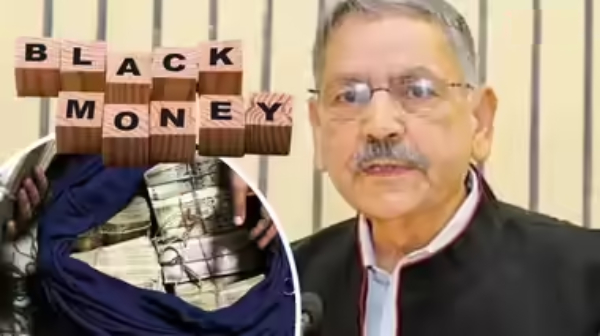
New Delhi – Black money is money that has not been declared to the Income Tax Department. That is, the Government has no knowledge of that money. The easiest way to make black money white, that is, official, is through the banking sector. People invest money in ‘real estate’ or send it abroad through hawala (transferring money to the concerned without the medium of a bank), said Karnal Singh, former chairman of the Enforcement Directorate (ED). He gave information in an interview about how hardcore criminals, as well as corrupt politicians, turn black money into white in India. Former IPS officer Karnal Singh was the head of the ED from 2015 to 2018. Karnal Singh further said that ‘money laundering’ (requesting or sending money abroad) also happens through trade. Under this, the value of goods is either shown higher through ‘over-invoicing’ or lesser through ‘under-invoicing’, so that the money can go out of the country. In India, people buy benami properties or open companies in someone else’s name.
🚨 Former ED Chief Drops Bombshell on Black Money
"The easiest way to launder black money is via banks," reveals ex-ED chief Karnal Singh.
“People often invest in real estate or send money abroad via hawala (informal, non-bank channels).” pic.twitter.com/Lv3ZbddlnJ
— Sanatan Prabhat (@SanatanPrabhat) July 15, 2025
Method of turning black money into white : In words that the general public can understandKarnal Singh, while explaining the method of how black money is turned into white, said that if someone has earned black money through crime, he plans to turn it white. To achieve this, he takes a loan from a bank, starts a business and invests black money in it through fake payments (to show the exchange of goods in the business). The business never starts in reality; but it is shown that he is earning money from it. Due to this, the original black money starts to appear white; that is, legal, in fact, it is turned into white. As a concrete example, Singh gave the example of a politician in Maharashtra, in which the politician ran a network of 300-400 ‘shell (fake) companies’ to launder money earned through corruption. These are entities that most of the time exist only on paper. The politician sent money to these entities in installments of Rs 45,000. This amount was kept atless than Rs 50,000 because transactions exceeding Rs 50,000 are reported to the ‘Financial Intelligence Unit’, a Government agency that monitors financial crimes. He further said that this money was sent through multiple bank accounts and then reinvested in the same politician’s entity. |
 Rise in thefts of bedsheets, blankets and towels from air-conditioned railway coaches !
 Touching a woman’s chest does not amount to an attempt to rape: High Court
 Yerawada (Pune) Police Station’s Inspector Anjum Bagwan involved in anti-Hindu and anti-social activities
 Announce date for construction of Shri Krishna temple before 9th August, then no need for Karseva : Kali Sena
 Shri Ram temple needs a devotee, not a government-appointed officer : Saints demand
 Bengaluru to establish the country’s first Government AI University !