
Beggars pay bail, get released within an hour, and resume begging again
No provision in the law for strict punishment or for transgender beggars
By Pritam Nachankar, Special Correspondent, Sanatan Prabhat
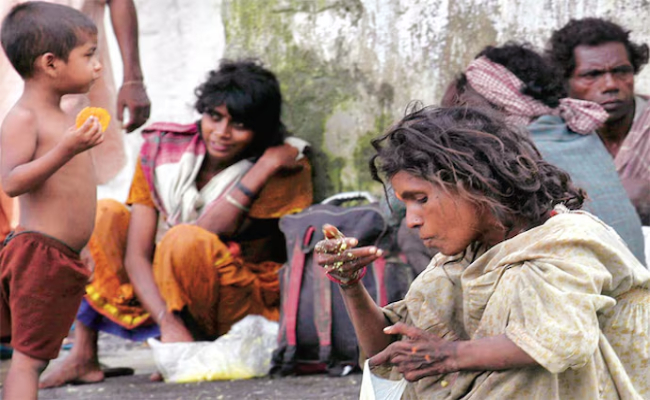
Mumbai – Maharashtra has a ‘Prevention of Begging Act,’ unlike many other states in the country; however, this important law has been virtually neglected. Over the past 75 years, even basic reforms suited to changing times have not been made to the Act. At present, even if Police conduct drives and detain beggars, they are released within an hour after paying a few thousand rupees as bail and lawyers’ fees, and they resume begging again. The law, which comes under the Women and Child Welfare Department, needs several important reforms according to present-day circumstances.
The ‘Bombay Prevention of Begging Act, 1959,’ enacted when Mumbai (erstwhile Bombay) was a separate state, was adopted as is after the formation of Maharashtra, just like many other laws. In 2025, the daily allowance for beggars housed in “Beggar Reception Centres” was increased from ₹5 to ₹40; however, apart from this, no meaningful reforms have been made in the law to date.
Interstate beggars operating in MaharashtraAccording to an official from the Beggar Reception Centre, most beggars caught in Police drives are from West Bengal. Large numbers also come from Uttar Pradesh, Jharkhand, and Assam. During the month of Ramzan, many Muslim beggars from other states reportedly come to Maharashtra, especially Mumbai, for begging. Some of these beggars are even found carrying expensive mobile phones. |
Negligence by Police as well
Despite the existence of the Prevention of Begging Act, the number of beggars in the state continues to rise instead of declining. One reason is that many people treat begging as a profession. Organised gangs involved in begging are active in the state. Police have the authority to take action against them; however, the Home Department has allegedly failed to act seriously against the issue. It is necessary that state government should conduct a survey of beggars through the Home Department and properly implement the law.
How action is taken

Under this law, Police have special squads dedicated to catching beggars. Once detained, beggars are first presented before a District Magistrate’s Court. If it is proven that the person is genuinely begging, the magistrate orders them to be sent to a “Beggar Reception Centre.” Maharashtra has 14 such centres, which function under the Women and Child Welfare Department. Beggars are generally kept there for about one year and are taught skills such as handicrafts, tailoring, gardening, and other vocational activities in an attempt to make them self-reliant. The centres also provide medical treatment, counseling, patriotic education, and entertainment facilities. If a beggar shows no improvement and no relatives are found, they can be kept in a rehabilitation institution for life with government approval.
Administration helpless as professional beggars secure bail easily
Even when Police catch beggars, most admit to begging; however, by paying ₹2,100 for bail along with lawyers’ fees, they are released within an hour and resume begging as a profession. The law contains no provision for strict punishment against repeat offenders or those who beg as a profession. As a result, paying some money and continuing the business of begging has become financially viable for many. Some beggars even threaten Police officials if their release is delayed after bail is granted. In many cases, associates from organised begging gangs are already present with money to arrange bail immediately.
More than 80% of beggars addicted to drugs
An official from a Beggar Reception Centre stated that more than 80% of beggars detained during drives are addicted to narcotic substances. They require treatment and counseling to help them recover from addiction.
What about transgender beggars
If Police detain a transgender beggar, there is no arrangement for them in Beggar Reception Centres because the law itself contains no such provision. As a result, authorities currently face a major challenge regarding where such individuals should be housed. Although the Social Justice Department runs hostels for destitute transgender persons, they cannot be sent there because they are detained under the Prevention of Begging Act. Legal amendments are necessary in this regard.
Need for modern reforms in the law
This law in Maharashtra is considered highly important. In recent years, some former residents of beggar homes have gone on to start their own businesses. In the Beggar Reception Centre at Chembur, the administration even arranged marriages between male and female beggars brought there, and their child is now employed at the same centre. Three years ago, a 23-year-old youth from Uttar Pradesh who had gone missing was reunited with his parents through this centre. In this way, these institutions play an important role in transforming the lives of beggars into those of ordinary citizens. Therefore, the government should take the matter seriously and reform the law according to present-day needs.
 India is indeed a Hindu Rashtra
 Conversion of Hindus by Muslims in Barabanki (Uttar Pradesh) !
 Mysuru (Karnataka): 40 Bangladeshi infiltrators alight from the Howrah Express
 Western Ghats in Gujarat, Maharashtra and Goa likely to be declared ecologically sensitive areas
 Priyank Kharge’s conspiracy to divide Hindu society ! : Kota Srinivas Poojary, BJP MP
 According to the Popular Front of India’s ‘Mission-2047’, all terrorists will emerge and overthrow the Government !