
Daily hearing underway in Dhar Bhojshala case at Madhya Pradesh High Court
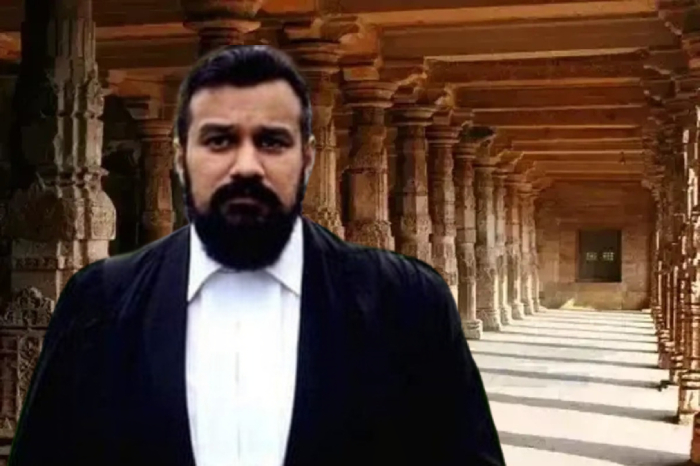
Indore (Madhya Pradesh) – Daily hearings in the Dhar Bhojshala case have commenced at the Indore bench of the Madhya Pradesh High Court. After the Supreme Court referred the matter to this bench, all parties have begun presenting their arguments.
Appearing for the Hindu side, Advocate Vishnu Shankar Jain presented arguments highlighting the historical background and traditions associated with Bhojshala during the Hindu period. He cited references from the 10th and 11th centuries, including Sanskrit sources, and also referred to the Supreme Court’s judgment in the Ram Temple case. He asserted that the property does not belong to the Waqf Board and mentioned recent developments related to Waqf regulations in 2025.
Key points presented during the hearing:
1. The Hindu side referred to the survey report of the Archaeological Survey of India (ASI), stating that Bhojshala has historically been a centre of Hindu faith. It was emphasized that the findings of the survey need to be taken seriously.
2. During the hearing, references were also made to the rule of King Bhoj, along with claims regarding damage caused during Islamic invasions and subsequent changes during the British period. Various pieces of evidence were presented to underline the historical and archaeological significance of Bhojshala. It was also stated that the site has been regarded as a “protected heritage” location since the 10th–11th centuries.
3. Advocate Vishnu Shankar Jain cited a plaque from 1935, stating that disputes over the site intensified thereafter and that attempts were made to take control of the premises unlawfully. He supported his arguments with ASI reports, carvings on pillars, and historical records.
What is the Case about?
Bhojshala, located in Dhar, is believed by the Hindu side to have originally been a temple dedicated to Goddess Saraswati. It is alleged that the structure was later damaged during invasions and encroached upon.
The Muslim side, however, maintains that the site is the Kamal Maula Mosque, dating back to the 11th century.
At present, the site is under the control of the Archaeological Survey of India. As per court orders, excavation and survey work had been carried out at the location, during which, according to the Hindu side, several idols were discovered.
 Terrorist arrested in Jammu and Kashmir ahead of the Amarnath Yatra
 More than 13,000 illegal Bangladeshi infiltrators in Karnataka !
 Claim of a conspiracy to Islamise the Dattapeetha premises at Chikkamagaluru (Karnataka) !
 9 incidents of love jihad exposed in various states in the last 24 hours
 Licences of 6 hotels, bakeries and clubs suspended in Mumbai; 19 people arrested
 “If there had been a Muslim in the Shri Ram Janmabhoomi Teerth Kshetra Trust, he would have been ‘encountered’ over the theft” : Asaduddin Owaisi