
|

New Delhi – Concerns are growing across Europe amid the Iran conflict and the perceived unpredictability of U.S. President Donald Trump’s policies. Against the backdrop of potential tensions arising from Trump’s trade strategies, several European countries are preparing to repatriate their gold reserves stored at the Federal Reserve in New York back to their home nations.
Fear of gold reserves being frozen!
For decades, many European countries have stored their gold reserves in the Federal Reserve’s vaults for security and logistical reasons. However, Trump’s “America First” policy has raised fears of strained relations between Europe and the United States.
European nations are concerned that in the event of economic sanctions or a trade conflict initiated by the U.S., their gold reserves could be frozen or used as leverage for political pressure.
Countries such as Poland, Hungary, and several Central European nations have reportedly accelerated the process of bringing their gold reserves back home. Germany, one of Europe’s largest economies, had earlier transferred nearly half of its gold holdings from New York to Frankfurt. Discussions are now reportedly underway regarding the remaining reserves as well.
Importance of gold reserves
A nation’s currency value and financial stability are closely linked to the strength of its gold reserves. During periods of war or global economic uncertainty, gold is widely regarded as the safest financial asset.
Following the Russia–Ukraine conflict, Western countries froze portions of Russia’s foreign exchange reserves. Learning from that precedent, several European nations now seek to maintain complete sovereign control over their national assets.
Possible impact on the global dominance of the dollar
Experts warn that if large quantities of gold are withdrawn from the United States, it could weaken the global dominance of the U.S. dollar. Such developments may also trigger significant volatility in international gold markets.
 If Prabhu Shriram married only once, the same can be expected of Rahim !
 US to impose 100% tariffs on five countries, including India, for purchasing Russian oil !
 Rajasthan: 38 Goshalas siphon off crores in government grants by inflating cattle numbers
 Shrikrushna was a Muslim who offered namaz five times a day: Maulana Jerjis Ansari
 If sexual intercourse is based on cheating or blackmail, it will be considered ‘rape’ ! : Madras High Court
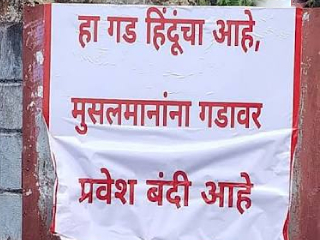 Boards stating ‘This fort belongs to Hindus; Muslims are not allowed entry here’ put up at Sinhagad Fort