
Iran demands compensation and assurance of no future attacks
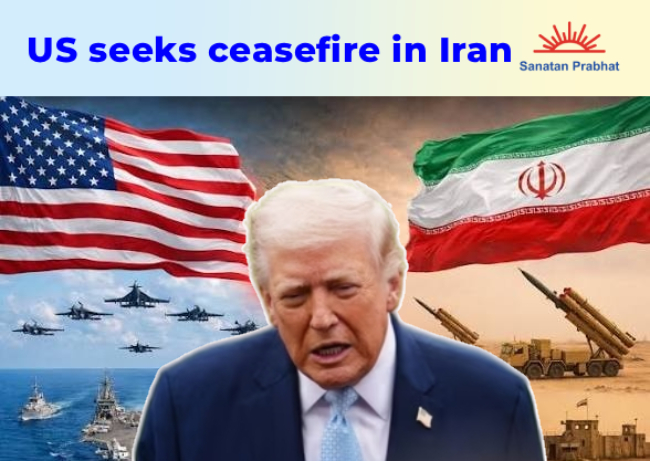
New Delhi – On the 24th day of the attacks carried out by Israel and the United States on Iran, the US has initiated efforts toward a ceasefire. However, Iran has placed certain conditions. US President Donald Trump has indicated readiness for talks, with his advisors Jared Kushner and Steve Witkoff working on the initiative. Iran’s conditions for negotiations include stopping the war, providing compensation for damages, and giving a firm guarantee that no future attacks will take place.
Trump has clarified that he is not yet ready to accept all of Iran’s demands, especially regarding compensation. There are currently no direct talks between the US and Iran; countries like Egypt, Qatar, and United Kingdom are acting as mediators.
The US wants Iran to temporarily halt its missile development programme, stop uranium enrichment, dismantle its nuclear facilities, and cease funding groups like Hezbollah and Hamas.
Peace comes through strength: Trump
Donald Trump made a strong statement saying, “Peace comes through strength,” which is being interpreted as an indirect warning to Iran. His remark may further escalate tensions in the Middle East.
War poses threat to global economy
Fatih Birol, head of the International Energy Agency, stated that the Iran conflict is a major threat to the global economy. He said the situation is serious, resembling multiple oil and gas crises occurring simultaneously. If conditions persist, no country will remain unaffected. Several oil and gas facilities have been attacked, impacting global supply.
Anti-US protests across Iranian cities
According to the Fars News Agency, people in several Iranian cities have taken to the streets against the US and Israel. On 22 March, protests were held in Kerman, where demonstrators carried images of the country’s new supreme religious leader Mojtaba Khamenei. Similar protests were also organised in South Khorasan, Urmia, and Ardabil.
Trump responsible for Iran war – Former CIA Director
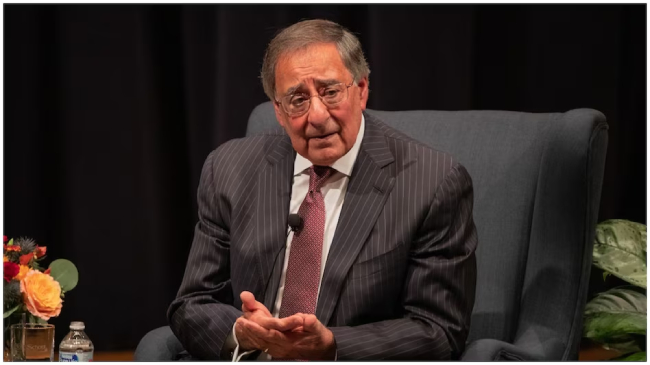
Former US Defense Secretary and former Central Intelligence Agency (CIA) Director Leon Panetta made the following statements:
1. The Middle East crisis has largely been created by Trump himself; the risks were not unforeseen.
2. US security officials have, for many years, been aware that Iran could block the Strait of Hormuz and disrupt global oil supply. This was a well-known risk; however, despite repeated warnings in the past, it appears to have been ignored in the current conflict.
3. It is not classified information that if you plan to go to war against Iran, the Strait of Hormuz would be one of the most significant vulnerabilities.
4. The current situation reflects a clear lack of preparedness. Either the administration underestimated Iran’s response or assumed the conflict would end quickly. They were not prepared and are now paying the price. The consequences are not limited to the region but are visible across global markets.
5. Contrary to expectations, the United States has not succeeded in weakening Iran. Instead, Iran’s leadership appears to have strengthened, with a more hardline figure like Mojtaba Khamenei coming to prominence.
6. Whichever option is chosen will have serious consequences. Withdrawing could be seen as a failure, while escalating the war risks worsening the situation further.
7. If you are planning a war, consulting your allied nations is not a bad idea.
59% of Americans oppose attacks
As the war with Iran enters its fourth week, pressure on Trump is increasing domestically. Rising fuel prices and uncertainty about the war’s duration are causing many Americans to reconsider their support. A survey by Reuters found that 59% of Americans oppose US attacks on Iran.
No attacks on Iran’s energy infrastructure for 5 Days: Trump
Donald Trump had earlier warned Iran to reopen the Strait of Hormuz within 48 hours or face attacks on energy facilities. After the deadline passed, he directed the US Department of War to postpone any military strikes on Iran’s power plants and energy infrastructure for five days.
Trump claimed this decision was made following very positive discussions between the US and Iran over the past two days.
 ‘We will cut off the hands of those who stop our water !’ : Pakistani Minister Musadik Malik
 India prepares to seek Pakistan’s reinstatement to the FATF grey list
 “If I reveal the names of the powerful people involved in the Shri Ram Temple donation theft, they will kill me” : Bageshwar Dham chief Pandit Dhirendra Krishna Shastri
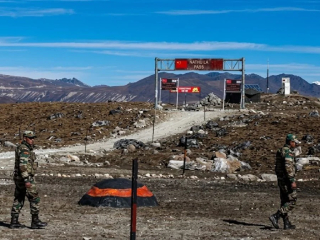 No Chinese military incursion into Arunachal Pradesh : Indian Army clarifies
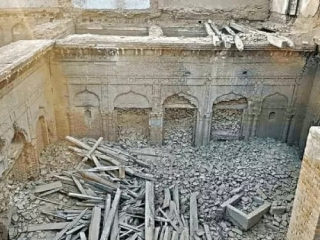 Attempt to demolish 125-year-old Gurdwara in Pakistan !
 Major win for Hindu unity : Maharashtra Government suspends the controversial ‘Devasthan Inam Abolition Draft Act’