
|
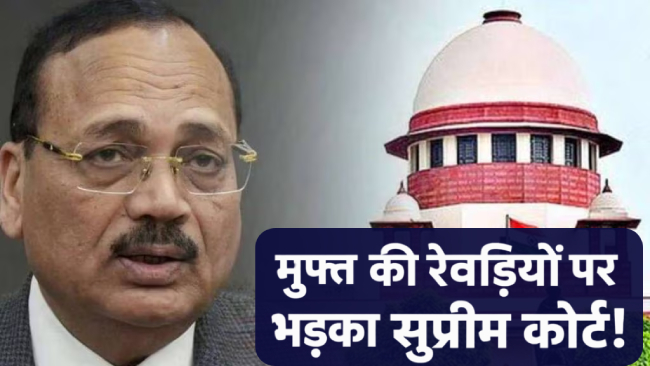
New Delhi – The Supreme Court has expressed strong displeasure over freebie schemes announced by various states. The Court warned that such policies could adversely affect the country’s economic development. “When many states are already running revenue deficits, who will ultimately bear the cost of free electricity, cash transfers, and other concessions? Is it not the taxpayers?” the Court asked.
🚨 Freebie Politics Under Fire
The Supreme Court has cautioned governments against reckless “freebie” schemes, warning that unchecked populism can derail India’s economic growth.
Revenue deficits rise, and ultimately it’s the taxpayers who foot the bill.
Short-term gains for a… pic.twitter.com/44aDMrn0AC
— Sanatan Prabhat (@SanatanPrabhat) February 19, 2026
1. Providing free facilities is against fiscal discipline
During the hearing in the case of Tamil Nadu Power Distribution Corporation versus the Government, Chief Justice Suryakant observed that while it is the duty of the state to assist the needy, providing free facilities indiscriminately even to those who are capable is against fiscal discipline. The growing tendency to announce such schemes just before elections is becoming dangerous. All political parties and policymakers should introspect. (Those intoxicated by power, despite knowing everything, sacrifice public interest for personal gain! – Editor)
2. Clarify the source of funds for free schemes
The Chief Justice emphasized that many states are facing revenue deficits, yet welfare expenditure continues to rise steadily. As a result, funds available for development works are shrinking. “Why is at least 25 percent of the annual revenue not spent on development?” the Court asked. The states were also directed to clearly explain, through affidavits, how they intend to raise funds for these free schemes.
3. Questions raised over direct cash transfers
The Chief Justice further remarked that states should focus on generating employment. “We have reached a stage where we start the day with free food, then free bicycles, followed by free electricity, and now direct cash deposits into citizens’ bank accounts.” When most states are already in revenue deficit, such policies impose additional financial burdens on them. Consequently, little remains for development; most funds go toward paying officials’ salaries and meeting the liabilities of these schemes.
Observation on planned and unplanned expenditure
Justice Bagchi stated that when making policy decisions, a clear distinction must be maintained between planned and unplanned expenditure. If such schemes are to be implemented, they must be incorporated into the budget with a clear explanation of how funds will be raised. Sudden decisions—such as granting free electricity to a specific community—and the manner of their execution increase arbitrariness in financial administration.
Editorial PerspectiveFor political gain, most parties in the country announce or implement such schemes effectively as inducements to voters. While some individuals may benefit in the short term, the broader public ultimately suffers. It is shameful if the people fail to recognise this reality. |
 Terrorist arrested in Jammu and Kashmir ahead of the Amarnath Yatra
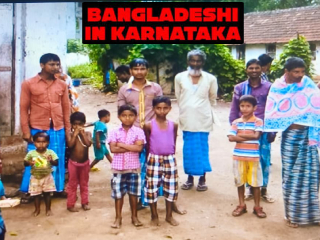 More than 13,000 illegal Bangladeshi infiltrators in Karnataka !
 Claim of a conspiracy to Islamise the Dattapeetha premises at Chikkamagaluru (Karnataka) !
 9 incidents of love jihad exposed in various states in the last 24 hours
 Licences of 6 hotels, bakeries and clubs suspended in Mumbai; 19 people arrested
 “If there had been a Muslim in the Shri Ram Janmabhoomi Teerth Kshetra Trust, he would have been ‘encountered’ over the theft” : Asaduddin Owaisi