
In 1991, India’s economic condition had become extremely precarious. India’s foreign exchange reserves had depleted completely, with only a namesake amount remaining. At such a time, India abandoned the policies of the Nehru era and stepped into the field of privatisation. Thereafter, a massive transformation took place in India’s economic condition. Many foreign establishments entered India and began their businesses. This very reason had earlier led to opposition to privatisation; however, when viewed today, nearly 35 years later, it is evident that India has benefited greatly from privatisation.

Subsequently, after Prime Minister Modi’s Government came to power in 2014, India has today become the world’s fourth-largest economy. No country can survive by being strong only in the defence sector, nor can any country thrive by being strong only in the economic sector; it is necessary to be strong on both the fronts. It is precisely for this reason that the USA dominates the world today. China has also adopted the same policy. If India wishes to become a superpower or establish its dominance on the world map, it too must become strong in both the sectors – economic & defence.
Gandhian India earlier did not manufacture weapons. During the rule of Indira Gandhi, recognising that modern weapons are essential for national defence, institutions were established for the development of advanced weaponry. As a result, today India has become self-reliant in the manufacture of missiles such as Agni, Prithvi, Akash and BrahMos, as well as nuclear weapons.
During Prime Minister Modi’s tenure, India also adopted a policy of arms exports, and today India has begun selling indigenously manufactured weapons on a large scale. This has generated substantial revenue for India, which is being utilised for the Nation’s development.
Since India is a vast marketplace for the world, global establishments aim to capture this market. Although India has adopted the principle of privatisation, it has also followed a policy ensuring that domestic establishments are not adversely affected. This is the primary reason for tensions between India and the USA. For the same reason, a trade agreement between India and America has not yet been finalised.
The US President Donald Trump has repeatedly stated with reference to Prime Minister Modi and India that India sells its goods cheap in USA, but imposes heavy taxes on their goods when they are sold in India. Trump’s anger was directed at India. He then found an excuse in Russia to take revenge. Claiming that India purchases crude oil from Russia and that Russia uses the proceeds for the Ukraine war, Trump threatened that India should stop buying oil from Russia. India rejected this threat and continued purchasing oil. Citing this very reason, Trump imposed 50% tariffs on India.
It is noteworthy that when India began purchasing oil from Russia, the USA Government was led by Biden, not Trump, and at that time there was verbal opposition to India’s decision. Pressure tactics were applied, but Biden administration refrained from imposing hefty tariffs on Indian imports. However, after Trump’s return, out of anger, he imposed tariffs on India.
Trump believed that this would weaken India’s economy; however, due to Prime Minister Modi’s capable leadership and policies, Trump’s objective failed. Today, India is trading with foreign countries on a much larger scale than before, and its Gross Domestic Product (GDP) has also increased.
Trump’s days are numbered !
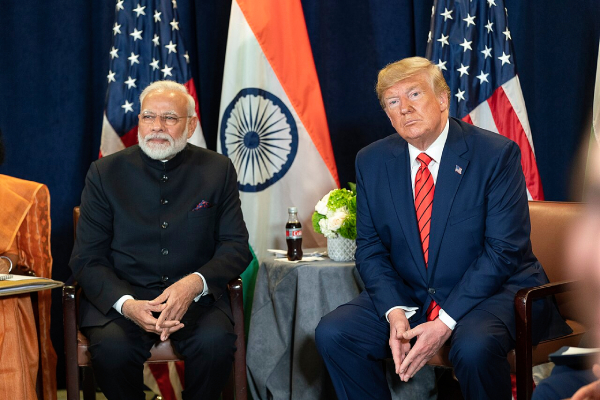
While the increase in India’s GDP itself was a slap in Trump’s face, he received an even bigger blow from his allied countries, namely the European countries. The European Union has signed its largest-ever ‘Free Trade Agreement’ with India. This agreement is being described as the ‘Mother of all deals’. This agreement with a bloc of 27 developed countries has the potential to transform the direction of India’s global trade.
An agreement that had remained in the pipeline for 19 long years has now finally been concluded. The greatest benefit of this agreement will be for India’s export sector. Europe is a colossal market worth 21 trillion dollars. At present, India’s share in the European Union’s total imports is only 2.9%; however, this is expected to increase significantly after the agreement.
If labour-intensive sectors such as textiles, gems, jewellery, leather and agricultural products receive ‘zero-duty’ access to Europe, millions of new jobs will be created. If Europe’s stringent regulations on the pharmaceutical sector are relaxed, Indian generic medicines will gain access to a vast market. Furthermore, if visa regulations are eased for service-sector professionals, India’s service exports will witness a major leap.
Strategically, this agreement will help reduce India’s trade dependence on China. It will prove to be a milestone in India’s journey towards becoming a 5-trillion-dollar economy. If import duties on European luxury four-wheelers (currently ranging from 70% to 110%) are reduced, vehicles such as Mercedes, BMW and Audi will become cheaper. While this will benefit consumers, it will create intense competition for domestic automobile manufacturers.
Trump had threatened Europe not to enter into this agreement and had exerted heavy pressure. However, considering the state of global politics and Trump’s conduct towards Europe, the European Union disregarded his pressure and went ahead with the agreement with India. This is India’s greatest victory and a massive setback for Trump. Trump’s attempt to isolate India has backfired.
The consequences of Trump’s arrogant policies have now begun to affect the USA itself. As a result, the USA citizens have taken to the streets to protest against him. In many places, thousands of people are protesting. While suppressing these protests, the military has shot dead three people so far, further fuelling public anger. This situation is likely to prove extremely difficult for Trump.
By entering into a trade agreement with Europe, India has demonstrated to the world how diplomacy should be conducted and how one should act with confidence in one’s own capabilities, without succumbing to pressure.
(PritamNachankar, Principal Correspondent, Sanatan Prabhat)
| By entering into a trade agreement with Europe, India has demonstrated to the world how diplomacy should be conducted ! |
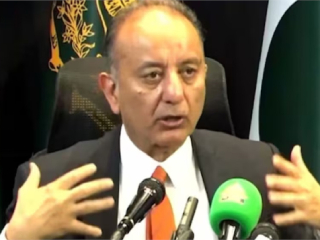 ‘We will cut off the hands of those who stop our water !’ : Pakistani Minister Musadik Malik
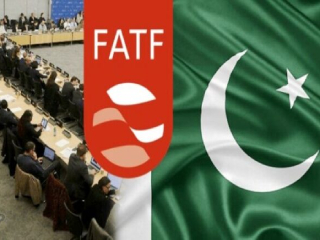 India prepares to seek Pakistan’s reinstatement to the FATF grey list
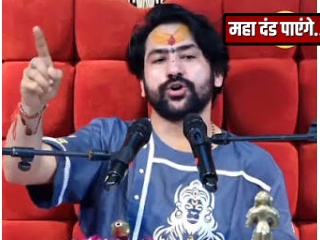 “If I reveal the names of the powerful people involved in the Shri Ram Temple donation theft, they will kill me” : Bageshwar Dham chief Pandit Dhirendra Krishna Shastri
 No Chinese military incursion into Arunachal Pradesh : Indian Army clarifies
 Attempt to demolish 125-year-old Gurdwara in Pakistan !
 Radiant Thoughts of Sachchidananda Parabrahman (Dr) Jayant Athavale