
Prime Minister Modi’s article on the occasion of completion of 1,000 years since the destruction of the Somnath Temple
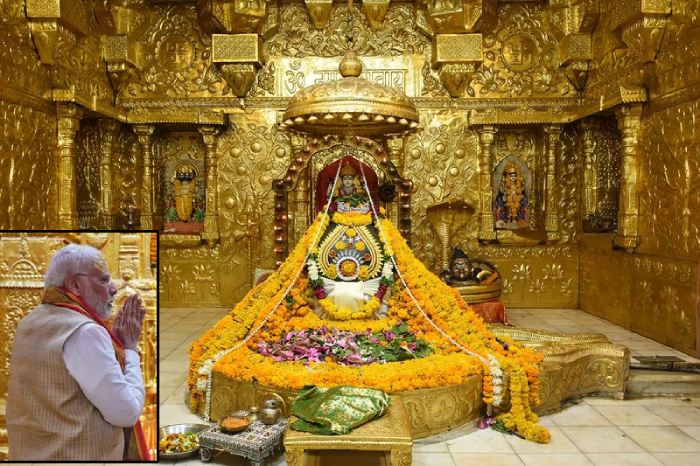
New Delhi – If the Somnath Temple, which was destroyed 1,000 years ago, can once again stand today in all its grandeur, then we too can recreate the ‘Prosperous India’ of 1,000 years ago. With this very inspiration, let us strive towards building a ‘Developed India’. An India whose cultural wisdom inspires us to continuously work for the welfare of the entire world—these were the thoughts expressed by Prime Minister Modi through an article.
In January 1026, Mahmud of Ghazni attacked and destroyed Somnath. On the completion of 1,000 years of that event, the Prime Minister has written this article under the title “Somnath Swabhiman Parva” (Festival of Somnath’s Pride).
Five important key messages from Prime Minister Modi’s article
1. Somnath is the eternal expression of the Indian soul
The very word Somnath evokes feelings of pride and devotion in our minds. Located at Prabhas Patan in Gujarat, the Somnath Temple represents the soul of India. The Dwadash Jyotirlinga Stotra mentions the twelve Jyotirlingas of India, and it begins with the line “Saurashtrae Somnatham cha…”—meaning that Somnath is mentioned first among all the Jyotirlingas.
2. The spiritual significance of the Somnath Temple is immense
Unfortunately, this very temple, the centre of faith and prayers for millions, became a target of foreign invaders. In January 1026, Mahmud of Ghazni carried out a massive attack and destroyed the temple. Yet, even after a thousand years, the temple stands today in full splendour. After 1026, efforts to rebuild the temple continued from time to time. Its present form finally came into existence in 1951. The spiritual significance of the Somnath Temple is enormous. It inspired a society whose economic strength was also extremely powerful.
जय सोमनाथ!
वर्ष 2026 में आस्था की हमारी तीर्थस्थली सोमनाथ ज्योतिर्लिंग पर हुए पहले आक्रमण के 1000 वर्ष पूरे हो रहे हैं। बार-बार हुए हमलों के बावजूद हमारा सोमनाथ मंदिर आज भी अडिग खड़ा है! सोमनाथ दरअसल भारत माता की उन करोड़ों वीर संतानों के स्वाभिमान और अदम्य साहस की गाथा है,…
— Narendra Modi (@narendramodi) January 5, 2026
3. Those with a mindset of destruction eventually perish
Despite the attacks on Somnath and the long period of slavery that followed, today I say with complete confidence and pride that the story of Somnath is not a tale of destruction. It is a saga of the self-respect of crores of sons and daughters of Mother India that has continued for the last 1,000 years. Every time the temple was attacked, there were great men and women among us who made the supreme sacrifice to protect it.
4. Abandoning our faith means death
Mahmud of Ghazni looted the temple and left, but he could never snatch away our devotion to Somnath. Even today, in the year 2026, the Somnath Temple sends a message to the world that; those with a mindset of destruction vanish, while the Somnath Temple stands firm as a powerful pillar of our faith.
This is the national psyche; this is the national life force. To abandon this is to invite death. Separation from it will lead only to destruction.
5. The book “Somnath, The Shrine Eternal” by K. M. Munshi must be read
Any reference to the Somnath Temple is incomplete without recalling the contributions of Ahilyabai Holkar, Sardar Vallabhbhai Patel and K. M. Munshi. Munshi had strongly supported Sardar Patel during that time. His work related to Somnath, especially his book “Somnath, The Shrine Eternal” must be read.
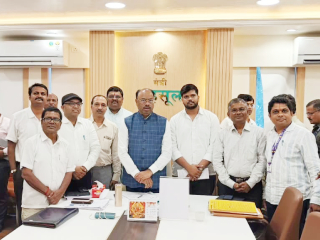 First meeting of the Government Committee on Devasthan Lands held !
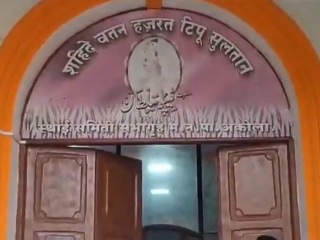 Akola Municipal Corporation’s naming of Standing Committee Hall after Tipu Sultan is illegal
 Review sexual harassment laws through a committee of women legislators !
 Passenger murdered in Mumbai local train over a trivial dispute; accused arrested
 Udhayanidhi Stalin accuses TVK govt of echoing BJP’s stand on HR&CE dept
 Four cases of Love Jihad and two cases of religious conversion reported in the past 24 hours !