
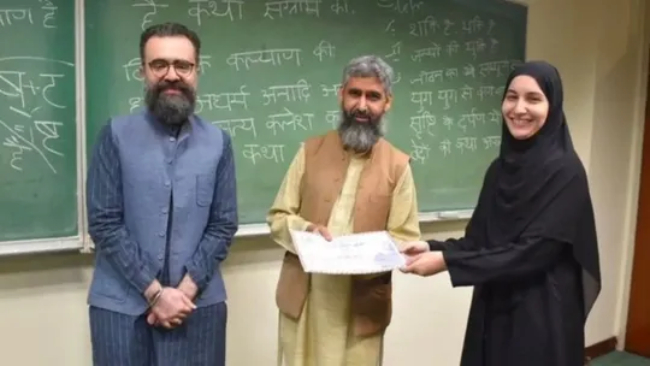
Lahore (Pakistan) – The sound of Sanskrit mantras is now being heard in Pakistan. After conducting a three-month Sanskrit workshop, the ‘Lahore University of Management Sciences’ (LUMS) has now launched a formal Sanskrit curriculum. Students and professionals participated in the workshop in large numbers. The workshop covered various dimensions ranging from Sanskrit grammar to Puranic traditions.This is the first occasion since Independence on which Sanskrit is being studied in Pakistan in this manner.
Encouraged by the positive response, the university has commenced the academic course. In the next phase, preparations are underway to begin research on the Ramayana and Mahabharata.
Formal academic course at the University level
Following the workshop, the university has introduced a regular Sanskrit course. Although admissions to this programme are currently limited, plans are in place to increase the intake in 2027. The university also intends to offer a short-term Sanskrit Diploma in the future.
A boost to the study of the Ramayana, Gita and Mahabharata
According to Dr. Ali Usman Qasmi, Director of the Gurmani Centre in Lahore, within the next 10 to 15 years Pakistan will produce scholars capable of conducting research on Sanskrit, the Bhagavad Gita and the Mahabharata. These courses will provide a new direction to the study of ancient Indian literature.
Importance of studying Sanskrit and the Vedas
Dr. Qasmi states that many historians believe the Vedas originated in this very geographical region; hence, the study of Sanskrit and the Vedas is essential for Pakistan. At present, Punjabi, Pashto, Sindhi, Balochi, Arabic and Persian are taught in the region, and Sanskrit is the source language for many words across these languages. The inclusion of Sanskrit strengthens the entire linguistic ecosystem.
A valuable collection of Sanskrit manuscripts
The university has preserved an invaluable collection of ancient Sanskrit manuscripts. In the 1930s, scholar J.C.R. Woolner compiled these manuscripts on palm leaves; however, no academic study was undertaken after 1947. With the new initiative, fresh research activity is now likely to begin.
 ‘We will cut off the hands of those who stop our water !’ : Pakistani Minister Musadik Malik
 India prepares to seek Pakistan’s reinstatement to the FATF grey list
 “If I reveal the names of the powerful people involved in the Shri Ram Temple donation theft, they will kill me” : Bageshwar Dham chief Pandit Dhirendra Krishna Shastri
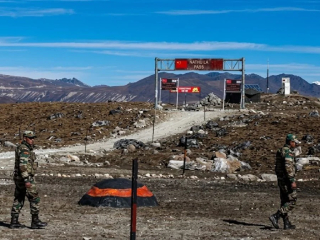 No Chinese military incursion into Arunachal Pradesh : Indian Army clarifies
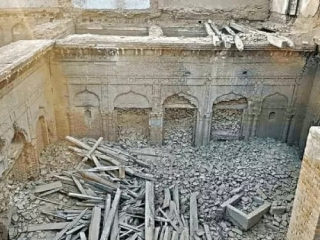 Attempt to demolish 125-year-old Gurdwara in Pakistan !
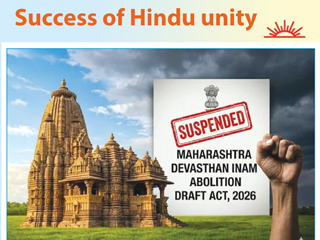 Major win for Hindu unity : Maharashtra Government suspends the controversial ‘Devasthan Inam Abolition Draft Act’