
The world is heading toward destruction, but India holds the opportunity to guide it, says Sarsanghchalak
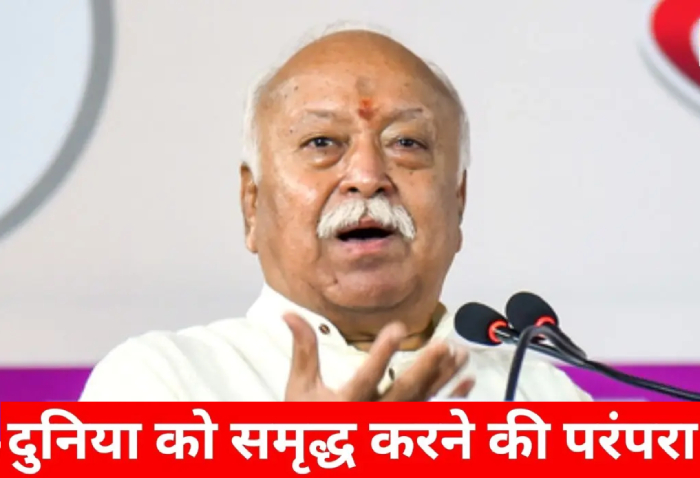
Mumbai – “What we perceive through our senses is determined by the signals our brain receives. To grasp reality in its true sense, we must rise beyond the limitations of the material mind,” said Rashtriya Swayamsevak Sangh’s Param Pujya Sarsanghchalak Mohanji Bhagwat at the release of the book Arya Yug on October 19.
Key points expressed by Param Pujya Sarsanghchalak Mohanji Bhagwat
1. Freedom from Macaulay’s knowledge system
“To understand India’s eternal knowledge tradition, we must liberate ourselves from the Macaulay system of education. That system alienated us from our own roots and made our thinking foreign. The world today is moving toward destruction, but India still has a chance to show the way. We must reconnect with our origins. Our minds and thoughts have become westernised. Only by freeing ourselves from foreign influence can we reclaim our ancient wisdom. Though that system trained our intellect, we must now channel that ability toward rediscovering our own spiritual and cultural heritage.”
2. Hindu unity and continuity across the world
“Every four years, Hindus from around the world come together in India. Despite challenges, they continue to preserve their identity and cultural traditions.”
3. British motives behind introducing English education
“The British believed that to control Indians, they needed to teach them English and Western culture. In 1835, the English Education Act was passed, making English the primary language of instruction in schools and colleges.”
4. Consequences of Westernised education
“This had a lasting impact on India’s education system. Generations became separated from their roots and traditions. Indian languages and classical knowledge were sidelined. English education benefited only the wealthy and the middle class, while poor children were left behind, creating social inequality. Instead of promoting creativity and depth, education became job-oriented and mechanical. This resulted in a superficial and one-dimensional system.”
 Terrorist arrested in Jammu and Kashmir ahead of the Amarnath Yatra
 More than 13,000 illegal Bangladeshi infiltrators in Karnataka !
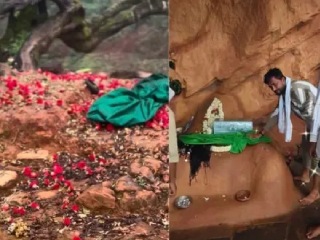 Claim of a conspiracy to Islamise the Dattapeetha premises at Chikkamagaluru (Karnataka) !
 9 incidents of love jihad exposed in various states in the last 24 hours
 Licences of 6 hotels, bakeries and clubs suspended in Mumbai; 19 people arrested
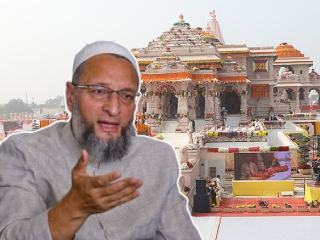 “If there had been a Muslim in the Shri Ram Janmabhoomi Teerth Kshetra Trust, he would have been ‘encountered’ over the theft” : Asaduddin Owaisi