
‘Crimson Crescent – The Last Quarter’, written and directed by renowned journalist Mayank Jain, was released
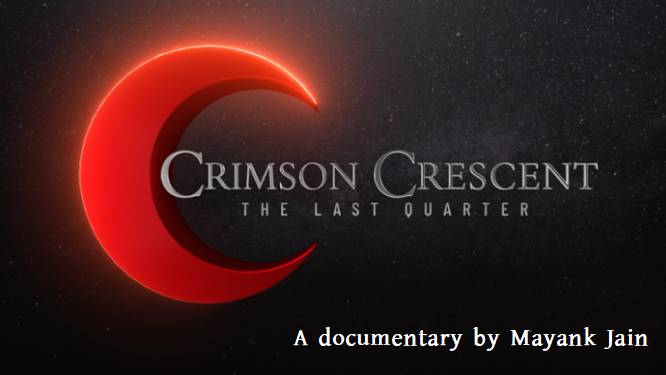
New Delhi – A documentary titled ‘Crimson Crescent – The Last Quarter’ was recently released. This 1-hour and 45-minute-long English-language documentary was released at the ‘Press Club of India’ in New Delhi. The documentary raises the question whether ‘Saudi Arabia’s Crown Prince Mohammed bin Salman (MBS) can peacefully bring about the most significant ideological transformation in the Islamic world’. ‘Will Saudi Arabia, which has been spreading radical Wahhabi ideology (Wahhabi ideology emphasizes the literal meaning of the text between the Quran and the Sunnah) through madarasas in Africa, South Asia, and Southeast Asia for decades, today reform radical Islam under the leadership of MbS ?’, asks famous director and journalist Mayank Jain through this documentary. Jain is the writer and director of this documentary. The documentary has been broadcast on various prominent YouTube channels, including Robert Spencer’s ‘Jihad Watch’, ‘Sangam Talks’, ‘Sudarshan News’, Neeraj Atri’s ‘Politically Incorrect’, ‘Upward’, and ‘Political Adda’. It is receiving a great response from thousands of people.
Director Mayank Jain appeals to pro-Hindu organisations to publicise the documentary for better reach
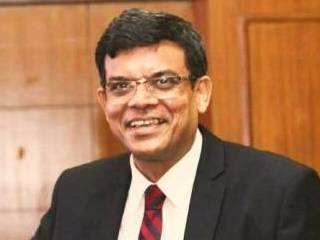
Mayank Jain (Director, Crimson Crescent)
‘Sanatan Prabhat’ contacted Mayank Jain regarding the documentary. Jain said that pro-Hindu organisations should come forward to make this documentary reach the maximum number of people. Documentaries are an excellent medium for promoting social awareness. I have worked day and night for this documentary.
📽️ Crimson Crescent – The Last Quarter by @mayankjain100 raises a bold question:
👉 Can Saudi Arabia shed its image as an Islamic hardliner?
Key takeaways:
🔹 Neom vs. Madrasas – surveys reveal madrasas fuel violence🔹 Uyghur Genocide – Islamic world’s silence = moral decay… pic.twitter.com/E9zBw8lzxi
— Sanatan Prabhat (@SanatanPrabhat) August 21, 2025
Important aspects of the documentary
1. NEOM: Reflection of change in the desert?
In 1989, communist East Germany and democratic West Germany were united by the fall of the Berlin Wall. Similarly, will Saudi Arabia break through the wall of radical Islam by building an ambitious and cutting-edge technology-driven smart city called ‘NEOM’ in the desert of Saudi Arabia ?, The documentary asks this deep question. The construction of this smart city will cost a whopping one and a half trillion dollars, i.e. Rs 131 lakh crore. This has left Saudi Arabia with no money left to spread Wahhabi ideology, claims ‘Crimson Crescent’. Jain says that this makes ‘NEOM’ not just a city but a revolutionary tool that binds peace and technology together.
2. Various surveys shed light on how madarasas encourage violence
‘Crimson Crescent – The Last Quarter’ asks a difficult question, which is, ‘Whether students studying in madarasas are more likely to murder in the name of religion ?’ According to a report released by the ‘Combating Terrorism Centre and the International Crisis Group’, 91 per cent of students in Indonesian madarasas openly support the religiously motivated killing of non-Muslims. All of these are mainstream Islamic madarasas. This violent mindset is not limited to class but is directly linked to violence on the ground. The documentary claims that the 17 coordinated attacks on processions in 17 cities in India on the day of Ganesh Visarjan in 2024 are evidence of the radical education in madarasas. This is not abstract extremism but a weapon of education.
3. Muslims are the victims !
91 per cent of those killed in Jihadi terrorist attacks are Muslims. From this, the documentary brings to light the fact that ‘the ideology that claims to defend Islam has inflicted deep political, spiritual and demographic wounds on the Muslim world itself’.
4. The Islamic world’s silence on the Uyghur genocide is a failure of moral responsibility
One of the most poignant parts of the documentary is the silence of Muslim-majority countries on the unprecedented atrocities suffered by the Chinese regime against more than 10 million Uyghur Muslims in China’s Xinjiang province. The documentary calls this not a political mistake, but a failure of moral responsibility.
5. An overview of the damage caused to India by Jihadi terrorism
The documentary cites statistics provided by national and international organisations such as ‘ASSOCHAM’, ‘Asia Economics Institute’ and ‘Institute for Economics and Peace’.
5 a. India lost Rs 9 lakh crore due to the 26/11 attack in Mumbai alone: India lost $100 billion (Rs 9 lakh crore) due to the 26/11 Mumbai attack, including $20 billion (Rs 1.8 lakh crore) in foreign investment.
5 b. Billions of rupees lost in PPP terms: In 2017, India lost nearly $1 trillion (Rs. 87.50 trillion) in PPP terms due to terrorism and communal violence. This figure was 9 per cent of the GDP (gross domestic product). In 2020, it lost $646 billion (Rs. 56.23 trillion). (PPP stands for Purchasing Power Parity, a method of comparing currencies objectively by studying how much money is spent to buy certain goods in different countries. This can be used to determine a country’s economic productivity and standard of living.)
5 c. Will Saudi Arabia compensate? : The documentary argues that if Saudi Arabia is indeed no longer funding Wahhabi ideology, will it compensate India for the damage caused by this ideology over the past several decades ?
6. ‘Crimson Crescent’ is the next ideological part of the documentary ‘The Bangla Crescent’ from 20 years ago
‘Crimson Crescent – The Last Quarter’ is the next ideological part of the documentary ‘The Bangla Crescent – ISI, Madarasas and Infiltration’, which was directed by Mayank Jain himself 2 decades ago. ‘Bangla Crescent’ gave information about what would happen, while ‘Crimson Crescent’ has documented what happened and what is finally changing now. Fearless journalism and in-depth ground reporting can be said to be important aspects of both these documentaries.
The director was threatened for asking about the word ‘Kafir’ in a madrasa in Delhi
For the shooting of the documentary, director Mayank Jain travelled to Nuh in Haryana, Sundarnagari in the capital Delhi, as well as some parts of Bengal and Assam. During this time, they recorded conversations on camera in homes, madarasas, and inner-city areas. In many interviews, madrasa students clearly described non-Muslims as ‘kafirs’ (non-believers in Allah). The students also spoke about ‘Dawat’ (the act of inviting non-Muslims to Islam) and ‘Jihad’ (war against non-Muslims). While interviewing a madarasa teacher and students in Sundarnagar on the concept of ‘kafir’, a crowd gathered, and people started shouting. As a result, the interview had to be stopped abruptly. Although the crowd’s attitude was threatening, the message was clear: ‘Such questions should not be asked’. The documentary depicts this incident.
 Israel will not withdraw from Lebanon, no matter how much pressure the United States exerts ! : Israel
 I do not act according to Trump’s wishes, nor does Trump act according to mine ! : Netanyahu
 British Prime Minister Keir Starmer Resigns
 Iran will not exist if it closes the Strait of Hormuz: Donald Trump
 Nepal does not want Britain to mediate in its border dispute with India
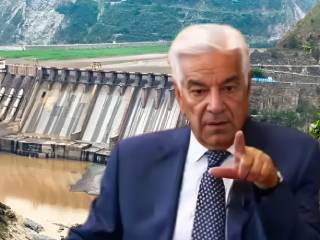 Will go to war against India if our ‘water’ is threatened : Pak Defense Minister