
 Bengaluru – A collaborative study between Victoria University in Melbourne and Queen’s University in Belfast found that meditation leads to better management of stress and improves mental health outcomes. Researchers conducted studies on a part of the human endocrine system that isn’t well studied in the context of meditation.
The endocrine system is a network of glands spread out in the human body, which produce hormones to regulate metabolism, growth, sexual functions, mood, sleep and development. They are responsible for the function of every cell and organ.
The study found a connection between meditation, the endocrine system and general well-being by analysing and reviewing a large number of existing studies on meditation and hormones. The results were published this week in the journal Cell Press.
“Through comprehensive literature review, we found that there is a clear link between meditation and stress reduction”, said Chantal Ski, an author on the paper at the School of Nursing and Midwifery at Queen’s University in a statement. “We focused on studies that analysed how meditation affected the endocrine system and a number of interconnected systems that regulate stress”, Chantal said.
“Whilst it is intriguing that various meditation practices appear to induce changes in endocrine function, and consequently, be associated with improvements in mental health, the underlying associations and mechanisms that might operate are unclear, though likely involve psychological, physiological, and neurological processes”, said Michaela Pascoe of Institute for Health and Sport at Victoria University, and lead author of the paper.
Meditation is becoming an increasingly popular form of personal mental health management, supported not only by anecdotal evidence about managing emotions, but also through evidence from a growing body of studies. Many of these studies have analysed the effect on the hypothalamic–pituitary–adrenal (HPA) axis, a network of three glands located near our brains and kidneys. The hypothalamus is a regulator that tells the pituitary gland when to produce growth hormones, and the adrenal gland is responsible for the flight-or-fight response.
The new study also analysed the renin-angiotensin-aldosterone (RAA) system of glands, which regulates blood pressure and fluid balance. The team found that there is a high likelihood that meditation physically affects the RAA system.
Most pertinently, researchers discovered that the hypothalamic-pituitary-thyroid (HPT) axis – linked to depression and anxiety – could also be influenced. This means that the thyroid hormone production is affected by meditation, which in turn can help manage depression, anxiety, and stress.
These learnings indicate that one can help develop a tailored meditation practice that can greatly benefit individuals or groups of people suffering from similar mental and emotional health issues.
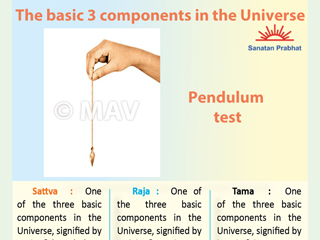 Subtle changes observed in March 2026 in the Sanatan-made picture of Shriram in the temple in Sachchidananda Parabrahman (Dr) Athavale’s room and their spiritual analysis
 Spiritual research on the positive effects of the Mahadhanwantari Yag on various components of the Yag
 “While the world’s technology sector is advancing rapidly, the Union Govt is making IITs conduct research on astrology, rebirth and similar subjects” : K’taka HM Priyank Kharge
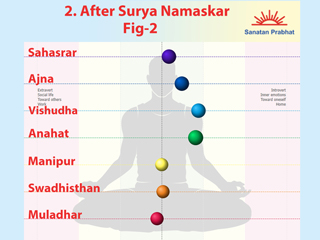 Smoking causing an extreme effect on the Kundalini-chakras of a seeker
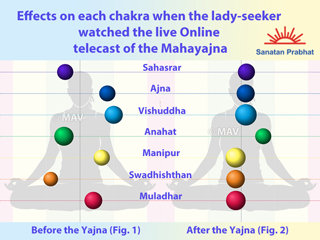 Six Kundalini-chakras of a lady-seeker becoming conducive to imbibing Chaitanya after watching the Shri Rajamatangi Mahayajna Online