
Thiruvananthapuram (Kerala) – In the Sabarimala case, the long-standing restriction on entry of women aged 10 to 50 years was set aside in 2018 by a 5-judge Bench of the Supreme Court of India in a 4:1 majority verdict. The Court had held that the exclusionary practice violated constitutional guarantees, including equality and freedom of religion.
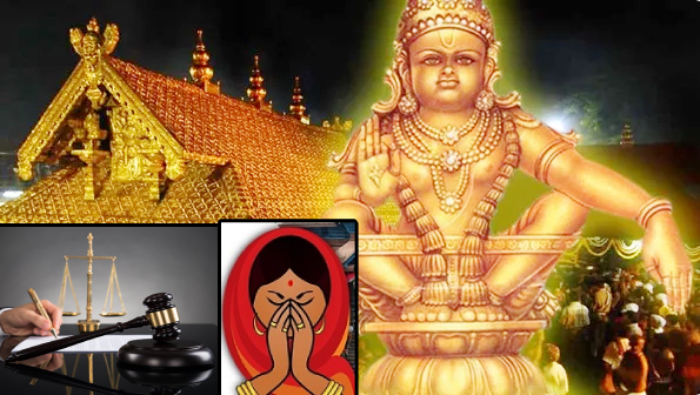
At that time, the Kerala Government led by Pinarayi Vijayan had supported the judgment and taken steps to implement it, leading to widespread protests. The matter was later referred to a larger Bench in 2019. It is now scheduled for consideration before a 9-judge Constitution Bench, where the State has altered its earlier position.
Faith should not be tested on rationality, says Kerala Government

“The court, while exercising judicial review, ought not to ordinarily delve into whether a religious practice is rational or logical. What is required to be seen is whether the belief is genuinely and conscientiously held as part of a religion.”
It further submitted that : “Before effecting changes in long-standing religious practices, the views of stakeholders, including religious scholars and reformers of the concerned faith, may be considered.” In the 2018 judgment (Indian Young Lawyers Association vs State of Kerala), the majority of the Supreme Court of India had observed – ‘Devotion cannot be subjected to the stereotypes of gender’ and ‘Patriarchy in religion cannot be permitted to trump over faith.’
However, during review proceedings in 2019, a 5-judge Bench (3:2 majority) noted that the issues raised could impact similar questions in other religions and observed, “These issues require consideration by a larger Bench.” Accordingly, the matter was referred to a 9-judge Constitution Bench without staying the original 2018 verdict.
Kerala Government’s stand on constitutional morality
The Government stated, constitutional morality is rooted in values such as equality, non-discrimination and dignity, and cannot be determined by subjective or shifting individual notions. At the same time, it maintained that practices violating law or public order cannot be protected under the guise of religion.
Tradition at Sabarimala Temple
At the Sabarimala Temple, Shri Ayyappa is worshipped in a celibate form. Based on this belief, women in the age group of 10 to 50 were traditionally not permitted entry, as devotees consider this necessary to preserve the Deity’s celibate austerity.
Editorial Perspective :
|
 Radiant Thoughts of Sachchidananda Parabrahman (Dr) Jayant Athavale
 We pay our obeisance a million times on the Birthday (as per Tithi) of
 Major win for Hindu unity : Maharashtra Government suspends the controversial ‘Devasthan Inam Abolition Draft Act’
 Mumbai-based advocate Siddhavidya, who is trying to stop trafficking through surrogacy (artificial pregnancy) and animals, and animal killing
 Construction of Sanatan Dharma Complex halted due to threats in Bangladesh
 Cuba 2026 : Why Havana Suddenly Matters Again