
|
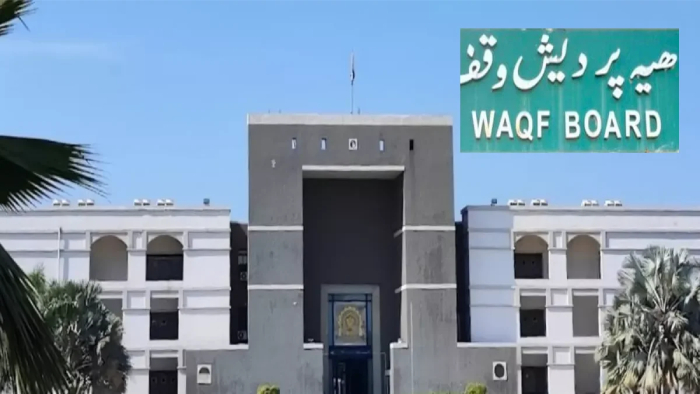
Ahmedabad (Gujarat) – The Gujarat High Court has given a significant and historic decision regarding the Waqf Board. The Court has clarified that the Waqf Board will now not be able to file cases without paying Court fees. After a hearing that lasted for about a week, the High Court rejected approximately 150 petitions filed by Waqf institutions. These petitions sought to regain control of Waqf properties from tenants or alleged encroachers, and to obtain related benefits. This decision is considered one of the largest mass rejections of petitions in Waqf cases in the history of Gujarat. The public had the perception that Waqf institutions were given special concessions when appealing in Courts and tribunals, while temples and other religious institutions had to pay Court fees. This verdict has put an end to this perception.
🚨 Historic Court Ruling ⚖️
The Gujarat High Court has ruled that the Waqf Board will NO LONGER be allowed to file cases without paying court fees.
📄 150 petitions were dismissed in this matter.
❓ Why was the Waqf Board given such a special exemption for decades?
🔍 This… pic.twitter.com/qI95AylM3f
— Sanatan Prabhat (@SanatanPrabhat) December 20, 2025
1. The petitioners included Waqf trustees such as the ‘Sunni Muslim Eidgah Masjid Trust Vadodara’, ‘Sahar Masjid Sabha Trust’, and the ‘Sarkhej Roza Committee’ from Ahmedabad. These trustees had challenged the orders of the Gujarat State Waqf Tribunal. According to those orders, payment of Court fees was mandatory before the hearing of any dispute.
2. The High Court noted that the Waqf trustees had sought relief before the tribunal in matters where there was a dispute between both parties, and where rights and liabilities had to be legally determined to reach a decision. Therefore, these cases were not simple applications but were of the nature of full-fledged contentious lawsuits.
3. The Court clarified that applications filed under Section 83 of the Waqf Act are judicial proceedings. Since they take the form of a lawsuit, the Gujarat Court Fees Act, 2004 applies to them. Therefore, payment of Court fees is mandatory.
HC decides not to interfere with Waqf Tribunal’s order
The Gujarat High Court stated that the first order issued by the Waqf Tribunal had directed the correction of the suit’s valuation in terms of Court fees and jurisdiction. This order was not challenged by the Waqf institutions in any higher Court within the stipulated time. The objection was raised only after the claim was dismissed due to non-payment of Court fees. Since the first order itself was not challenged in time, the second order cannot be deemed incorrect merely on the grounds of non-payment of fees. As there is no serious legal error, jurisdictional defect, or incorrect application of law in the lower Court’s order, the question of interference does not arise. All the petitions were dismissed on this basis.
Calling them applications does not change the rules
The Waqf institutions argued that since the Waqf Act does not have a clear provision regarding Court fees, no fees should be levied on applications filed under it; however, the High Court rejected this argument.
A long-standing misconception cleared
The High Court clarified that previously, due to certain legal provisions, Waqf institutions were exempt from Court fees; however, this exemption has now ended. Muslim Waqf Trusts, like other religious trusts and charitable institutions, will also have to pay a fixed fee to litigate in Court. For many years, there was a perception among Waqf institutions, from small dargah managements to large mosque boards, that Court fees were not applicable to disputes related to Waqf; however, this decision has dispelled this misconception.
Decision against the backdrop of nationwide discussion
Discussions are underway across the country regarding Waqf administration. This decision, given at such a time, has gained significant importance. This year, the Waqf Amendment Act 2025 was passed in Parliament. The purpose of this law is to improve the management of Waqf lands and properties. While some have welcomed this law, others have criticized it.
High Court’s decision ‘historic’ : Deputy Chief Minister Harsh Sanghavi
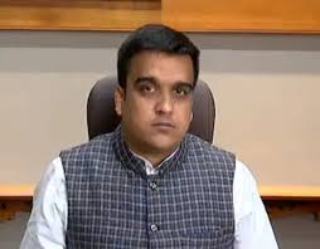
Gujarat Deputy Chief Minister Harsh Ramesh Sanghavi has termed the High Court’s decision as ‘historic’. He stated that all religions are equal in India, and the Court has ensured equal rights for all citizens. The Waqf Act, which was introduced by the Congress party for vote bank politics, contained provisions that exempted Waqf properties and tribunal cases from Court fees. However, fees were levied on similar cases concerning the properties of temples, gurdwaras, and other religious institutions. This decision has eliminated this inequality.
Editorial Perspectives
|
 Illegal church in Solapur and misconduct by a municipal employee to be investigated
 Karnataka: Religious fanatics breaks farmer’s hand over bursting firecrackers in front of a mosque !
 Wife earning more than her husband is not entitled to maintenance : Karnataka High Court
 Amazon Insults Aryabhata : Hindu Janajagruti Samiti serves legal notice
 Murtis of Hindu Deities found in the basement of Jama Masjid in Bharuch (Gujarat)
 Construction of Sanatan Dharma Complex halted due to threats in Bangladesh