
Effective counter-terrorism requires dismantling the economic, ideological, and social structures underpinning terrorism. It involves education, remembrance, and collective societal resolve to prevent future attacks. Memorializing sites of terrorist violence as places of martyrdom reinforces public memory and awareness, ensuring that society does not slip back into complacency or inadvertently forgive and forget terrorist atrocities for short-term economic gains.
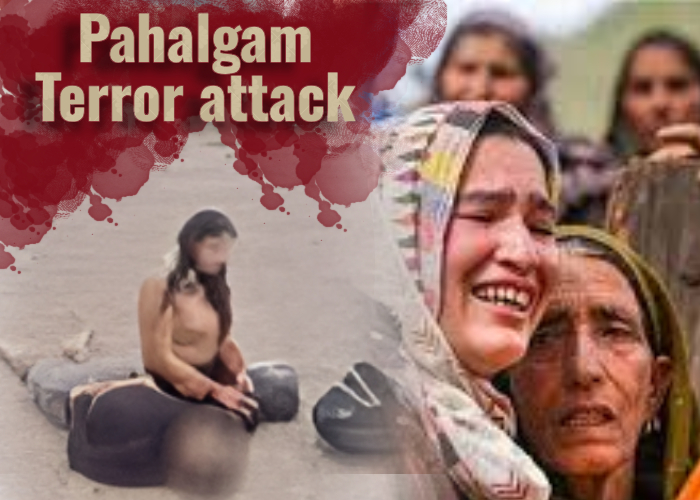
The April 22 terrorist attack in India has engulfed the country in the familiar circle of outrage, anger, and helplessness. Not just the TV anchors, the common man is asking the Government to act this time, accompanied by a glaring reluctance among citizens to assume personal responsibility in combating terrorism. It’s natural, perhaps even justified, to expect decisive actions from authorities. Yet, the complexity and persistence of terrorism demand a collective effort that extends far beyond governmental interventions.
Terrorism thrives not merely through terrorists’ actions but due to their ability to instill fear in people. This fear inevitably transforms into anger and public outrage, prompting citizens to demand immediate action from the Government. Yet these emotions, as neuroscience repeatedly highlights, are transient; anger, powerful in the moment, fades easily without leading to meaningful, lasting solutions. While surgical action assuages the spirit, is it efficient in countering terrorism in the long term ?
Counter-terrorism is not a knee-jerk reaction to every attack; it requires a long-term objective and persistent action. Common outrage should not drive this action; outrage can be satisfied by quick actions, but it does nothing to eradicate terrorism.
The ordinary citizen has to understand his role in this fight against terror. Everybody has to do something; every professional can contribute in some way. They are part of a professional association, and they can ask their association to determine the best way they can help fight terrorism. Because ultimately terrorism is not fought by the Government, the army, or defence forces, terrorism is fought by ordinary people who believe that it is a long fight and needs persistence. Outrage is not enough, small actions to remind and remember are important.
The current outrage is underlined with fear; people are so scared that they are angry, as they feel they can be attacked and killed for their identity as a Hindu. Terrorists’ purpose is served. Everyone has personalised the terrorist attacks on themselves or their family, and they can expect it to happen to them. Here again, the massive anger that Indians feel against Pakistan, the Pakistani Army, or the terrorists will die down. Nor is the problem of terrorism going to be resolved with one or even many actions against Pakistan. This needs concerted efforts over the next few years.
Anger has to be replaced by steely resolve to do something, repeatedly, so that what happened on April 22nd is not forgotten. Every victim has to be recognized and remembered where they died so that nobody else forgets the act.
Pahalgam is no longer just a tourist site, it is also a martyr site. If it reduces tourist traffic to the place, well, so be it. But we cannot wash away terrorism for tourism or economic needs. The stock market was the fastest in brushing aside the terror attacks as if they had never happened.
This is yet another tragedy in Mumbai and the markets, and it reflects poorly on our society, one that we quickly forget. As a result, we are forgiving these terrorists by deleting them from our memories. These are difficult memories, but if society has to eradicate terrorism truly, it has to learn to remember the past tragedies and learn to counter them effectively. Mumbai is always swift to move back to what it calls the Mumbai spirit, and the attack on Mumbai was also never adequately retaliated.
The attack on the terrorists does not have to be commensurate with their actions; it has to be disproportionate to their actions. It is not about killing 25-26 terrorists; it is about destroying their fundamental economic structure, physical structure, and even cultural structure that allows these terrorists to breed. Now, destroying physical structures is easy, visible, and politically beneficial; it also assuages the wounded pride and anger the country feels, but it is insufficient. Cultural and social eradication will take the longest, and it has to be supported by all the political parties; if they cannot support, they do not need to be a political party in India. In the so-called War on Terror after 9/11, more than 3700 Americans died. America killed more than 300,000 in Iraq and 230,000 in Afghanistan. The response was a thousand times greater.
Counter-terrorism experts are still evaluating whether this response was adequate or not. As a matter of fact, between 2001 & 2007, that is the six years after the attacks, the casualties by terrorists went up substantially due to terrorist attacks outside the US. Are ordinary Indians ready for a rise in casualties in the immediate future due to the response by the Indian Government ? Or as the casualties go up, will we ask for the resignation of all the political leadership ?
Will acts of terrorism become political issues to be used to beat down the long-term efforts of the state ? Will we come back to the same old normal, a feeling of complacency if the terrorists reduce their actions temporarily ?
This dangerous return to complacency occurs as the public forgets, markets move on, and the urgency of action is lost, allowing the root causes to fade into oblivion. Terrorists bet on the ability of the public to forget and forgive. Terrorism is not eradicated by episodic anger or isolated military actions against hostile states like Pakistan. It requires a determined and sustained effort, spanning years or even decades.
In his insightful work “Does Counter-Terrorism Work ?” Richard English points out that effective strategies balance military action and political and social initiatives. English notes explicitly, “Counter-terrorism succeeds most sustainably when it integrates military measures with political solutions, recognizing that terrorism is often driven by political grievances and societal fractures.” In Pakistan’s case, there are no political solutions. Still, there are political fractures possible, which means breaking Pakistan down into multiple states so that it is busy fighting internally without any means to plan terror elsewhere.
Similarly, Jessica Stern, a leading authority on terrorism and the author of “Terror in the Name of God,” emphasizes the importance of undermining the ideological foundations that terrorists exploit. Stern argues that mere force, while temporarily satisfying national pride and emotional needs, rarely provides lasting solutions.
The real victory against terrorism is psychological and cultural, achieved through sustained social engagement, economic development, and the dismantling of radicalization networks at their ideological roots.
None of these actions can be done unilaterally; they require coalitions of all kinds, including ideological, economic, and geographical ones.
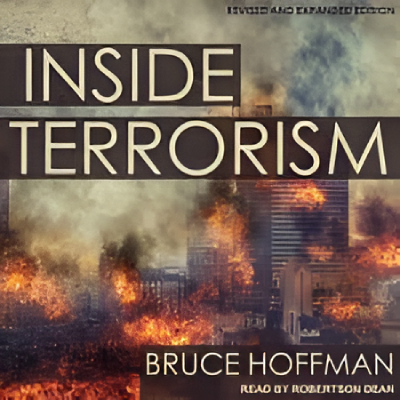
Bruce Hoffman, in his seminal book “Inside Terrorism,” further validates the need for a disproportionate yet carefully targeted approach, explaining that successful counter-terrorism often requires disrupting financial channels, dismantling radical ideologies, and rigorously addressing the sociopolitical grievances exploited by terrorist recruiters. Though it is difficult to address the sociopolitical grievances when the terrorists are state actors from Pakistan.
Israel’s longstanding fight against terrorism provides additional insights. Israel responds with swift and decisive military operations against terrorists. Still, these operations are always accompanied by rigorous domestic security measures, community vigilance programme, and sustained campaigns to delegitimize terrorist ideology. Israeli responses are disproportionate precisely because they recognize the asymmetrical nature of terrorism. Small-scale terrorist attacks, though limited in immediate casualties, demand overwhelming counter measures to deter future incidents, dismantle terrorist infrastructure, and disrupt their recruitment and radicalization processes.
India’s response, therefore, must move beyond superficial retaliations aimed merely at visible terrorist infrastructure.
Ultimately, defeating terrorism is not merely a Government or military task – it is a societal imperative. Citizens must transform their anger into disciplined action every single day. They must recognise their individual and collective responsibility to contribute meaningfully through professional, civic, and personal avenues. It is this sustained collective action – grounded in memory, vigilance, and discipline – that will provide India with lasting security against terrorism.
(Courtesy : Article by K. Yatish Rajawat posted on voiceofindia.me; 4.5.2025)
(K. Yatish Rajawat is a public policy researcher and works at the Gurgaon-based Centre for Innovation in Public Policy [CIPP].)
| Successful counter-terrorism requires rigorously addressing the sociopolitical grievances exploited by terrorist recruiters ! |
 Illegal church in Solapur and misconduct by a municipal employee to be investigated
 Radiant Thoughts of Sachchidananda Parabrahman (Dr) Jayant Athavale
 We pay our obeisance a million times on the Birthday (as per Tithi) of
 Major win for Hindu unity : Maharashtra Government suspends the controversial ‘Devasthan Inam Abolition Draft Act’
 Amazon Insults Aryabhata : Hindu Janajagruti Samiti serves legal notice
 Murtis of Hindu Deities found in the basement of Jama Masjid in Bharuch (Gujarat)