
|
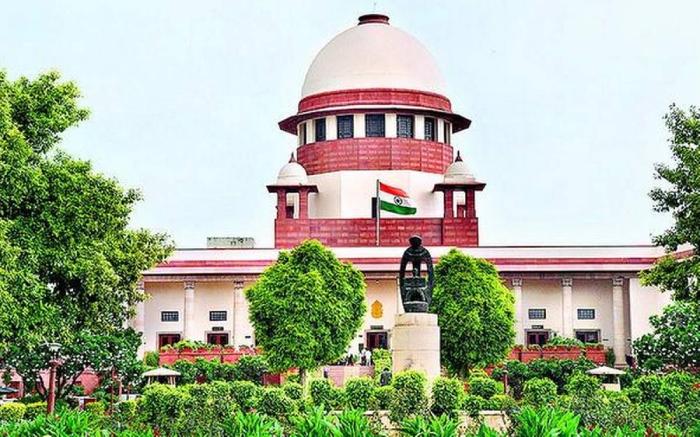
New Delhi – A petition had been filed in the Supreme Court seeking a fixed deadline for the President and State Governors to grant assent to Bills. The matter arose after the Governor of Tamil Nadu failed to give assent to certain Bills passed by the Tamil Nadu Legislative Assembly. While the Governor does not have absolute authority to block Bills passed by the legislature, it is also inappropriate to impose a rigid time limit on the Governor’s decision-making process, the Constitution Bench of 5 judges ruled unanimously. However, the Court clarified that if there is undue delay, it retains the power to intervene.
Key directions of the Supreme Court:
1. Once a Bill is presented to the Governor, the Governor has three options:
– Grant assent by signing the Bill,
– Return the Bill to the legislature for reconsideration, or
– Reserve the Bill for the President’s consideration.
2. No fixed deadline can be imposed on the Governor’s action regarding a Bill. However, if the delay becomes excessive, the Court may step in.
3. In April, during earlier hearings in this matter, the Supreme Court held that Governors do not possess a ‘veto power’. It also directed that the President must take a decision within three months on any Bill sent by a Governor. In response, the President sought the Supreme Court’s opinion on 14 questions relating to this issue. The hearings have been ongoing for the past eight months.
4. The Court has now added that if a Bill is submitted for the assent of the Governor or the President, and no timely response is provided, the law presumes that assent has been granted.
5. However, the Court emphasised that it cannot invalidate a Governor’s assent. A Governor is not merely a ‘rubber stamp’ in the process of converting a Bill into law; the role carries constitutional responsibility.
 More than 13,000 illegal Bangladeshi infiltrators in Karnataka !
 Claim of a conspiracy to Islamise the Dattapeetha premises at Chikkamagaluru (Karnataka) !
 9 incidents of love jihad exposed in various states in the last 24 hours
 Licences of 6 hotels, bakeries and clubs suspended in Mumbai; 19 people arrested
 “If there had been a Muslim in the Shri Ram Janmabhoomi Teerth Kshetra Trust, he would have been ‘encountered’ over the theft” : Asaduddin Owaisi
 Illegal church in Solapur and misconduct by a municipal employee to be investigated