
‘Jaipur Dialogues 2025’ Concludes
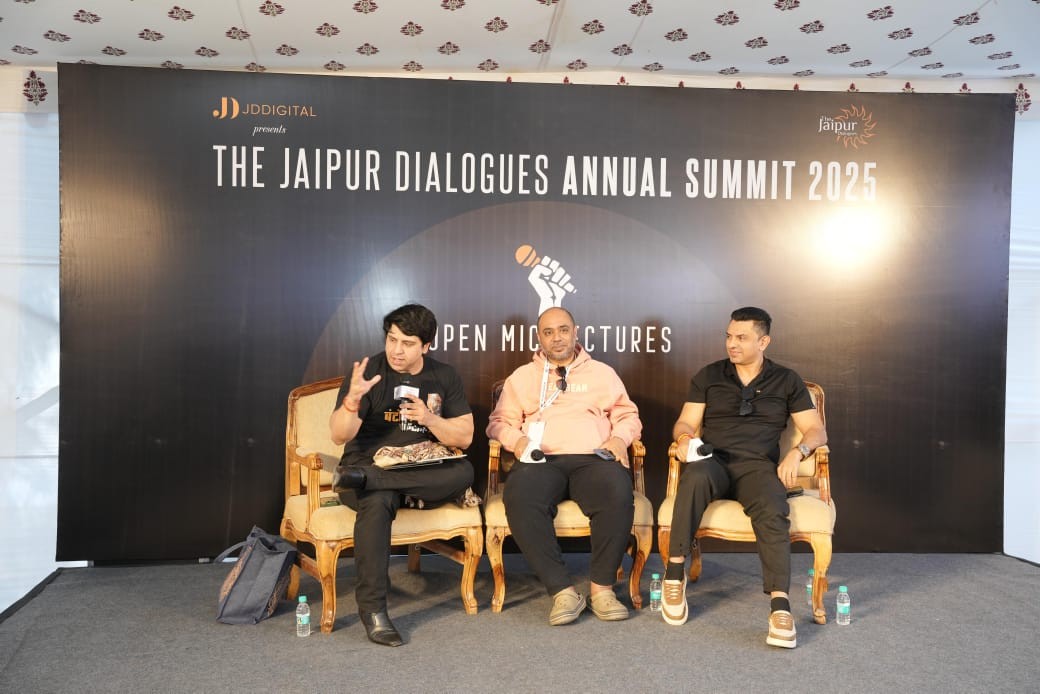
Jaipur, Rajasthan — The three-day conclave ‘Jaipur Dialogues 2025’ concluded on November 9 in an atmosphere of nationalism. Over the course of three days, 42 sessions were held on the central themes “Shatrubodh” (Understanding the Enemy) and “Atmabodh” (Self-Realization). Intellectuals, politicians, defense experts, and leaders aligned with Hindutva ideologies held in-depth discussions on issues of national concern, culture, and security policies. Topics such as religious conversion, corruption, the education system, defense self-reliance, and conceptual politics were explored in detail.
🇮🇳 #TJD2025 | Day 3 – “Shatrubodh” 🔥
The Jaipur Dialogues Annual Summit 2025 (#TJD2025) concluded on 9th November 2025 after three days of intense deliberations across 42 sessions, focused on the themes #Shatrubodh (awareness of adversaries)Highlights of Day 3
🇮🇳 India’s… pic.twitter.com/armLPNjVK5— Sanatan Prabhat (@SanatanPrabhat) November 10, 2025
Understanding the Enemies of Civilization – The True Account of History Must Be Written !
In the session “Civilization Shatrubodh” (Understanding the Enemies of Civilization), Dr. Omendra Ratnu, Shefali Vaidya, Esther Dhanraj, Sandeep Balakrishna, and Kartik Gaur took a strong stand against distorted historical narratives. They asserted that the falsification of history has caused immense harm to Hindu society. Therefore, it is essential to preserve cultural pride and rewrite the history of Hindus truthfully — a need of the time.
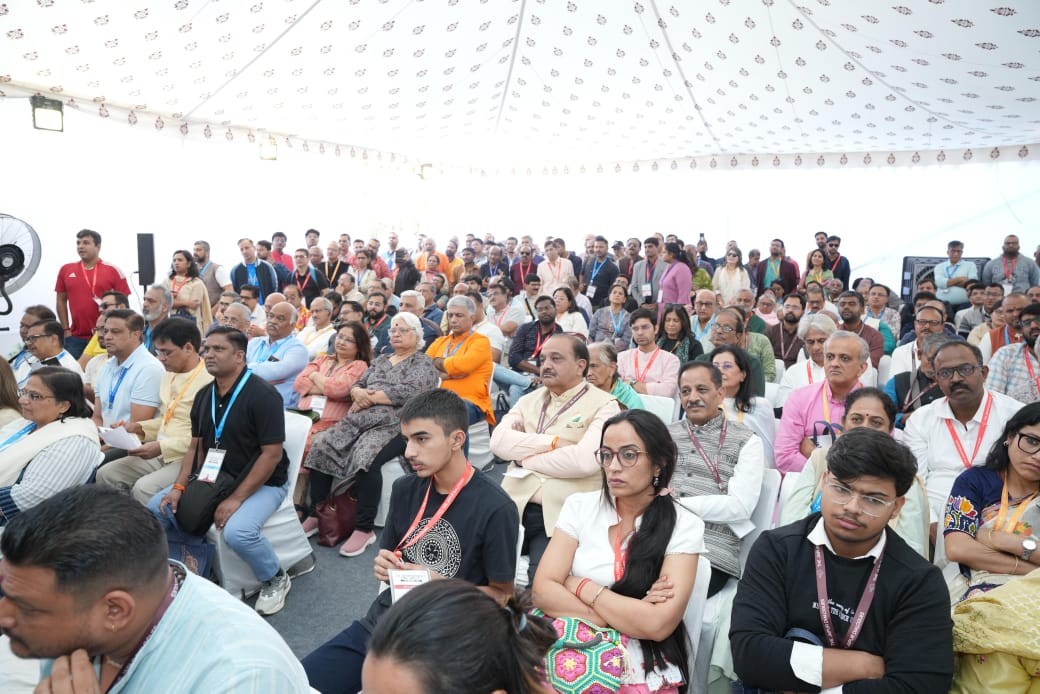
Political Enemies and Anti-National Policies
In this session, Tuhin Sinha, Pallavi Ghosh, Abhijit Iyer Mitra, Shehzad Poonawalla, Baba Ramdas, B.D. Mundada, and journalist Abhishek Tiwari critically discussed politicians attempting to divide the country. Referring to historical contexts, they highlighted how opponents of Sanatan Dharma and the past Congress governments — particularly the Gandhi family — perpetuated casteism, discrimination, and inequality. The speakers exposed such divisive elements and their political motives.
Enemy Destruction – Identify the Enemy and Formulate Policy
In the fourth session, R. Jagannath, Bhau Torsekar, Avneesh P.N. Sharma, Tehseen Poonawalla, Jaipur Dialogues President Sanjay Dixit, and Anupam Mishra emphasized the importance of first identifying enemies and then responding decisively, both legally and strategically. They said that once the enemy is fully understood, coordinated policies must be designed against them. During this session, under the “Digital Akhand Bharat” initiative, an app named “World Fast AI for Sanatan” — aimed at disseminating information about Sanatan Dharma — was launched.
Self-Reliant Defense – Technology-Based Transformation Is Essential
In the “Atmanirbhar Defense” session, Lt. Gen. D.P. Pandey, Col. Mayank Chaube, Col. Ajay Raina, and Maj. Gen. Sudhakar Ji (all retired military officers) emphasized the evolving nature of warfare and the decisive role of modern technology. They shared that during “Operation Sindoor,” technology was used strategically instead of direct firing, and the use of Make-in-India naval vessels played a crucial role. They urged the administrative machinery to understand and address the demands of ex-servicemen seriously and act in the right direction.
Education Sector – Rethinking Foreign Education
In the discussion “Indians Coming Back to Bharat?”, Sankrant Sanu, C.K. Raju, Raj Vedam, and Vijay Sardana pointed out that India’s education system collapsed during the Mughal and later British eras — and even after eight decades of independence, it has not been restored. The Gurukul system has disappeared; our history has not only weakened but been distorted. As a result, India’s academic talent migrates abroad to prosper. They noted that China identifies the best of India’s talent in every field, provides them specialized training, and turns them into “super specialists.” Until other nations recognize India as a global leader, India must continue to work relentlessly toward that goal.
Concluding Message – A “Hindu Ecosystem” Is the Need of the Hour !
Expressing concern about religious conversions, speakers emphasized that people must care for families in their surroundings — understand their needs and help them access government welfare schemes. Ami Ganatra, Baba Ramdas, and Sanjay Dixit said that a sense of Shatrubodh (awareness of adversaries) must be developed among children. The number of women and children participating in community meetings must increase. Social media and podcasts have brought awareness, but this awareness must reach 100%. Instead of depending solely on the government, people should ensure their own protection and build a Hindu Ecosystem — a self-sustaining network of social and cultural defense.
 More than 13,000 illegal Bangladeshi infiltrators in Karnataka !
 Claim of a conspiracy to Islamise the Dattapeetha premises at Chikkamagaluru (Karnataka) !
 9 incidents of love jihad exposed in various states in the last 24 hours
 Licences of 6 hotels, bakeries and clubs suspended in Mumbai; 19 people arrested
 “If there had been a Muslim in the Shri Ram Janmabhoomi Teerth Kshetra Trust, he would have been ‘encountered’ over the theft” : Asaduddin Owaisi
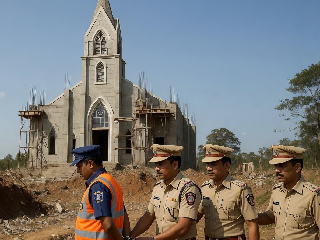 Illegal church in Solapur and misconduct by a municipal employee to be investigated