
Worship begins near the so-called Adina Mosque
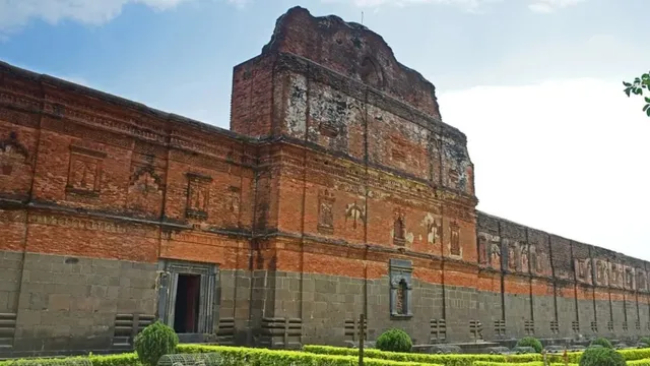
Malda (Bengal) – With the support of local BJP leaders, a Hindu organisation has begun worship near the approximately 650-year-old so-called Adina Mosque at Pandua in Malda district. The ‘Adinath Puratan Shiv Mandir’ organisation has announced that it will install a Shivling 3.6 feet in height and weighing approximately 1.5 tonnes outside the mosque complex. The Shivling is being brought from Tarakeshwar, which is about 289 kilometres away.
Mosque built after demolishing the Adinath Temple
The organisation’s chief patron and BJP leader Mr Kajol Goswami stated that idols of Hindu and Buddhist deities are present inside the so-called mosque. “The mosque was built after demolishing the Adinath Temple. Our objective is to re-establish the temple and install the Shivling inside it. Our organisation will fully abide by the law.” The Archaeological Survey of India and police officials have instructed them to perform worship only outside the protected monument area.
Archaeological department issues guidelines
Following these developments, the Malda district police issued strict guidelines. The police reminded the public that the Adina monument has been declared a protected monument by the Union Government under the Ancient Monuments and Archaeological Sites and Remains Act, 1958. Therefore, worship or any religious rituals without permission are completely prohibited within the premises.
BJP raises the issue in Parliament
BJP Rajya Sabha MP Samik Bhattacharya raised the issue in Parliament and urged the Union Government and the Archaeological Survey of India to pay attention to protecting the original Adinath Temple. On the other hand, CPI(M) Central Committee member Mohammed Salim alleged that the BJP was using its old political strategy of dividing people ahead of the upcoming elections.
History of the Adinath Temple
Government documents relating to the Adina Mosque record that it was built by Sultan Sikandar Shah between 1373 and 1375. However, several archaeological and architectural pieces of evidence indicate that the history of this site is much older. The structure was built largely using stones, pillars and carved architectural elements taken from pre-existing Hindu and Buddhist religious sites dating to the Pala-Sena period (8th to 12th centuries).
The numerous idols and other remains found in the mosque indicate that a grand Adinath Temple and a temple dedicated to Shri Vishnu once existed at this site. The mosque’s minbar (the pulpit from which the imam delivers sermons) was also made using a doorway of black basalt stone taken from the remains of a temple.
Carvings of Shri Shiva, Shri Ganesh and other Hindu symbols can be seen on the walls, doorways and arches of the structure. Numerous carvings, including floral motifs, chaitya arches, kirtimukhas, pearl garlands and chains with bells, can also be seen. Such decorative features are generally not considered part of Islamic architecture. Therefore, these carvings and architectural elements are believed to belong to the Pala-Sena period. Even today, broken Shivlings and overturned idols of Hindu deities can be seen in the premises and in the surrounding walls.
Senior Advocate Pujya Hari Shankar Jain had written to Prime Minister Modi
 histo
histo
Senior Advocate Pujya Hari Shankar Jain appealed for the restoration of Hindus’ right to worship at the site. He had written to Prime Minister Narendra Modi, raising the issue of the historical destruction that took place during the reign of Sultan Sikandar Shah.
 116 question papers leaked in the past 12 years; 7.5 crore students affected
 ‘The present Union Government is following Pakistan !’ : K’taka Cong. Leaders B.K. Hariprasad
 ‘Our present objective is to create awareness among youth at the grassroots level’ : Cockroach Janata Party
 Eating biryani on the Ganga is not a crime ! : CJI Ujjal Bhuyan
 Courts can’t be 24×7 entertainment channels : Supreme Court
 Mastermind Brijendra Gupta arrested in Bihar !