
Apple has yet to respond to the issue of Siri not replying to ‘Jai Shriram’
(Siri is a feature available on Apple smartphones that enables users to perform various tasks through voice commands.)
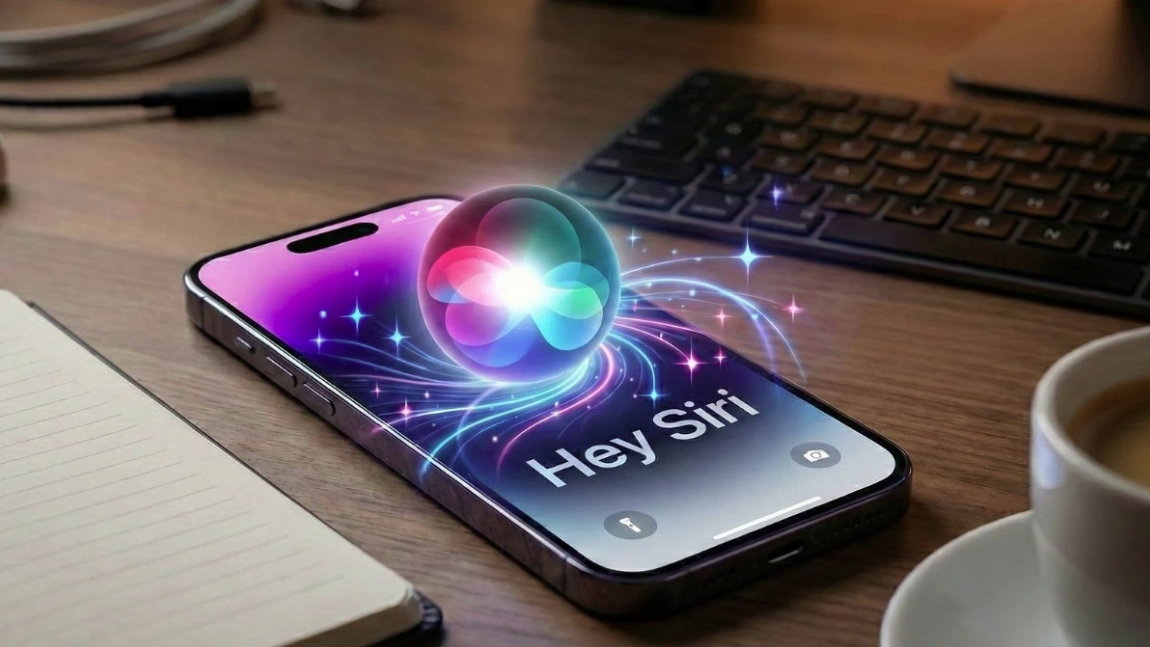
New Delhi – A few days ago, devout Hindu organisations in Ujjain, Madhya Pradesh, wrote to the Chief Minister of the State complaining about the Siri feature on Apple’s iPhone. They said that when users say “Jai Shriram” to Siri, it does not respond by saying “Jai Shriram”, whereas if someone greets it with “Assalamu Alaikum” (“Peace be upon you”), Siri replies with “Wa Alaikum Assalam” (“Peace be upon you too”). Expressing their anger, the organisations demanded action. Apple has not yet issued any official statement on the matter. Meanwhile, information technology experts have argued that it is incorrect to create a controversy over this issue. They explained that Siri operates according to the programming designed by Apple.
Since there are countless forms of greeting across the world, it would be impossible for Apple to program responses for every one of them. Against this backdrop, a video has gone viral on social media showing that when Google’s Gemini AI is greeted with “Jai Shriram” or “Jai Mahakal”, it responds with the same greeting. This has prompted people to ask, “If Gemini can do it, why can’t Apple?” Many are now criticising Apple, questioning why, despite earning crores of rupees in profits from India, it has not upgraded its voice assistant to reflect Indian culture.
🚨 Respect Hindu Faith or Face Boycott!
If Google's Gemini can respond to "Jai Shri Ram", why can't Apple's Siri?
Apple has yet to publicly explain this alleged inconsistency.
Why are Hindu religious sentiments so often perceived as being ignored by global tech giants?
If… https://t.co/KrdPqI9mFe pic.twitter.com/DNKlp35ekv
— Sanatan Prabhat (@SanatanPrabhat) July 18, 2026
Apple does not respect the name of our Deity
The person who shared the video claimed that the iPhone was working against Indian culture and hurting the sentiments of crores of Hindus. “Crores of Hindus across the country buy iPhones with enthusiasm, but the company is deceiving us. It possesses all our data, and this is a well-planned conspiracy against us. Owning an iPhone has become a fashion in India today. People purchase iPhones even by taking loans or expensive instalment plans despite not having the money. Yet this foreign company does not respect the name of our Deity,” he said.
No place for religious slogans
Experts have also argued that virtual assistants such as Siri work on predefined language dictionaries. Their systems contain hard-coded responses for only a limited number of commonly used greetings around the world, such as “Hello”, “Hi”, “Assalamu Alaikum”, and, in selected languages, “Namaste”. They state that “Assalamu Alaikum” is regarded globally as a common greeting. In contrast, Apple classifies phrases such as “Jai Shriram” and “Har Har Mahakal” as religious slogans rather than general greetings. For this reason, these expressions were not included in Siri’s coding list. Similarly, “Har Har Mahadev” and “Allahu Akbar” are considered religious slogans rather than ordinary greetings and therefore are not included among standard greeting responses.
Why are Hindu sentiments always ignored in the world of technology?
According to devout Hindu organisations, when companies conduct business in a vast and culturally rich country such as India, they must understand the realities of that society. In India, “Jai Shriram” and “Jai Shri Mahakal” are not merely political or religious slogans but are widely used by crores of people as everyday greetings when meeting one another. In such circumstances, claiming that “Jai Shriram is not a greeting” is entirely baseless and far from reality. Even if this is regarded in coding terms as merely a “missing word”, the question still arises as to how Apple, which considers India one of its largest markets, could overlook such an important issue.
If Google’s Gemini and other virtual assistants can understand these greetings and respond appropriately, why has Apple’s Siri failed to do so? If crores of Indian consumers purchase these companies’ expensive smartphones and generate billions of rupees in business for them, they also expect respect for their own culture and faith in return. This cannot simply be dismissed as a technical error. Apple has not yet issued any clarification regarding the controversy. Until the company rectifies this technical issue and explains its position, dissatisfaction among the majority community in India is likely to continue, along with the question of why Hindu sentiments are repeatedly overlooked in the world of technology.
 Teacher conducting SIR process assaulted by three religious fanatics !
 District Court Lifts Stay on Chemical Coating of the Shri Vitthal–Rukmini murti at Pandharpur !
 Three Hindus arrested for consuming mutton and alcohol on holy Saryu in Ayodhya
 Teacher dismissed by school in Bhagyanagar (Telangana) for asking a Hindu student to memorise the ‘Kalma’ as homework !
 Karnataka to ban the sale of pizza-burger near schools
 Committees to be constituted in Maharashtra to decide cases of passive euthanasia