
US–Iran conflict
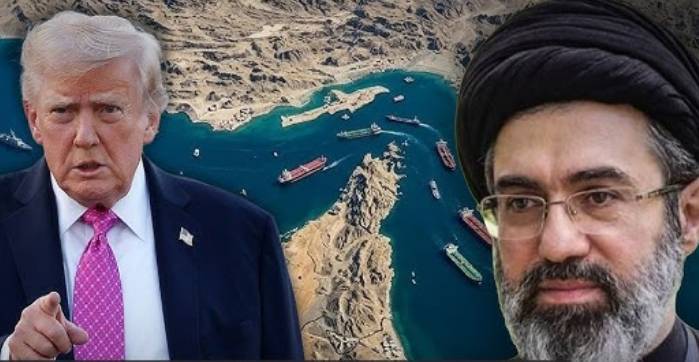
New Delhi – Talks between the United States and Iran, held in Islamabad, Pakistan, lasted for 21 hours but ended without any agreement. With no breakthrough achieved, delegations from both sides have returned to their respective countries. Each side is now making conflicting claims and blaming the other for the failure.
The US made unreasonable demands – Iran’s claim
Iran’s embassy in Ghana stated on X that Iran had firmly rejected what it described as excessive demands by the United States. According to the statement, the U.S. was merely seeking an excuse to walk away from the negotiations. It was attempting to secure, through diplomacy, concessions it could not achieve through war.
The U.S. delegation reportedly returned empty-handed, while the Strait of Hormuz remains closed. Iran reiterated that it would not accept unreasonable conditions and would continue diplomatic efforts to safeguard its national interests.
“No deal because Iran rejected our conditions” – U.S. response
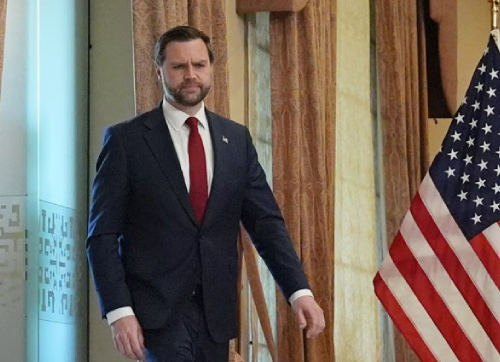
JD Vance, after talks with Iran
U.S. Vice President JD Vance stated that the failure of the talks was due to Iran’s refusal to accept U.S. conditions. He emphasised that the United States had clearly outlined its position, including areas where it was willing to show flexibility and where it was not.
According to Vance, the U.S. had presented its final and best offer after extensive discussions and demonstrated considerable flexibility. However, the key expectation was a firm commitment from Iran that it would not pursue nuclear weapons or acquire capabilities to develop them rapidly; an objective central to President Donald Trump’s policy.
Islamabad Talks Fail
⚠️ War fears rise again🇮🇷 “US made unreasonable demands!”
🇺🇸 “No deal – Iran rejected our conditions!”
🤝 21-hour Islamabad talks end without agreement; delegations leave
🗣️ “No one expected a deal anyway!” – Iran
⚔️ Tensions remain high as ceasefire… pic.twitter.com/fM95ohufdD
— Sanatan Prabhat (@SanatanPrabhat) April 12, 2026
“No one expected a deal in one meeting” – Iran
Iran’s Foreign Ministry spokesperson Esmaeil Baghaei remarked that it was unrealistic to expect a comprehensive agreement in a single round of talks. He added that Iran would continue engagement and dialogue with Pakistan and other regional partners.
“Operations against Iran not over yet” – Israel
Israeli Prime Minister Benjamin Netanyahu stated that military operations against Iran are ongoing. He claimed that the strikes were necessary as Iran was close to developing nuclear weapons and that these operations had significantly damaged Iran’s nuclear program.
Trump may consider a naval blockade
Following the breakdown of talks, President Donald Trump indicated on social media that stricter measures could be taken against Iran. Reports suggest that the U.S. may consider imposing a naval blockade if Iran refuses to accept its conditions.
Such a blockade could severely impact Iran’s economy and also affect countries like China and India, which rely on Iranian oil. A similar strategy had previously been used against Venezuela, significantly weakening its economy.
According to The New York Times, the U.S. administration now faces two difficult options: continue prolonged and complex negotiations or move towards renewed military confrontation.
Iranian citizens express concern
Reports indicate that many Iranian citizens have taken to social media to express concern following the collapse of talks. Many had hoped for a diplomatic resolution that could ease sanctions and improve economic conditions.
A resident of Tehran, Amir Hossein, wrote, “May God protect us. It feels like we are heading back toward war.”
U.S. begins mine-clearing operations
The U.S. Central Command (CENTCOM) has stated that American warships are preparing to secure key maritime routes. Iran has been accused of laying naval mines in strategic waters.
Warning to China over arms supply
President Donald Trump warned that China would face serious consequences if it supplied weapons to Iran. The warning followed reports that Iran might receive new air defence systems from China in the coming weeks.
China has denied these claims, with its embassy in Washington, D.C. stating that it has not supplied weapons to any party involved in the conflict and urging the U.S. to avoid baseless allegations.
“Illusion of power fuels war” – Pope Leo XIV
Speaking in Vatican City, Pope Leo XIV said that the illusion of being the most powerful is driving the conflict involving the U.S., Israel, and Iran. He urged global leaders to prioritise dialogue and peace.
He added that excessive focus on power, wealth, and conflict has already caused enough damage, and warned that such illusions ultimately lead to destruction.
 “If I reveal the names of the powerful people involved in the Shri Ram Temple donation theft, they will kill me” : Bageshwar Dham chief Pandit Dhirendra Krishna Shastri
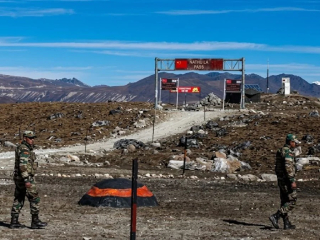 No Chinese military incursion into Arunachal Pradesh : Indian Army clarifies
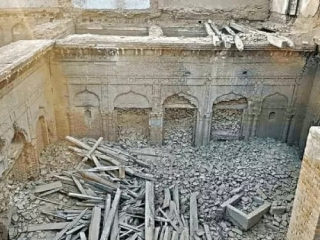 Attempt to demolish 125-year-old Gurdwara in Pakistan !
 Major win for Hindu unity : Maharashtra Government suspends the controversial ‘Devasthan Inam Abolition Draft Act’
 Construction of Sanatan Dharma Complex halted due to threats in Bangladesh
 Cuba 2026 : Why Havana Suddenly Matters Again