
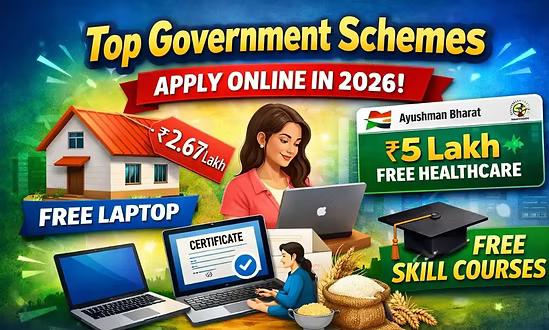
New Delhi – Welfare schemes such as free ration distribution and direct cash transfers to women are significantly increasing the financial burden on state governments. During elections, most political parties promise such benefits; however, fulfilling these commitments post-election has placed several states under severe fiscal strain within a short span of time.
Many states are struggling to mobilise adequate resources to sustain these schemes and trying to maintain balanced budgets. Experts caution, if this trend continues, some states could face serious financial set-back.
Indian States Heading Toward Bankruptcy 🚨
Several states are nearing financial distress due to unsustainable freebie schemes; free rations, cash handouts, and more.
Every election brings bigger promises, but at what cost?
This is not welfare – it’s vote-buying in disguise.… pic.twitter.com/KXF948nezw
— Sanatan Prabhat (@SanatanPrabhat) April 5, 2026
Key observations:
1. In certain states, expenditure on such schemes has reached 30–40% of total revenue receipts. In Himachal Pradesh, a severe cash crunch has led to delays in the payment of salaries and pensions for government officials, including senior leadership.
2. In Telangana, extensive welfare spending has created budgetary constraints, delaying several development and public welfare projects. In Madhya Pradesh, the Ladli Behna Scheme has contributed to an increase in state debt from 27% to 32% of GSDP (Gross State Domestic Product).
3. In Maharashtra, substantial spending on the Ladki Bahin Yojana has resulted in the discontinuation of the festive ration kit scheme.
4. Dr. Amarjeet Singh Sethi, editor of the Indian Association for Research in National Income and Wealth, has warned that continued expansion of such schemes could push states toward financial distress, even if the overall national economy remains stable. States are already beginning to reduce expenditures to manage the situation.
Examples of welfare expenditure
Madhya Pradesh:
- Ladli Behna Scheme
- Free LPG cylinder scheme
- Electricity subsidies
- Estimated expenditure: ₹50,000 crore
Telangana:
- Mahalakshmi Scheme (free bus travel, LPG cylinder, and ₹2,500 monthly support for women)
- ₹5 lakh housing assistance for the homeless
- 200 units of free electricity per month
Estimated expenditure: ₹51,000 crore
Punjab:
- 300 units of free electricity per month
- ₹1,000 to ₹1,500 monthly financial assistance for women
- Free bus travel for women
Estimated expenditure: ₹2.6 lakh crore
Editorial perspectives
|
 Illegal church in Solapur and misconduct by a municipal employee to be investigated
 Karnataka: Religious fanatics breaks farmer’s hand over bursting firecrackers in front of a mosque !
 Wife earning more than her husband is not entitled to maintenance : Karnataka High Court
 Gold jewellery seized by the police stolen from a police station in Kerala !
 A four-wheeler suspended by a crane and deliberately blown up in Badnagar (Madhya Pradesh) !
 Religious conversion and sexual exploitation of Hindu women exposed in Kota (Rajasthan)