
Observation made while hearing the case related to Uttar Pradesh’s ‘Unlawful Religious Conversion Prohibition Act’

New Delhi – The Supreme Court of India has observed that certain provisions of the Uttar Pradesh Prohibition of Unlawful Religious Conversion Act, 2021 make the process of religious conversion excessively complicated and burdensome. The Court made this remark while quashing criminal proceedings filed against the Vice-Chancellor of Sam Higginbottom University of Agriculture, Technology and Sciences (SHUATS), Prayagraj, who had been accused of forced conversion.
A bench comprising Justice J.B. Pardiwala and Justice Manoj Misra stated that, under the Constitution of India, citizens are guaranteed freedom of thought, expression, belief, and worship, which are essential features of India’s secular character. The bench noted that, according to the Act, individuals are required to inform the District Magistrate both before and after conversion, following which the Magistrate must order a Police enquiry. Such a process, the Court said, indicates state interference and intrudes into a person’s individual religious choices.
Citing the landmark judgements in K.S. Puttaswamy (Right to Privacy) and Shafin Jahan (Hadiya case), the Supreme Court emphasized that the right to privacy is inherent under Article 25. Every person has the freedom to choose, practice, and express their religion, and personal autonomy, especially in matters like marriage, is of utmost importance.
Interim order : Conversion without force, allurement, or fraud not to be brought under anti-Conversion Law
The Supreme Court further noted that a similar case challenging the constitutional validity of the ‘anti–love jihad’ law is pending before the Gujarat High Court. During the proceedings, the Court issued an interim order stating that provisions of the anti-conversion law should not apply to interfaith marriages or conversions that occur without force, inducement, or deception.
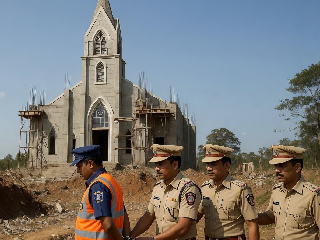 Illegal church in Solapur and misconduct by a municipal employee to be investigated
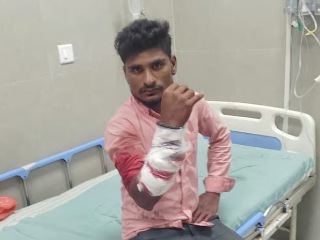 Karnataka: Religious fanatics breaks farmer’s hand over bursting firecrackers in front of a mosque !
 Wife earning more than her husband is not entitled to maintenance : Karnataka High Court
 Gold jewellery seized by the police stolen from a police station in Kerala !
 A four-wheeler suspended by a crane and deliberately blown up in Badnagar (Madhya Pradesh) !
 Religious conversion and sexual exploitation of Hindu women exposed in Kota (Rajasthan)