
|

Mumbai – After being trapped for 27 long years in the vicious cycle of ‘tarikh pe tarikh’, an exhausted Namdev Jadhav, who was waiting endlessly for justice, ended his life by jumping off the Pune court building. This is not suicide, but an institutional murder committed by an indifferent and lethargic system. More than 5 crore cases are still pending in courts across the country. According to NITI Aayog, it will take 324 years to resolve them, meaning countless generations and crores of people will never see justice. How long will this ‘tarikh pe tarikh’ ordeal continue ? When will Namdev Jadhav get justice ? – This was the question raised by Sanatan Sanstha spokesperson Mr Abhay Vartak in a press release.
Mr Vartak further said,
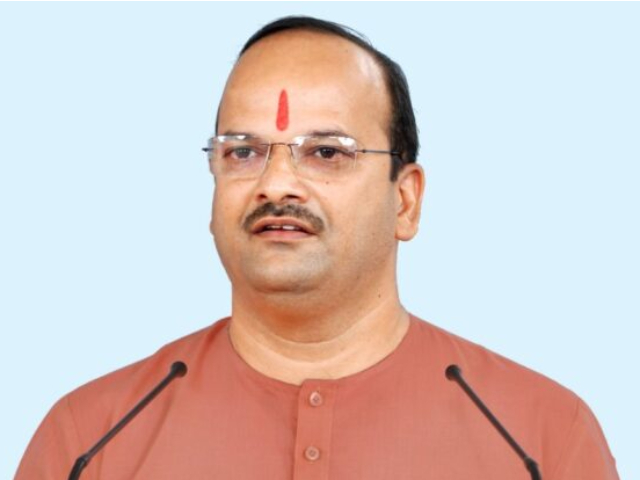
“The death of Jadhav is just the tip of the iceberg. As of today, over 5 crore 3 lakh cases are pending across courts in the country. Of these, the highest number – 4 crore 7 lakh – are pending in district and taluka courts, which are the first doors that ordinary citizens knock on for justice. Shockingly, over 1 lakh 8 thousand cases have been pending for more than 30 years, and some for even 50 years, still awaiting justice.”
Thousands of judges’ posts lying vacant !
Administrative apathy lies at the root of this judicial delay. In India, there are only 15 judges per 10 lakh population, compared to 150 in the United States and 220 in Europe. The Law Commission had, decades ago, recommended at least 50 judges per crore population; yet we have failed to reach even that target. As of October 2025, 26% of the posts in 25 High Courts and more than 5,200 in district courts remain vacant for years. Because of these vacancies, working judges face an enormous workload, slowing down the pace of case disposal and delaying justice. Expenditure on the judiciary forms a mere 0.08% of India’s total Gross Domestic Product, which clearly reflects the lack of infrastructure.
Declare crores of pending cases as a ‘national emergency’ !
To prevent citizens from losing faith in the judicial system, the Government must treat this situation as a national emergency and act on a war footing. There is a dire need to frame and strictly implement a national policy ensuring disposal of every case within a fixed timeframe, to increase the number of judges as per international standards, to fill all judicial and administrative vacancies, to invest in court infrastructure, to reform legal procedures, and to make effective use of technology. Only through such concerted efforts can the policy of ‘timely justice for all’ truly be achieved, stated Mr Vartak in the release.
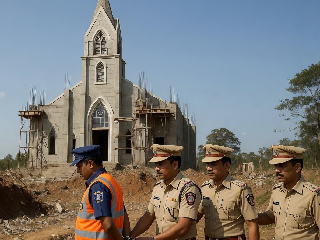 Illegal church in Solapur and misconduct by a municipal employee to be investigated
 Karnataka: Religious fanatics breaks farmer’s hand over bursting firecrackers in front of a mosque !
 No Chinese military incursion into Arunachal Pradesh : Indian Army clarifies
 Wife earning more than her husband is not entitled to maintenance : Karnataka High Court
 Major win for Hindu unity : Maharashtra Government suspends the controversial ‘Devasthan Inam Abolition Draft Act’
 Mumbai-based advocate Siddhavidya, who is trying to stop trafficking through surrogacy (artificial pregnancy) and animals, and animal killing